

In just a few weeks, millions of Americans will participate in one of the most consequential rituals of our democracy: casting a ballot.
Across California, election officials are preparing polling places, community organizations are helping neighbors navigate the voting process, and civic leaders are working to ensure that every eligible voter can participate freely, safely, and with confidence.
These efforts matter enormously. Free and fair elections are foundational to democratic life. But as we approach November, I find myself returning to a question that extends far beyond Election Day:
What does it mean to take responsibility for democracy in the 364 days between elections?
For too long, we have treated democracy primarily as a system we participate in periodically, rather than a shared civic undertaking we must continuously sustain. We vote, follow the news, debate policies, and look to elected officials to lead. Yet the strength of our democracy depends on something much broader: the everyday decisions of people who lead our businesses, schools, public institutions, community organizations, and neighborhoods.
Democracy is not simply a form of government. It is a practice of collective responsibility. And its preservation requires far more of us than casting a ballot.
The original promise of citizen leadership
This conviction is deeply rooted in Coro’s history.
In 1942, amid a world confronting the devastating consequences of authoritarianism and the fragility of democratic institutions, two leaders in San Francisco, W. Donald Fletcher and Van Duyn Dodge, asked a deceptively simple question: How do we prepare people to make democracy work?
Their answer was not to train more politicians. It was to cultivate citizen leaders.
They understood that a functioning democracy requires people across society who can understand how institutions operate, navigate competing interests, engage across differences, and exercise judgment in service of the public good.
The Coro model emerged from that belief. Rather than teaching leadership as a set of abstract principles, Coro immerses participants in the complexity of public life, bringing them into direct contact with institutions, communities, and perspectives different from their own.
More than eight decades later, that founding insight feels remarkably urgent.
We need leaders who can hold complexity without retreating into certainty. Who can disagree without dehumanizing. Who understand that exercising power responsibly requires both conviction and humility. And who recognize that leadership is not defined by a title, but by the willingness to assume responsibility for the conditions in which we all live.
This is the promise of citizen leadership: that every one of us, regardless of position or profession, has both the capacity and the obligation to contribute to a stronger democracy.
Democracy needs institutional stewards
Much of our national conversation about democracy focuses, understandably, on elected officials, political parties, and the institutions of government.
But democracy does not exist in isolation from the rest of society.
It depends on an ecosystem of institutions that shape how people experience public life, access reliable information, build relationships, resolve differences, and develop trust in one another.
A local business can be a trusted source of information in a community. A school can teach young people how to engage constructively across disagreement. A faith institution can bring together neighbors who might otherwise never encounter one another. A nonprofit can connect residents to public systems that feel distant or inaccessible. A corporate leader can affirm that respect for the rule of law and democratic processes is fundamental to institutional stability.
Each of these institutions holds a form of civic influence. The question is whether we recognize and exercise that influence responsibly.
To build a stronger democracy we cultivate a broader ecosystem of institutional leaders who recognize their responsibility to protect and sustain democratic governance.
This requires a shift in how we understand civic leadership.
A CEO’s responsibility to the community does not end with creating jobs. A university’s contribution to democracy extends beyond educating students. A foundation’s civic role is not limited to funding organizations already doing democracy work.
These institutions are part of the democratic fabric itself.
Their leadership matters because they can help protect the conditions that make legitimate democratic participation possible: access, trust, accountability, reliable information, respect for lawful processes, and the ability to engage across difference.
These are not partisan commitments. They are the shared foundations that allow a pluralistic society to govern itself.
From civic participation to civic infrastructure
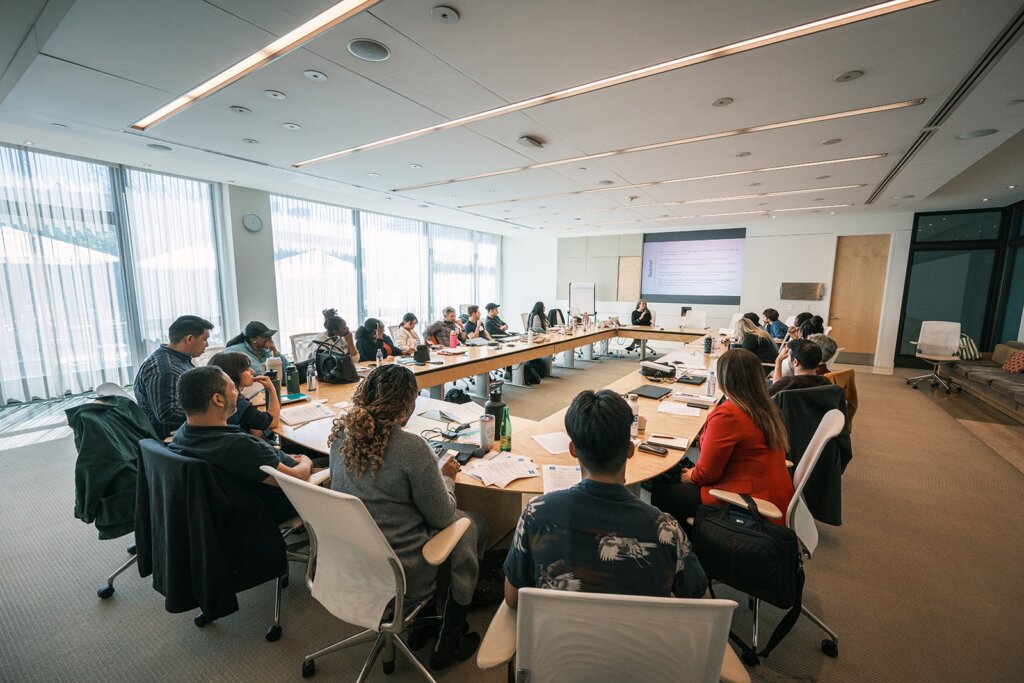
Coro California has taken an active role in exploring what democracy preservation looks like in practice.
Through our statewide relationships, we are identifying and connecting organizations and trusted community leaders working to strengthen civic participation, expand access to reliable election information, protect voting rights, and build confidence in democratic processes.
We are looking beyond the organizations traditionally associated with elections to understand where trust already exists: among small businesses, rural communities, faith institutions, neighborhood organizations, and other civic partners whose relationships are rooted in everyday life.
One of the clearest lessons emerging from this work is that California does not lack committed people or organizations. Across our state, extraordinary leaders are already working to strengthen their communities and protect democratic participation.
Coro alumni have spanned across leadership titles, sectors, and industries. Alumni have also been strengthening California’s communities through public service, including Senator Alex Padilla, LA County Supervisor Holly Mitchell, LA City Councilmember Adrin Nazarian, and LA City Councilmember Katy Yaroslavsky, among others.
What we need is stronger connective tissue.
Too often, organizations are working toward complementary goals without the relationships, shared resources, or infrastructure that would allow their efforts to reinforce one another. Some communities have robust civic networks, while others have far fewer resources. Trusted local messengers may have deep relationships but limited access to timely information or institutional support.
The opportunity is not simply to create another initiative. It is to connect and strengthen the civic infrastructure already taking shape across California.
That means building relationships before they are urgently needed. It means connecting institutional resources with community knowledge. It means recognizing that the people best positioned to engage a community are often those who have earned its trust over years, not those who arrive in the final weeks before an election.
And it means thinking beyond 2026.
If every election requires us to rebuild relationships, recreate partnerships, and rediscover trusted messengers, we will remain in a perpetual cycle of reaction.
The work of preserving democracy must become enduring civic infrastructure, not an emergency response activated every election cycle.
The leadership opportunity before us
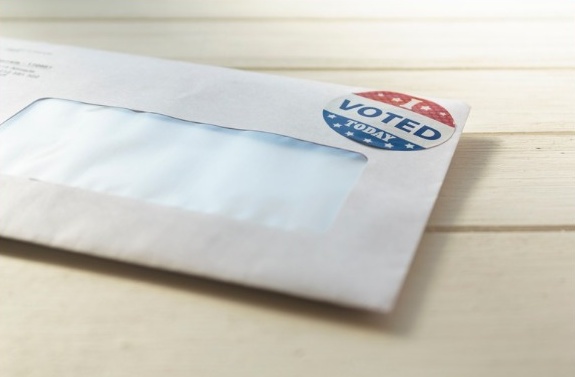
The coming weeks offer an immediate opportunity to put these principles into practice. Coro has put together a civic engagement hub to support individuals and organizations ahead of Election Day. Access voter resources for California’s General Election on November 3rd: trusted, nonpartisan information for you, your organization, and the communities you serve.
For individuals, that begins with participation. Make a plan to vote. Help others access accurate, nonpartisan information about registration, voting options, and their rights. Learn how elections are administered in your community. Support the people responsible for carrying out that work.
For community organizations, it means considering how existing relationships can strengthen civic participation. A neighborhood association, cultural organization, or community center does not need to become an election organization to help people find reliable information and connect with trusted resources.
For business and institutional leaders, the invitation is broader.
Use your credibility and relationships to affirm the importance of free and fair elections, impartial election administration, and respect for lawful outcomes. Make trustworthy voting information accessible to employees and communities. Support nonpartisan civic partnerships. Recognize that democratic stability is not separate from organizational success, but one of the conditions that makes it possible.
For philanthropic leaders, the opportunity is to invest in the connective infrastructure that allows this work to endure: trusted community messengers, regional partnerships, civic leadership development, and the organizational capacity needed to sustain collaboration beyond a single election.
And for those of us whose work centers on developing leaders, we must ask whether we are adequately preparing people not only to succeed within institutions, but to steward those institutions responsibly.
None of this requires agreement on candidates, parties, or policy preferences.
In fact, the legitimacy of this work depends on our ability to distinguish the principles of democratic participation from the political outcomes that participation produces.
We can disagree profoundly about the direction of our country while remaining united in the belief that eligible voters should be able to cast their ballots, election officials should be able to carry out their responsibilities without intimidation, and lawful election outcomes must be respected.
That is not the absence of political conviction. It is the presence of democratic commitment.
Building solidarity before we need it
There is another dimension of this work that deserves greater attention: the relationships we build across communities and identities.
Our society is rich with distinct histories, experiences, and struggles. Those differences matter. They shape how people encounter institutions, understand power, and experience the promises and shortcomings of democracy.
But our differences need not prevent us from recognizing our shared stake in democratic life.
The protection of one community’s rights cannot be separated from the health of the institutions that protect everyone’s rights. Nor can lasting solidarity be built solely around moments of shared crisis.
We need relationships that are deeper than transactional alliances, built on mutual understanding, reciprocity, and a recognition that our futures are interconnected.
This requires patience. It requires curiosity about experiences unlike our own. It requires the willingness to build trust before asking people to mobilize around a particular issue.
And it requires leaders who can help communities move beyond the assumption that their struggles exist in isolation.
A thriving democracy does not ask us to surrender our distinct identities. It asks us to develop the capacity to act together while honoring them.
That is the kind of civic leadership we must cultivate, not only to meet the challenges of this election, but to strengthen the democratic culture we pass on to future generations.
The work begins now, and continues after November
There is a temptation, particularly during consequential elections, to measure the health of democracy primarily by what happens on Election Day.
But November 3 is not the finish line.
The days and weeks that follow will require the same commitment to accuracy, lawful processes, institutional integrity, and public trust. And the years ahead will demand something more ambitious: a sustained investment in the people, relationships, and institutions that make democratic self-government possible.
At Coro California, our commitment is to help develop and connect the leaders who can meet that responsibility across sectors, generations, and communities.
We believe democracy is strengthened when people learn to exercise power with integrity, navigate complexity with humility, and work across differences in service of something larger than themselves.
Eighty-four years after Coro’s founding, the central question remains: How do we prepare people to make democracy work?
The answer must extend beyond preparing individual leaders. We must build a culture of civic stewardship in which institutions understand their democratic responsibilities, communities are connected through durable relationships, and more people see themselves as active participants in shaping our collective future.
The challenges before us are significant. But so is the opportunity.
Across California, the people, relationships, and institutions capable of strengthening our democracy already exist. Our task is to connect them, equip them, and invite them into a shared commitment that extends beyond any one election.
Democracy is not something we inherit once and preserve automatically. It is something we build, practice, and renew together.
And that work belongs to all of us.
Stand together for California’s elections
Alongside these resources, Coro California is joining leaders from across California’s business, philanthropic, faith, and civic communities in a nonpartisan statement affirming our shared commitment to free, fair, secure, and accessible elections. The statement underscores the importance of protecting voters’ rights and information, supporting election officials in carrying out their responsibilities without intimidation or improper interference, and upholding public trust in the democratic process. We invite individuals and organizations who share these principles to review the statement and consider adding their names.
Read the statement and sign on here by Thursday, October 29, at 12 p.m. Pacific. Organizational signatories must have appropriate authorization.
About Coro California
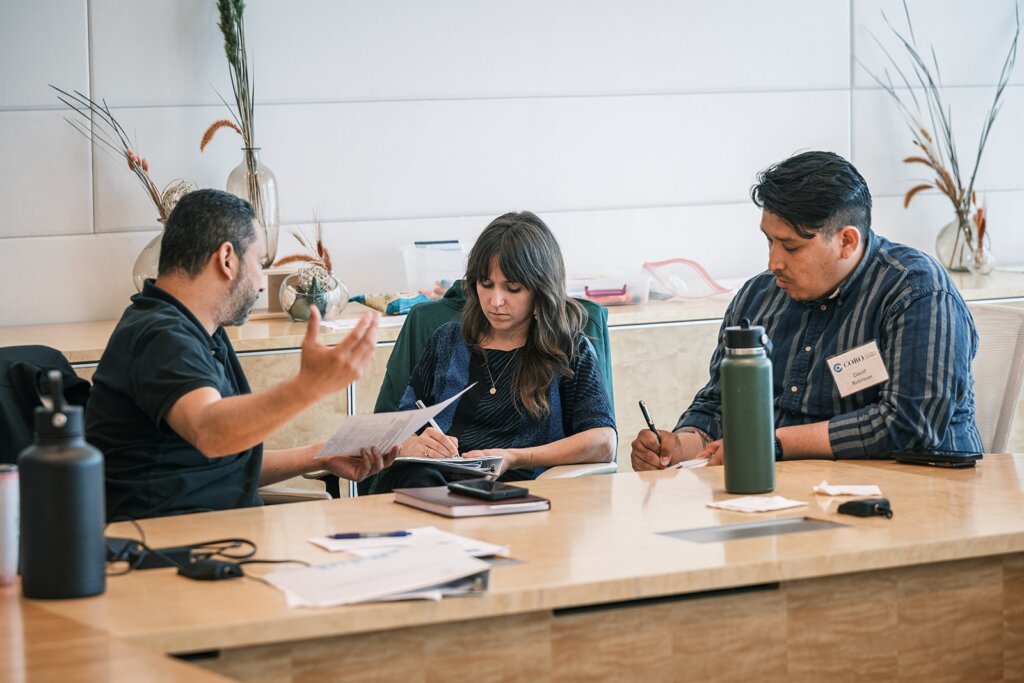
At Coro California, we train, empower, and connect leaders across sectors and generations to strengthen democracy and tackle society’s most complex challenges together. Our vision is of a thriving democracy led by people in every sector, at every level of leadership, and across communities, who bridge differences, navigate complexity, and lead in service of the greater good — advancing California’s communities toward a more just, connected, and resilient future.
To learn more about Coro California and our leadership development programs, visit www.coroca.org.
Visit Coro California’s civic engagement hub at www.coroca.org/elections.

Natalie Samarjian
Ready to strengthen your leadership impact?
Explore programs designed to equip leaders with the skills to drive change.