

The future of leadership development in California will not be defined by how many exceptional individuals we produce. It will be defined by whether we have the courage to invest in the relationships, trust, and civic capacity that make communities exceptional.
California has long been where the future arrives first. The technologies we invent, the industries we build, and the policies we pioneer often become models for the rest of the world. But California’s greatest challenges arrive here early, too. Housing affordability. Climate resilience. Artificial intelligence. Workforce transformation. Declining trust in institutions. These are not simply policy challenges. They are tests of our collective capacity to solve increasingly complex problems together.
For generations, our instinct has been the same: develop stronger leaders. We have invested in executive education, coaching, and professional development. We celebrate visionary CEOs, transformational mayors, courageous founders, and charismatic elected officials. We tell ourselves that if we can produce enough extraordinary leaders, extraordinary outcomes will follow.
There is truth in that story. But it is only part of the story.
Much of modern leadership development begins with the assumption that leadership resides primarily within individuals. If that assumption is correct, our current approach makes perfect sense. We should continue investing in stronger communicators, better strategists, more resilient executives, and more visionary decision-makers.
Yet experience, history, and an increasingly compelling body of research, points us toward a different conclusion. Leadership is best understood not as an attribute of exceptional individuals, but as an emergent property of healthy civic relationships. It is created through the trust, reciprocity, and shared purpose that enable people, institutions, and sectors to solve problems together. Once we recognize that, the implications are profound. It fundamentally changes how we define leadership, how we develop it, and ultimately, how California builds the capacity to solve its most complex challenges.
The future of leadership development in California is therefore not about developing better individual leaders. It is about building the civic infrastructure that enables communities to lead together.
We remember heroes, but leadership development programs must teach relationships
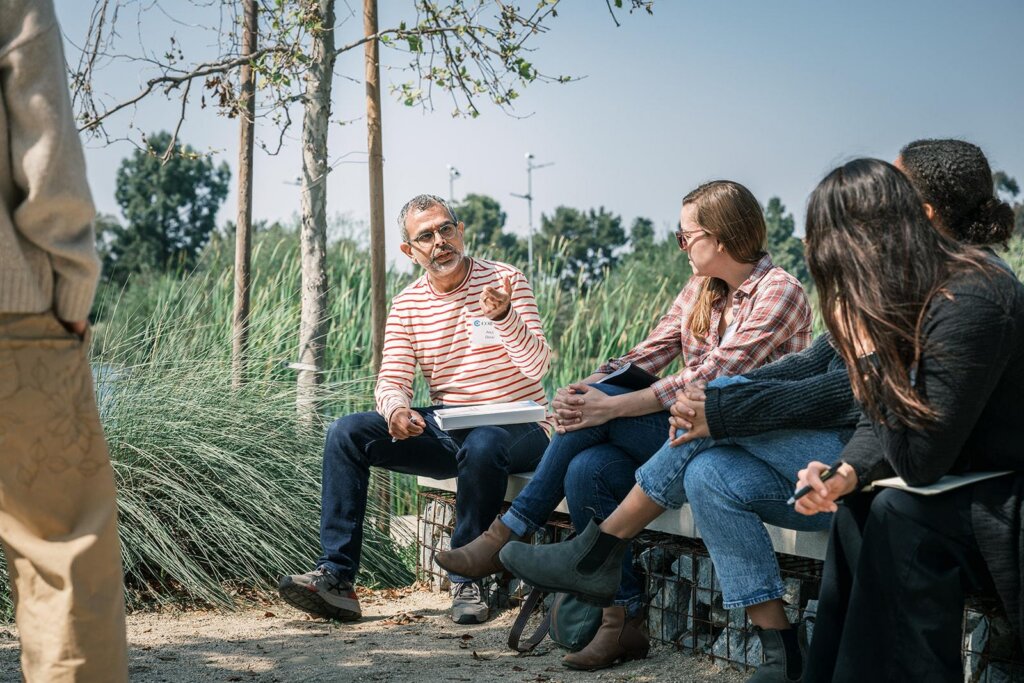
Leadership emerges when relationships become strong enough to transform shared concern into shared action.
Our culture has always preferred heroes to systems. Heroes simplify history. They give us protagonists, decisive moments, and compelling stories. We celebrate visionary founders, transformational governors, iconic activists, and extraordinary CEOs. We build biographies around individuals because individuals are easier to understand than the invisible networks that surround them.
Yet history tells a different story.
Silicon Valley did not become the world’s leading innovation ecosystem because one entrepreneur changed the world. It emerged over decades through the interaction of universities, federally funded research, venture capital, entrepreneurs, engineers, policymakers, invested organizations, and generations of innovators building upon one another’s ideas. The world’s most successful innovation ecosystem was never the product of one brilliant mind. It was the product of thousands of relationships that allowed knowledge, talent, capital, and ambition to move freely.
California’s leadership on climate policy tells a similar story. The state’s influence has been built through decades of collaboration among state and local governments, scientists, universities, businesses, utilities, investors, entrepreneurs, environmental organizations, tribal communities, activists, and advocates. Landmark vehicle emissions standards, clean energy innovation, and climate resilience efforts have endured because institutions with different interests found ways to align around a shared long-term vision.
No individual leader could have accomplished this alone, the ecosystem made it possible, and the lesson extends far beyond California. Individuals matter. Vision matters. Courage matters. But enduring progress almost never belongs to individuals alone, it belongs to the ecosystems they help cultivate.
Leadership lives between people: the case for relational leadership development programs
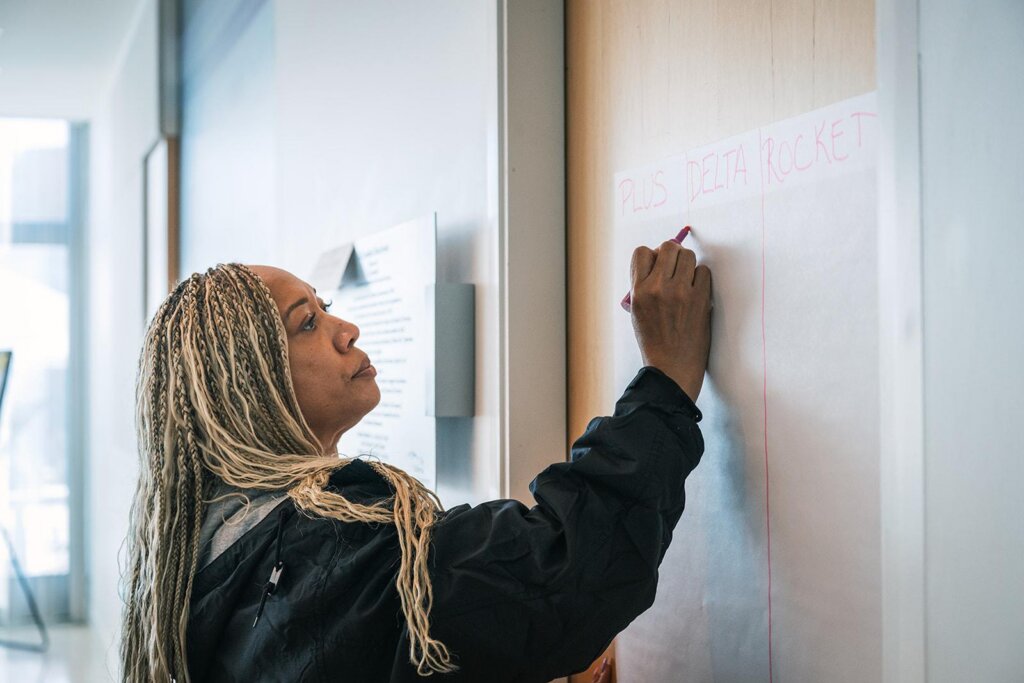
Communities solve complex problems when relationships across institutions become strong enough to support collective action.
This realization challenges one of the central assumptions of modern leadership development. For decades, we have focused primarily on strengthening the individual leader. We teach communication, executive presence, negotiation, strategic thinking, resilience, emotional intelligence, and ethical decision-making. These capabilities matter deeply. Every leader should strive to develop them.
Yet over decades of observing leaders across sectors, another truth has become increasingly clear: individual excellence, while necessary, is rarely sufficient. Communities solve complex problems when relationships across institutions become strong enough to support collective action.
The research reinforces what many practitioners have long observed. Harvard political scientist Robert Putnam has spent decades documenting the importance of social capital – the networks of trust, reciprocity, and civic engagement that enable communities to solve problems together. His work demonstrates that communities with stronger civic relationships tend to experience higher levels of institutional trust, civic participation, and collaborative capacity.
The Organisation for Economic Co-operation and Development has reached a similar conclusion, recognizing trust and social capital as foundational public assets that strengthen cooperation, institutional effectiveness, and societal well-being.
These findings point toward an insight that is both simple and profound.
Leadership is not the capacity of an individual. It is the capacity of a community to solve problems together.
Leadership does not exist only inside people, leadership exists between people.
A brilliant executive without trust cannot mobilize an organization. A visionary mayor without partnerships cannot transform a city. An innovative nonprofit without deep community relationships cannot create lasting change. Leadership emerges when relationships become strong enough to transform shared concern into shared action. Trust is not merely a leadership quality, it is civic infrastructure. By civic infrastructure, I mean the network of trust, relationships, institutions, and shared norms that enables communities to solve problems they cannot solve alone.
California's competitive advantage is relational
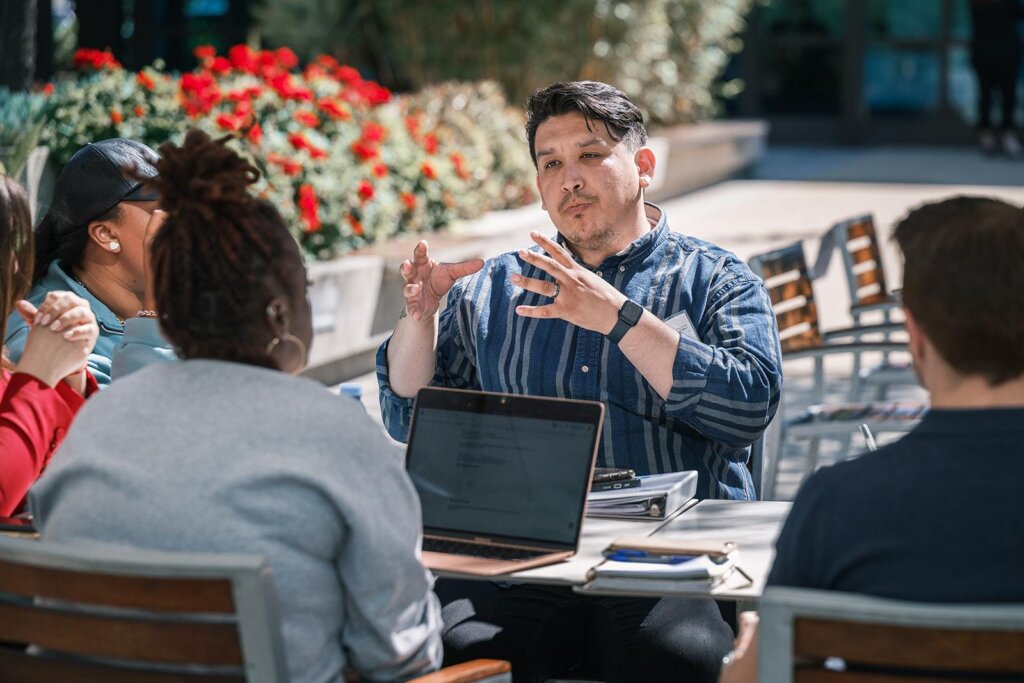
If our greatest challenges are increasingly collective, our approach to leadership development must become more collective as well.
California has never lacked talent. What has distinguished the state for generations is something even more powerful: its ability to connect talent across sectors, disciplines, and institutions. Economists often describe Silicon Valley as an innovation cluster. I think of it differently, it is a relationship cluster. Ideas move because people move. Innovation spreads because trust already exists. The same principle extends far beyond technology.
Preparing Californians for the workforce of tomorrow requires educators, employers, government, philanthropy, and community organizations to align around shared outcomes. Addressing housing affordability requires local governments, developers, financial institutions, nonprofit organizations, planners, employers, and residents working across competing interests.
Building a responsible future for artificial intelligence will require technologists, policymakers, educators, ethicists, employers, and civic institutions to collaborate in ways few societies have yet achieved. These are not simply technical challenges. They are relational challenges. Communities respond effectively because the relationships required for collective action already exist before a crisis demands them. That is a different way of thinking about leadership.
The measure of leadership is not how many people follow one individual. It is how many people become capable of leading together.
If our greatest challenges are increasingly collective, our approach to leadership development must become more collective as well. Developing stronger individuals remains essential. California will always need thoughtful executives, courageous public servants, innovative entrepreneurs, effective nonprofit leaders, and visionary activists.
But individual excellence is only part of the equation. The next generation of leadership development must also cultivate the ability to convene across differences, build trust before conflict emerges, navigate competing values, and strengthen relationships across institutions.
This is not a new insight for Coro. For nearly eighty five years, Coro has operated from a simple conviction: California’s future depends not only on the quality of its individual leaders, but on the strength of the relationships that connect them. Long before “cross-sector collaboration” became common leadership language, Coro was bringing together leaders from business, government, nonprofits, labor, education, and philanthropy – not simply to exchange ideas, but to build the trust and understanding necessary to lead together.
The goal was never merely to develop exceptional individuals. It was to strengthen California’s civic capacity. Today, that philosophy is less an aspiration and more a core necessity.
A new standard for leadership development programs in California

The implications of this understanding of leadership extend far beyond leadership programs. It challenges every institution that claims to develop leaders.
CEOs should ask whether their organizations are cultivating leaders who know how to build partnerships beyond their own walls. Public agencies should ask whether they are strengthening relationships that will outlast individual administrations. Universities should ask whether they are preparing graduates to navigate complexity with people whose experiences, incentives, and perspectives differ from their own. Philanthropy should ask whether it is investing only in talented individuals, or also in the civic infrastructure that enables communities to thrive.
And every organization should ask itself five questions:
Are we developing leadership as an individual capability, or as a collective capacity?
Are we preparing people to succeed within or across silos and boundaries?
Are we measuring individual achievement or collective capacity?
Are we building trust before we need it?
Will our work leave behind stronger civic infrastructure than we inherited?
California has always invested boldly in the infrastructure that powers its future. We build highways because mobility matters. We invest in universities because knowledge matters. We modernize ports because commerce matters. We strengthen energy systems because resilience matters. It is time to invest with the same seriousness in the civic infrastructure that allows people, institutions, and communities to solve problems together. Because no technology, no policy, and no extraordinary individual can substitute for a society that has lost the ability to work across differences.
Civic infrastructure is not a luxury. It is the foundation upon which every other investment depends. The future of leadership development in California will not be defined by how many exceptional individuals we produce. It will be defined by whether we have the courage to invest in the relationships, trust, and civic capacity that make communities exceptional.
Because the future will not belong to the communities with the strongest heroes. It will belong to the communities with the strongest civic infrastructure. Let’s start building it.
About Coro’s leadership development programs
For nearly eighty-five years, Coro California’s leadership development programs have brought people together across generations and sectors to build the kind of civic infrastructure our communities and democracy needs. Our portfolio spans the full arc of a leader’s journey: youth programs like Exploring Leadership and the Youth Fellows Program introduce high schoolers to civic life; the Fellows Program in Public Affairs prepares early-career professionals to lead with purpose; and networks like the Lead Fellowship, Women in Leadership, and the Executive Leadership Network sharpen the leadership development skills of established professionals and executives across sectors.
We also offer issue-based leadership networks — including the Affordable Housing Leadership Network, Climate Resilience Leadership Network, and Housing & Houselessness Leadership Network — that convene leaders around California’s most pressing challenges, alongside the Board Leadership Training Accelerator and Nonprofit Executive Transition Program for organizational capacity building.
For organizations seeking a tailored approach, Coro X delivers custom leadership training built around your team’s specific goals.
Explore all of Coro California’s leadership development programs to find the right path for your leadership journey.

Natalie Samarjian
Ready to strengthen your leadership impact?
Explore programs designed to equip leaders with the skills to drive change.