
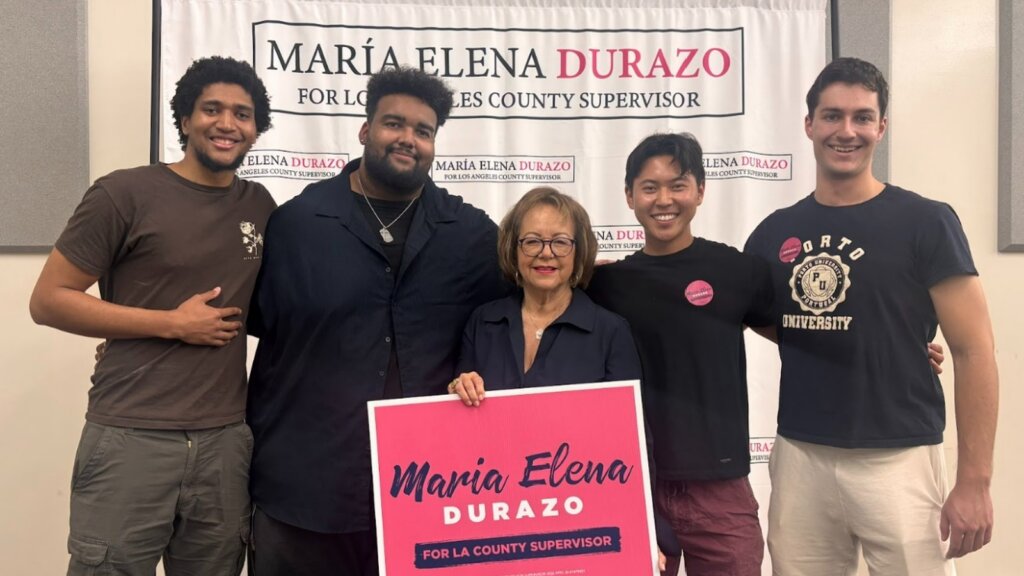
Every cohort in Coro California’s Fellows Program in Public Affairs arrives with a different purpose, and leaves having reshaped what that actually looks like in practice. In this alumni reflection, one Coro Fellow looks back on the placements, connections, and quiet moments of leadership that turned a year of uncertainty into a clearer sense of purpose.
Coro gave me the space to reflect, grow alongside my cohort, and shape myself into the leader I aspire to become.
Why I applied for the public affairs fellowship
Take us back to the moment you decided to apply for the Fellows Program in Public Affairs. What were you searching for — in your career, your community, or yourself — and what did you hope the program would help you find?
When I think back to applying for the Coro Fellows Program, I can distinctly remember the excitement I felt just scrolling through the website. What stood out immediately was the wealth of experience the program offered. The idea of completing four or more consecutive placements across different fields, all in one year, was something I couldn’t pass up.
I was at a point where I knew my purpose, but I didn’t yet have a clear picture of how to turn that passion into something real and productive. Academia had given me a foundation, but I knew there were things you could only learn by actually being inside the systems you want to change. Coro felt like the bridge between knowing your why and figuring out what you want to do with it.
Beyond the placements, what drew me in was the community the program builds. The idea of going through something this intensive alongside a cohort of equally driven people, supported by alumni who are genuinely invested in your growth, felt rare outside of academia. I came in hoping the program would give me clarity on what my career path should look like. I believed that after enough work experience and exposure, I’d have the clarity I needed to start building my future.
Looking back, I’m leaving with less clarity than I started with, but in the best possible way. Every relationship I built and every connection I made introduced me to a job, a field, or a career I had never considered before. In the end, the program didn’t narrow my path; it opened it up in ways I didn’t expect.
The connections that shaped my public affairs fellowship experience
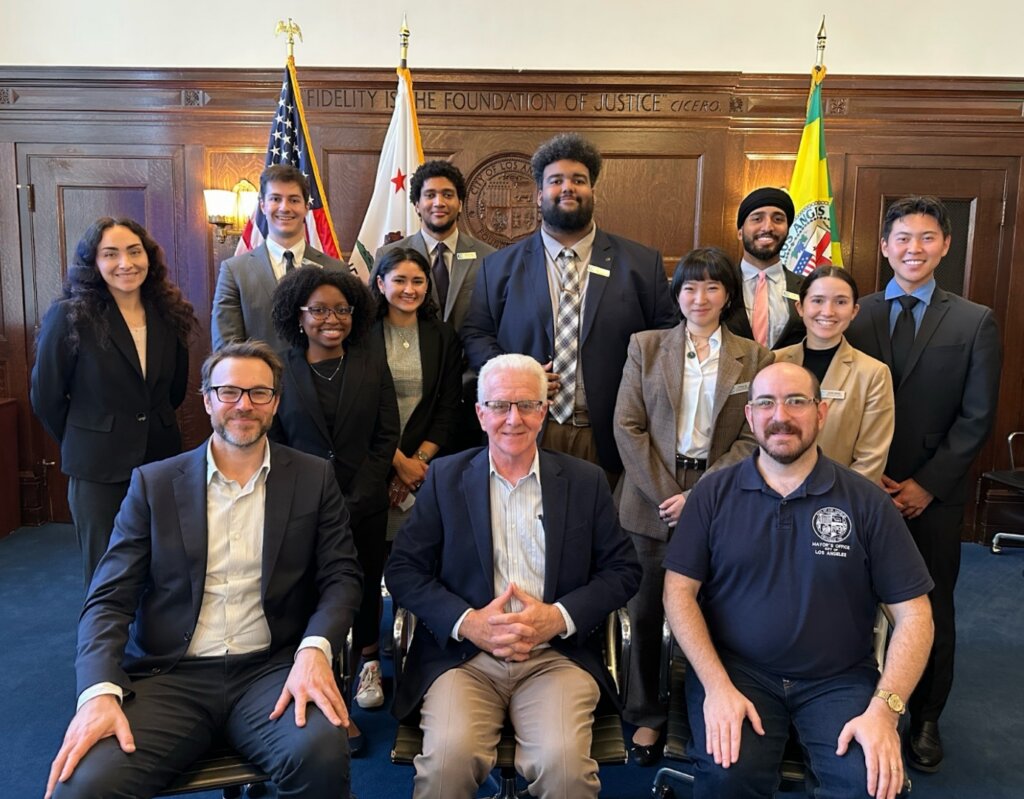
Tell us about a Coro connection you met through the program who played a key role in your personal or professional development. What did they offer you that you didn’t know you needed?
The Coro Fellows Program in Public Affairs has provided me with a plethora of unique experiences and learning moments throughout my placements and various Coro activities. From learning how to better manage my time in a high-stress environment to understanding how to effectively collaborate with a team, every new Coro connection that I made gave me a new perspective and an opportunity to reflect on my own development.
One connection that stood out to me in particular was during my time working with the LA Mayor’s Office of Major Events (OME) under Daniel Rodman for my Government Placement. It was under Dan and the OME team that I finally began to find my footing as a working professional, accepted as an equal. Coro had given me the ability to enter rooms that I had never been in before, which both excited and intimidated me at the same time. While I had been chasing feedback and constructive criticism from my colleagues and peers to improve, Dan had offered me the space to sit with myself and reflect on my work as a contributing member of the team, outside of just being a Coro Fellow.
That space and assurance allowed me to reflect and grow in ways I hadn’t anticipated. That shift was small on the surface but significant underneath. It taught me that growth isn’t always about getting more feedback or constantly trying to change. Sometimes it’s about slowing down long enough to trust the work you’re already doing and recognize you’ve made it this far for a reason.
Redefining leadership through the public affairs fellowship
Leadership can look like a lot of things — running a meeting, asking a hard question, translating between communities that don’t speak the same language. What does leadership look like for you now, and how has that definition evolved this year?
Coming into the Fellowship, my definition of leadership was pretty narrow. I thought it was mostly about being out front, having all of the answers, and driving the room toward a decision of your choosing. That picture started to change pretty quickly. Over the course of this year, I started recognizing leadership in much quieter and more unexpected moments. In someone asking the question that no one else in the room wanted to ask. In being the person who could bounce between groups and build bridges between them. In knowing when to step back so someone else could step forward, and doing that without making it a thing. The Fellows Program placed me in enough different environments, across sectors, issue areas, and communities, that I had to keep adjusting how I showed up.
What I found is that there is no single type of leader, in the same way that there was no single playbook that worked everywhere. Working alongside the cohort and examining our different leadership styles only further reinforced that point. That experience and flexibility ended up teaching me more about leadership than any single role could have. I also learned that leadership doesn’t always have to be visible in the moment. For me now, leadership is less about authority and more about being genuinely useful, staying present, and being willing to do the work that actually moves things forward even when nobody is watching.
That shift in how I see it has been one of the most meaningful parts of this whole experience.
Unexpected skills built during the public affairs fellowship
What’s a skill or muscle you built during the program that you didn’t expect to — something that isn’t on the official curriculum, but that you’ll carry with you?
One skill that I hadn’t expected to develop over the course of the program was how to use “short-term memory” effectively in my growth and development. What I mean by that is learning how to process a mistake or a hard moment, take what’s actually useful from it, and then let it go and keep moving. That sounds simple, but it took real practice.
Early in the Fellowship, I’d fixate on things that had already passed, a moment where I felt like I fell short or a situation I wished I’d handled differently. What the pace and intensity of this program taught me is that there is always a new day with new work, new challenges, and new deadlines, and you genuinely cannot show up fully for what’s in front of you if you’re still carrying what’s behind you.
That’s not about avoiding accountability or brushing things off; it’s about understanding where reflection ends and where unproductive behavior begins. The Fellowship moves fast, and learning to keep up with it mentally, not just logistically, was something I had to continuously improve at. That balance is a skill I didn’t walk in with, but it’s one I’ll carry long after the program ends.
What’s next for you — immediately after the program, and in the longer arc of the change you want to make? How has the Fellowship shaped the “why” behind that work, not just the “what”?
Immediately after the Coro Fellowship, I hope to work on and support campaigns for the upcoming 2026 election. Throughout the program, I have worked on and volunteered for campaigns. This experience has helped me appreciate the importance of a well-executed campaign for civic engagement. Whether you vote for people or policies, elections serve a vital role in our democratic system. Each campaign provides real insight into how that system functions as a whole.
In the long run, I plan to continue supporting meaningful change across the LA region. More specifically, I want to push for greater development of affordable housing and accessible transportation. These two things touch just about every part of daily life for working families here. The work that excites me most lives at the intersection of urban planning, project development, and government affairs. This is where policy meets the physical world, and decisions made in conference rooms show up on street corners and in neighborhoods. I have grown up witnessing firsthand what both poor planning and good, thoughtful policy can do for a community. That contrast is what drives me.
The Coro Fellowship has helped me build that combination of on-the-ground community understanding and cross-sector fluency required for this line of work. I know how to move between rooms, translate between stakeholders, and stay focused on the people most affected by the decisions. Whether that looks like working in government on public affairs, supporting organizations and projects through public affairs consulting, or guiding development through project management that reflects the real needs of the communities they serve, I want to be close to work that shapes how people actually live. Los Angeles has so much potential, and I’m ready to make a difference in a way that sticks.
About the Fellows Program in Public Affairs
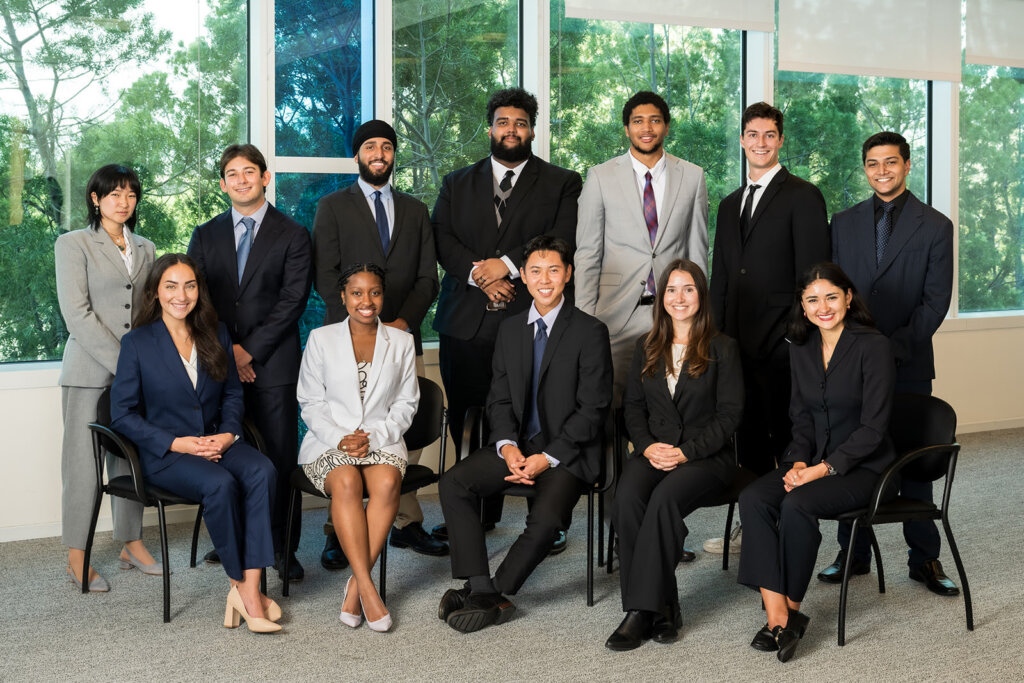
The Fellows Program in Public Affairs is Coro California’s flagship public affairs fellowship offered in both the Greater Los Angeles Area and the San Francisco Bay Area. Fellows rotate through multiple professional placements across sectors like government, nonprofit, labor, private industry, and electoral politics, working directly with teams on high-profile assignments. Alongside their placements, Fellows take part in Focus Weeks exploring regional civic issues, closed-door interviews with influential leaders, and weekly leadership seminars building a toolkit in adaptive leadership, systems thinking, and stakeholder analysis — all while joining a lifelong network of more than 15,000 Coro alumni.
Ready to write your own reflection? Applications for the next Fellows cohort are now open for both the Bay Area and Los Angeles — apply today, nominate someone you think would thrive in the program, or schedule a call with our team to learn more.
John Barber III
Ready to strengthen your leadership impact?
Explore programs designed to equip leaders with the skills to drive change.