
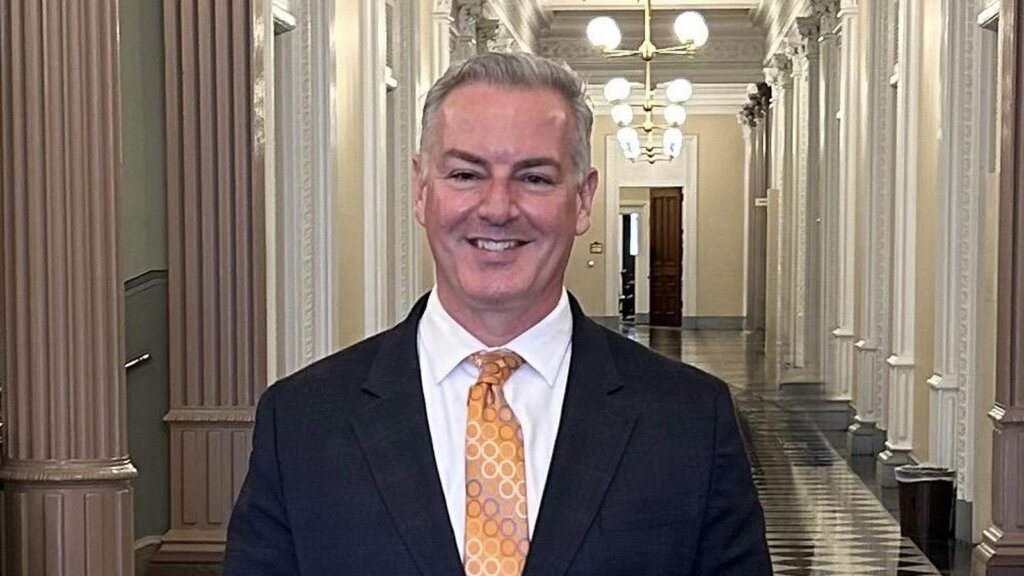
Aaron Carruthers has spent more than a decade as Executive Director of the California State Council on Developmental Disabilities, leading the largest community needs assessment for people with disabilities in state history. But his path there started in 1997, as a graduate of Coro California’s Fellows Program in Public Affairs in San Francisco. In our conversation, Aaron reflects on how Coro philosophies from the Fellows program became his lifelong operating system, and why he’s stayed connected to Coro ever since, as a monthly donor, field faculty mentor, and Alumni Council member.
That’s the real lesson 30 years after the fellowship. Give before you think you can afford to. Open the doors before you think you have a standing to. Understand that the people who shape the Coro network aren’t the ones who waited for a title. They’re just the ones who kept showing up.
After 12+ years as Executive Director of the California State Council on Developmental Disabilities, what part of the work lights you up today?
It’s the same that has always excited me about it – possibility. It’s about coming to work every day and saying, what can be different? What in the world can be better?
Some of the most satisfying pieces are when someone realizes that their lived experience is really the expertise the system needs. Your experience is your expertise. The whole reason this organization exists is so decisions are made with people and not for people. That’s a core Coro philosophy.
Over the last year, we’ve engaged in community conversations to find out what’s important to people: how would they like this system to work for them and what could be improved. I held town halls over last year, and we set up community surveys. 4,200 people responded.
I’m deeply grateful that we have enough of a history and connection with the community to have the trust that anyone would say, here are my thoughts. Anytime someone does that, I see it as a gift, and we have a responsibility to do something with it. This is the largest community assessment of needs in California for individuals with disabilities. That will shape our work plan for the next 5 years.
From Coro’s public affairs fellowship to statewide leadership
Take us back to 1997, when you’re graduating from the Fellows Program. At that moment, what were your hopes and aspirations?
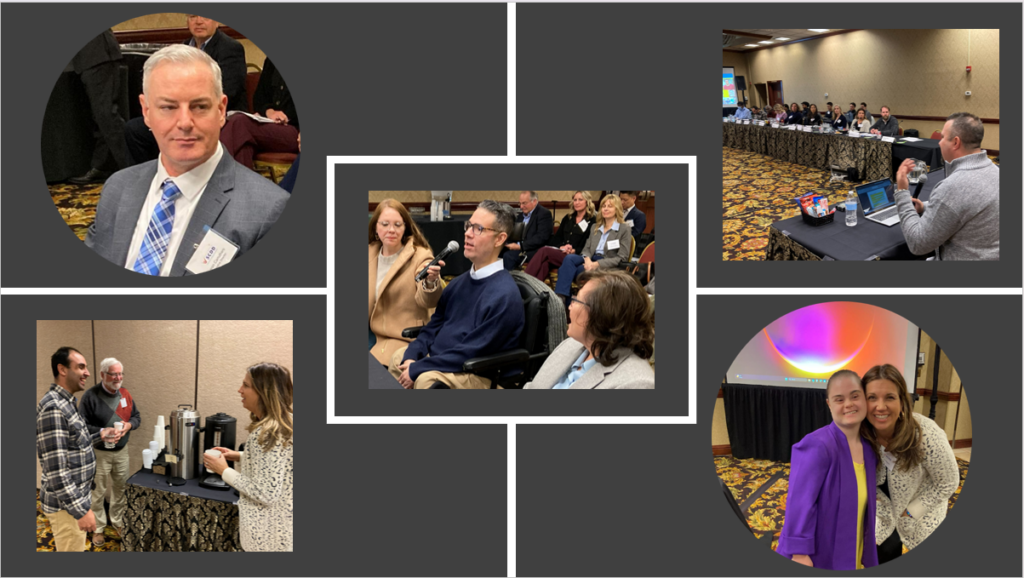
When I finished Coro, I couldn’t have planned this professional journey. I wanted to continue to learn. I wanted to be a student of community, structures, and systems. We’re taught the map is not the territory; that’s a Coro tool. My hope graduating wasn’t that I’d get a specific job or a specific title. It’s that I would be able to find career paths that would let me stay a student of the territory.
Inside the systems that serve people who really don’t have lobbyists is where it landed.
Looking at your career arc since — California State Assembly, California Department of Justice, State Senate, the Department of Corrections and Rehabilitation, the Mental Health Services Oversight and Accountability Commission, and now SCDD — where has Coro shown up along the way?
I think it’s a little bit less about a moment and more like my operating system, like my DNA. I’ve been very grateful to have the different experiences I’ve had.
Every one of these stops has required the same core Coro skills. You walk into a room or an issue you don’t know and you’ve got to figure out fast: what are the issues, who’s actually holding influence in the space versus who’s holding a title, and how do you build enough trust to be effective. That’s what I keep doing. That Coro operating system just continues to show up for me throughout the career arc.
Redefining leadership: measuring impact by who else is empowered
How has your growth as a leader changed outcomes around you — at work, at home, or in the communities you serve?
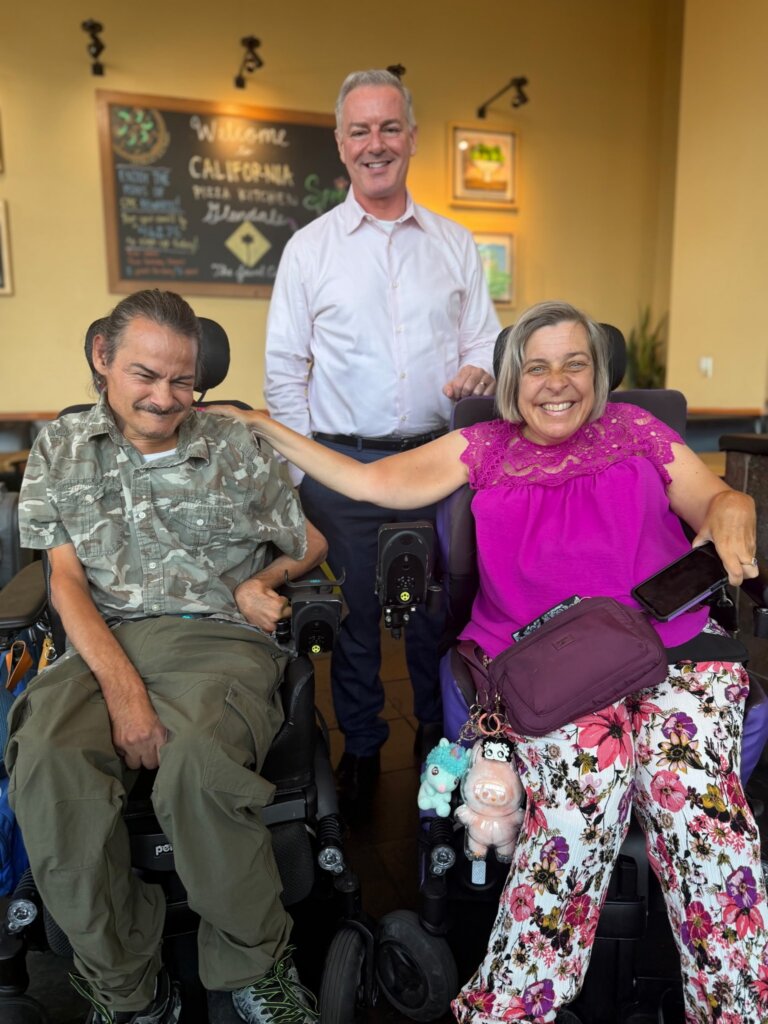
Early in my career, I measured leadership by how much I personally knew, how much I could push through and accomplish, or how much I could endure. Somewhere along the way, I really started measuring it differently — by how much better others around me are functioning, how much less I’m the one who’s carrying it.
The recent example would be this year we had six new council members. I run a council, there’s 31 governor-appointed council members. Working with them to support them into growing into their leadership roles and their potential is hugely satisfying. Watching them find their own voice.
I’m seeing how it’s not me who’s holding more — that’s not the measure of leadership. The measure of leadership is how much are people at the table holding, and how much ownership exists there.
At home it shows up too. I’m a child of parents with developmental and other disabilities. I’m a person with disabilities. I’m a parent of a young man with disabilities. Any of these issues I’m talking about, I’m just talking about family. I bring some of that to parenting, advocating with my son rather than for him whenever I can, because it’s really the same shift. I’m asking the systems to make the best decisions with him and not for him.
Ways to get involved with Coro
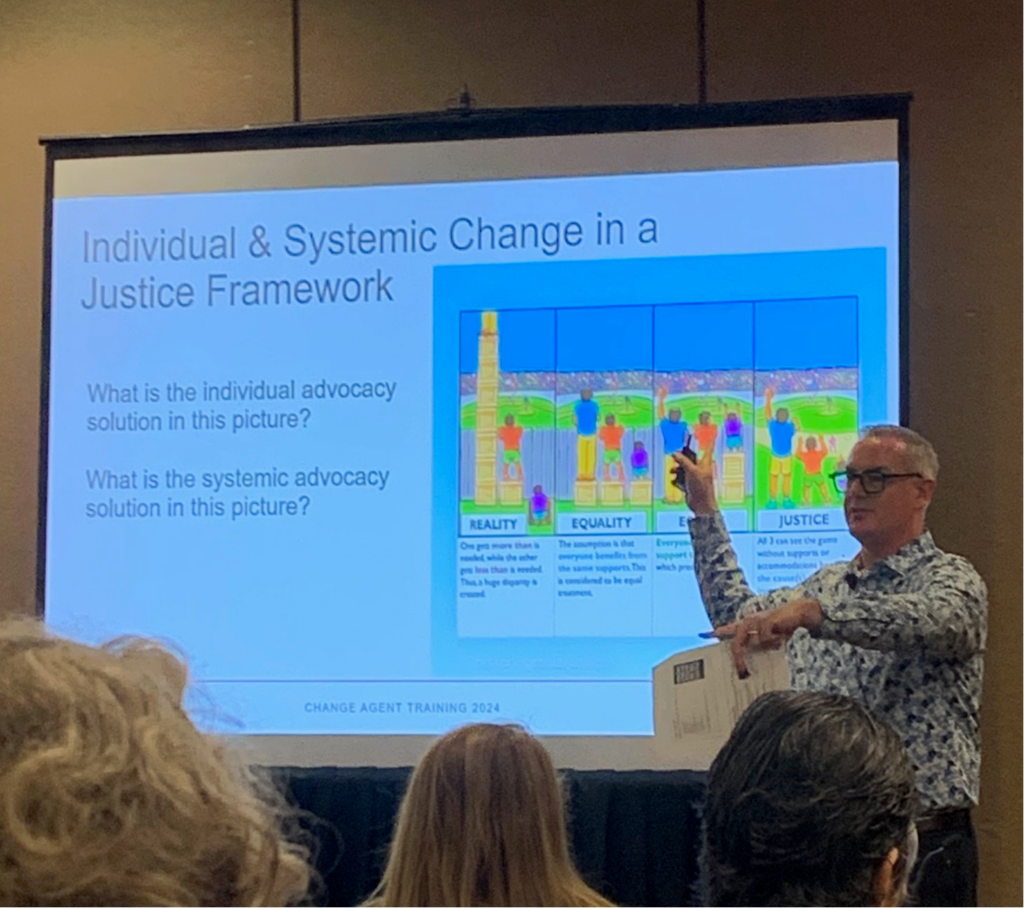
Most alumni pick one way to stay connected to Coro. You stay connected in several — giving monthly, opening your doors to Fellows as interns or hires, sitting on the Alumni Council. What pulled you into each of those, and what’s kept you there?
I think it’s pretty simple — when you get, you give. Coro gave me so much, and Coro gave me more than one thing. So I’ve looked for different ways to give back.
Giving monthly — it is hard to run a nonprofit organization. Every donation matters and every recurring donation matters. It matters in morale when you see donations come in every month from the same person. It also matters when you’re fundraising with other entities — how many recurring donors you have to show as a measure of strength for why other entities should also give money. So there’s morale, but there’s also being able to leverage that.
Opening doors to other fellows to hire them, or being field faculty — there’s so much that can happen in that field-faculty dynamic. I often approach my role as helping not only systems achieve their potential, but individuals achieve their potential. It’s a fantastically rewarding experience that I get a lot out of.
David Delgado, a 2025 Fellows Program in Public Affairs alum, had an internship placement at the State Council on Developmental Disabilities, and is now on staff working with Aaron.
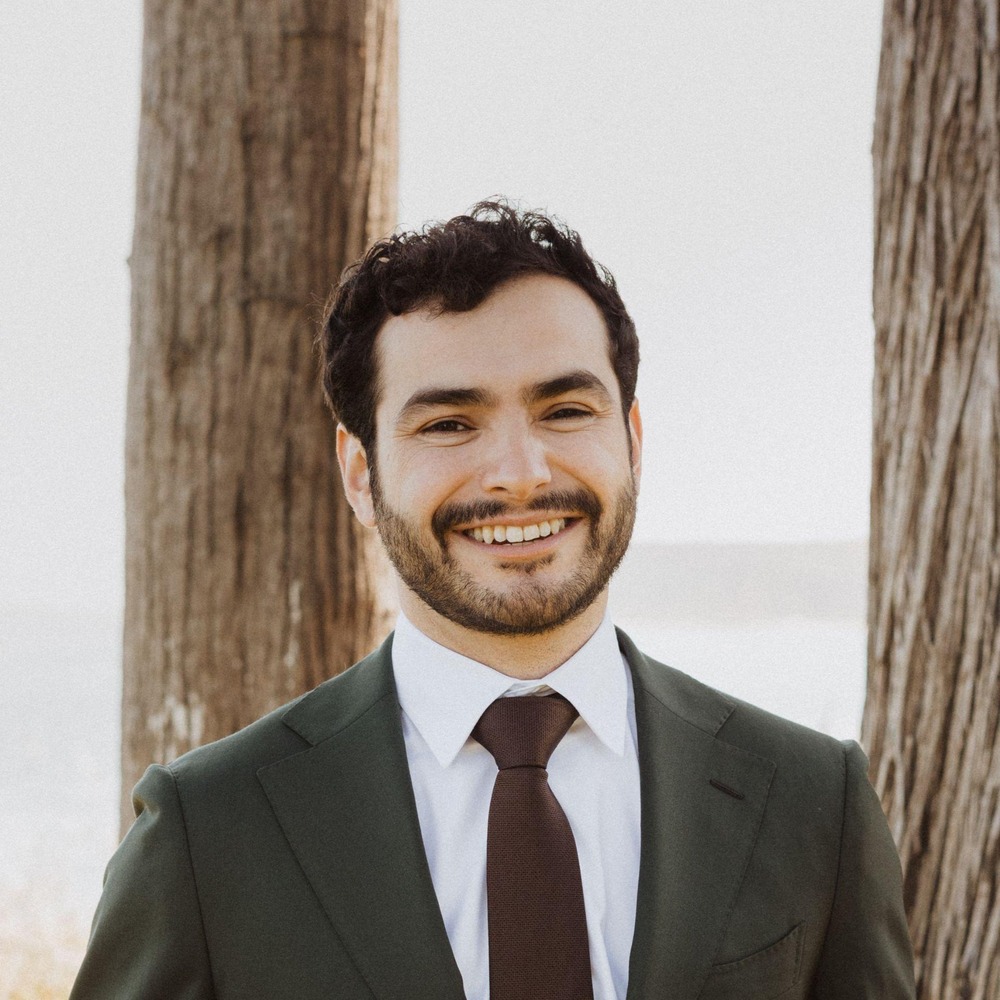
My placement at SCDD coincided with the disastrous Eaton and Palisades fires that devastated Los Angeles in early 2025 as well as Medicaid cuts that were being voted on as part of H.R. 1. It was a dynamic experience that showed me how public, private, and nonprofit sectors work together to address the many challenges our communities regularly face, as well as the unprecedented moments that require steadfast leadership. It was also a deeply rewarding experience due, in large part, to Aaron’s leadership and commitment to the Coro Fellowship.
During my placement, I had the opportunity to ride alongside Aaron as he made his annual trip to Eureka, California. Aaron makes it a point to visit each of the 31 governor-appointed Councilmembers across California each year to understand how disability service systems could be better serving the community in pursuit of SCDD’s mission to make California the best place for people with disabilities and their families.
Along the way, he took calls from legislative staff looking to partner on policy, met with multiple disability coalitions to strategize around looming Medicaid cuts, collaborated with the other state councils to organize wildfire aid, and, of course, gave me feedback on a training deck I was developing as part of my placement project. All the while, he challenged me to think about what the purpose of government was and took the time to share his experience working as a civil servant with me.
That trip captured what I’ve come to appreciate most about Aaron’s leadership. Aaron can navigate an enormous amount of diverse challenges with grace and decisiveness, while never losing sight of the people around him. He takes the time to connect with his people personally, make them feel supported, and remind them why the work matters.
In response to the fires and Medicaid cuts, I saw Aaron quickly galvanize stakeholders across multiple sectors locally, statewide, and nationally to address both issues. He partnered with SCDD staff and other councils to organize the delivery of emergency supplies for people with disabilities and their families that were impacted by the fires, facilitated staff partnerships with local fire departments to develop procedures that considered the functional and access needs of people with I/DD for future emergencies, and worked with legislative staff to ensure they were kept apprised of the impacts the fires had on the DD community. At the same time, he held statewide town halls to share information with the DD community on what Medicaid cuts might mean for them and how they could take action, never forgetting that these cuts would have an impact on his own staff and holding weekly huddles to ensure agency staff were equipped for what might be coming. It was nothing short of inspiring to see him work with so many diverse stakeholders and strategies to help SCDD maximize its impact and support to affected families at that time.
When I have a fellow, I want them to leave with their life changed. It’s a high standard, but that’s what happens during Coro that’s so amazing. You have these moments where you see your life, choices, options, and possibilities in completely different ways and come out of the program clear. You get so much out of it, and I take on that responsibility as field faculty.
Then as a member of the Northern California Alumni Council, it’s how do we all find out who each other are, and do good things together.
Alex Fuentes, a 2022 Fellows Program in Public Affairs alum, had an internship placement at the State Council on Developmental Disabilities, and volunteers alongside Aaron on the Northern California Alumni Council.
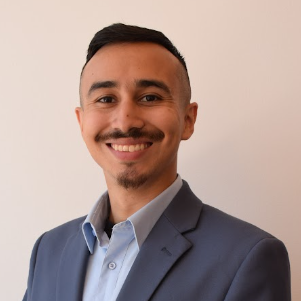
My placement with the State Council on Developmental Disabilities gave me a unique look inside California’s systems for people with intellectual and developmental disabilities (IDD). As someone with a developmental disability, my work felt deeply personal and meaningful. In just six weeks, my cohort mate Zach Manuel and I developed a 53-page comparative analysis of how California is serving people with IDD, including identifying metrics that could help inform spending and legislative priorities.
I appreciate how Aaron entrusted us with this work, and his earlier advice continued to ground my learning. The placement changed how I understand systems-level work in my home state of California and expanded my sense of my own capacity to contribute to policy change.
If a Fellow from 1997 sat across from you today, what would you want them to know about staying engaged with Coro for the long haul?
You really don’t have to wait until you have something impressive to report back. The value is just staying connected. It isn’t proving that the fellowship made you in some way. It’s really that the network just gets stronger every time someone stays in it — honestly, including the years when you’re struggling, including the years when you’re unsure if you’re doing it right.
This past year, in our own professional world, reminded me why the long haul matters so much. We lost two amazing advocates who’ve been in the field for decades. One was a council member of ours, Eric Ibarra, an activist out of Stockton, a friend. The other was internationally known, from San Francisco — Alice Wong, an author and activist who was recently a MacArthur Fellow.
Their advocacy didn’t come from one big moment. It came from just showing up, year after year. And you keep doing it after it’s exciting or easy or new — you do it when it’s hard and when you’re confused.
A vision for the future
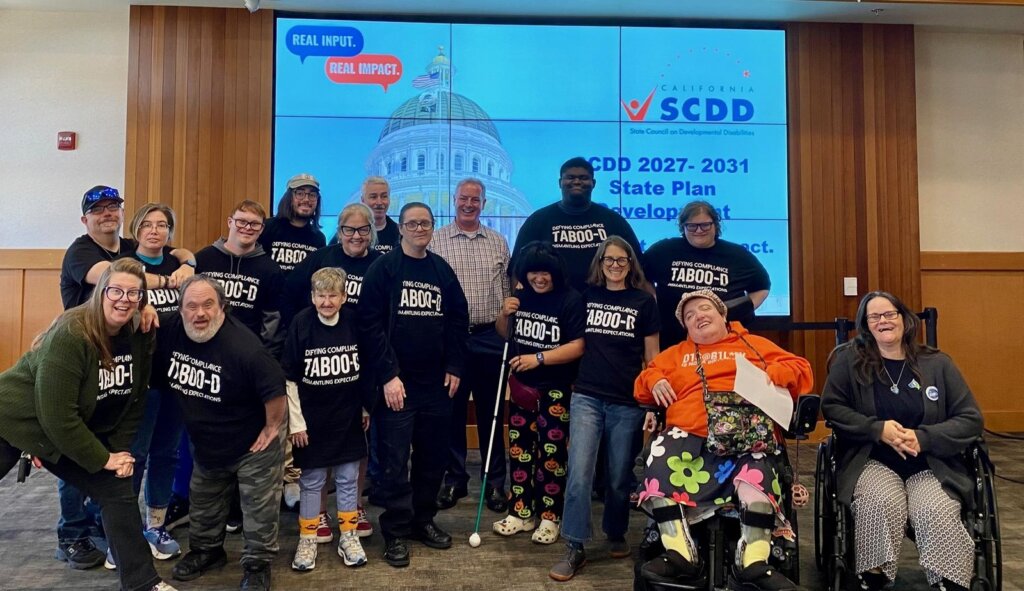
What’s your vision for a stronger California, and what role do you see yourself playing in it?
My why is really clear. It’s to make California the best place for people with developmental and other disabilities. That means people with disabilities are shaping the decisions that affect their lives and systems are serving people well. It means support systems see people as a whole person — not divided up into education and rehabilitation and home and community-based services, or whatever programs I may be using to succeed.
If California is the best place for people with developmental and other disabilities, that also means it is a humane place — a place that sees people’s dignity and value, of all abilities and all types. That is the world I want to create.
Coro’s public affairs fellowship: how to get involved
Aaron’s story began nearly 30 years ago with Coro California’s Fellows Program in Public Affairs, a public policy fellowship that immerses emerging leaders in California’s civic, government, and nonprofit sectors. It’s the same program shaping the next generation of leaders today.
Interested in the Fellows Program in Public Affairs?
Learn more about the program and how to apply. Applications are now open.
Nominate someone in your network.
Want to learn more about the Alumni Council?
Email Henry DeRuff at hderuff@coroca.org to learn more about our Northern California alumni council and getting involved with your alumni network.
Inspired by Aaron’s story of giving back?
Like Aaron, you can support the next generation of leaders with a monthly gift. Every recurring donation, no matter the size, strengthens Coro’s programs. Become a monthly donor.
Gohar Chichian
Ready to strengthen your leadership impact?
Explore programs designed to equip leaders with the skills to drive change.