
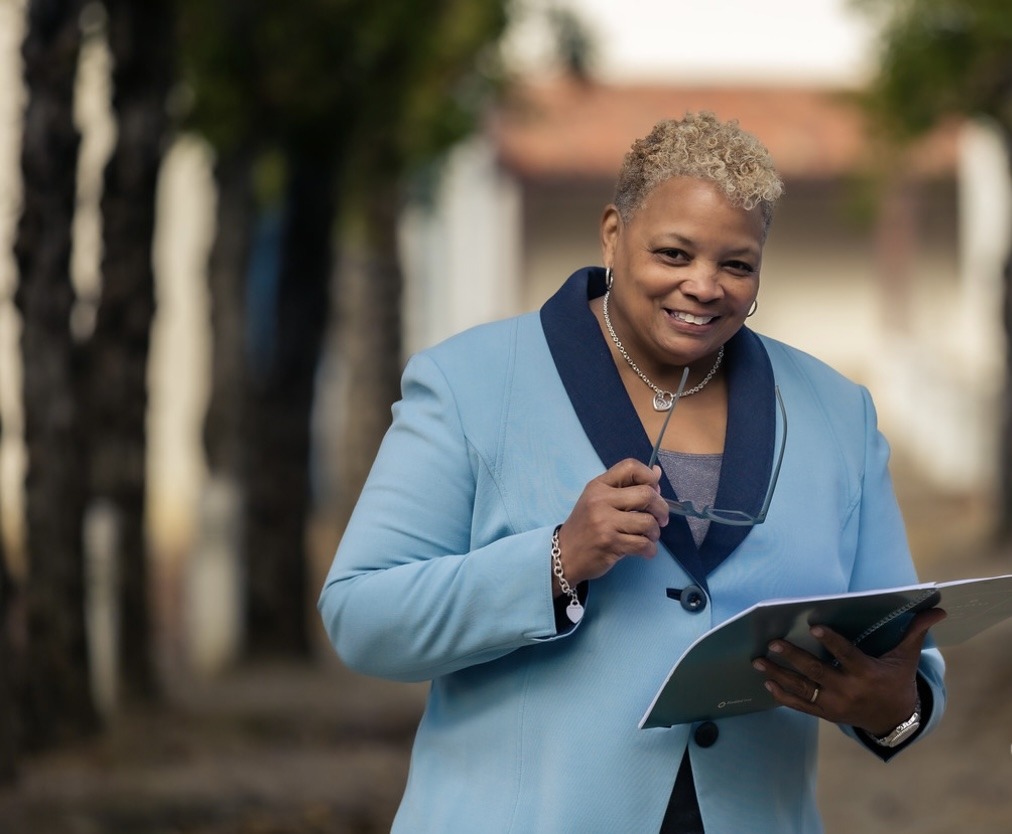
As Executive Director of the East Oakland Boxing Association (EOBA), Dawna has created a safe space for Oakland youth to come together as a community. A Lead Fellowship Bay Area alumna, Dawna was recently on the other side of Coro’s leadership development experience when she hosted Rosie and Dhairya, two of our Exploring Leadership youth fellows this summer.
In this Q&A, she reflects on what it means to sit on the other side of the Coro experience, how the Lead Bay Area Fellowship shaped the way she leads today, and her vision for a more civically engaged California.
Being on the other side of this experience through Coro has shown me that leadership development is not about giving someone your version of leadership. It’s about helping them realize what already exists within them and giving them the support and practice to strengthen that skill that they have. The real surprise is that when I’m creating that experience for them, they’re creating that experience for me too.
Tell us about your work as Executive Director of the East Oakland Boxing Association (EOBA). EOBA runs workforce development, food justice, financial literacy, and mentorship programs for a community that’s been showing up for 40+ years. What part of that work are you most energized by right now?
What I’m most energized about is that we’re moving away from boxing. I think the one thing that I’m probably most interested in is that we’re becoming a hub for the community, which is exactly what this place was really meant to be.
About 175 young people come through our doors each year to work through all these different community partnerships. They do an internship here, and then they all want to work here.
The fact that there’s young people who come here and intern, don’t want to leave, and all they want is just a safe place to go, and they felt that this is that place — that’s what energizes me every day. It’s the partnerships that we’re making to make this space accessible for so many young people.
From Lead Fellowship Bay Area Alumna to hosting Exploring Leadership Fellows
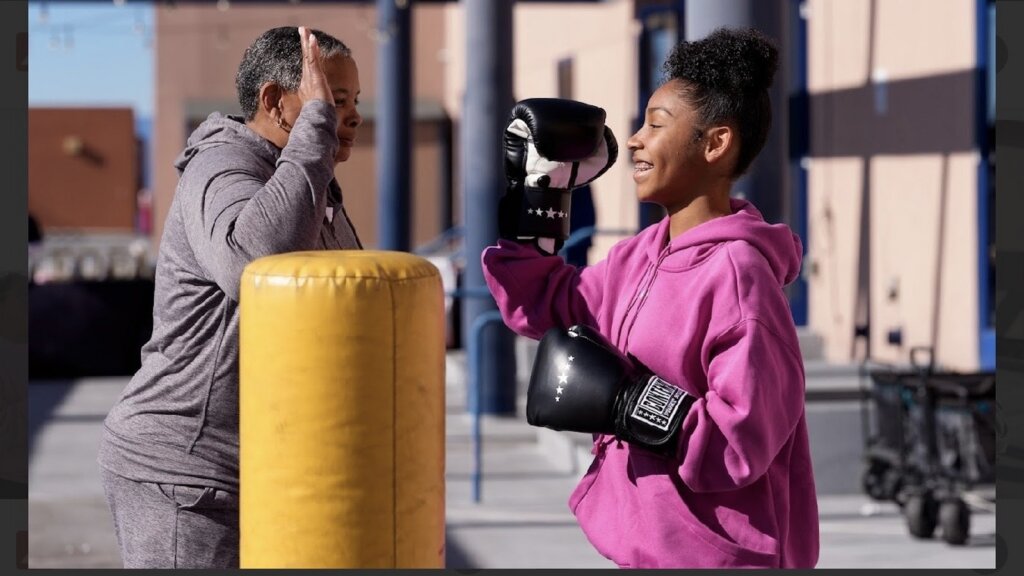
Today you’re on the other side of the Coro experience — hosting two Exploring Leadership fellows, Rosie and Dhairya, at EOBA this summer. Talk through the projects they worked on. What did you observe from the Youth Fellows?
They did a lot in the small time that they were here. We got to dropship pallets of materials, like notebooks, crayons, pencils, and glue sticks, and Rosie and Dhairya worked with a team of other interns to put together 500 backpacks, for a community-wide backpack event for 2,000 kids total.
Every year we do an event in conjunction with Youth Alive and we put together a Black August event. Black August started in 1979 with incarcerated members of the Black Guerrilla Family in San Quentin State Prison. It’s a way to honor the deaths of Jonathan Jackson and George Jackson, who were really influential in prison reform. Black August is observed as a way to bring observance of systemic racism, oppression, and harsh conditions faced by African Americans and Black political prisoners in the United States.
We educate people about the foods that African Americans eat and why they’re so prevalent in the Black community. Black Americans had to move through the country in the early days, needing proteins that would travel well without refrigeration and without hotels or diners available to them, especially in the South. We do what we call a ‘taste of history,’ talking about Black-eyed peas, Johnny Cakes, and fried chicken.
We also talk about financial literacy and why Black and brown people are preyed upon by check-cashing places and buy-here-pay-here locations. We talk about being registered to vote and not being apathetic about civic engagement, as well as mental health, which has always had a stigma around Black and brown people.
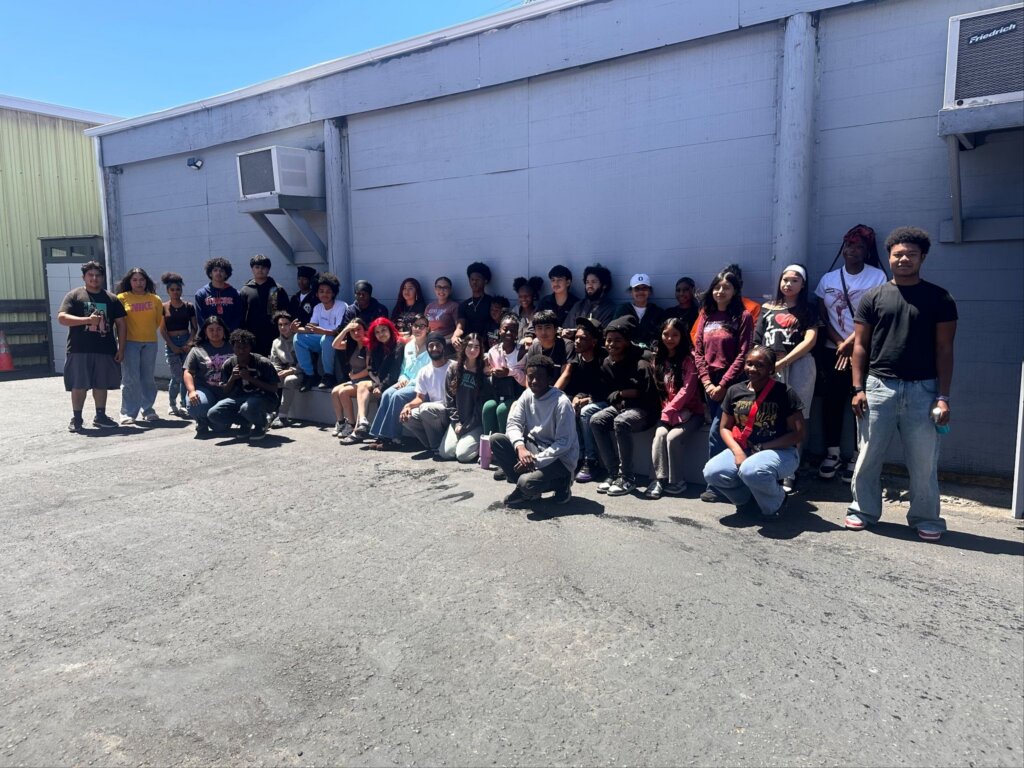
Rosie and Dhairya made posters on the history of the food and Black August. They put these great posters together so people can learn about Black August, financial literacy, and why it’s important to vote.
Our entire organization is run by youth, so Rosie and Dhairya were totally surprised when they got here, like, why does everybody look like us? That really made them fit in. They got curious about how everybody got here and how they have a role. They asked, how about we film them and put together a little documentary? I told them their final presentation needed to be about their Coro principles and what they learned. They did a presentation on one of the pillars, and then showed their video as their final project.
What’s it like to be the one creating that leadership development experience now, after having gone through it yourself in the Lead Bay Area program?
I think the beautiful thing about my job is that I get to create leadership opportunities for young people every day. We are a worksite for many other organizations and they send all their people to us. I find out what these young people are interested in; a lot of times I build a job description around their interests. Sometimes the job descriptions are already built and they fill in those roles.
What surprised me after going through the Lead Bay Area Fellowship in 2024, and now being able to provide these leadership opportunities to young people, is how much I continue to learn about myself in the process. Some days I have to stop and ask, who’s teaching whom here? My role is to create conditions for young people to discover their own leadership. I think that is honestly one of the most beautiful things about my job. That means giving them meaningful responsibility, trusting them to make decisions, and allowing them to fail, too. When something doesn’t go as planned, they pick themselves up, dust themselves off, and re-examine what happened and try again.
I found myself drawing lessons from Coro I wasn’t sure I would ever use. I didn’t always know where those tools were gonna fit, or when I was gonna need them. Now they show up in how I guide a conversation to build a team, give feedback, or make room for a young person to find their own answer.
When I went through the Coro program, I thought I was a certain kind of leader. I later found out I am not that kind of leader at all. So I get to watch that with these kids. They come in with these preconceived notions. I learned that about myself by watching a lot of these young people come through the program. Letting them go through those exercises and find out what kind of leader they are, the same way I did in the Coro program.
How Coro’s leadership development programs build lasting networks
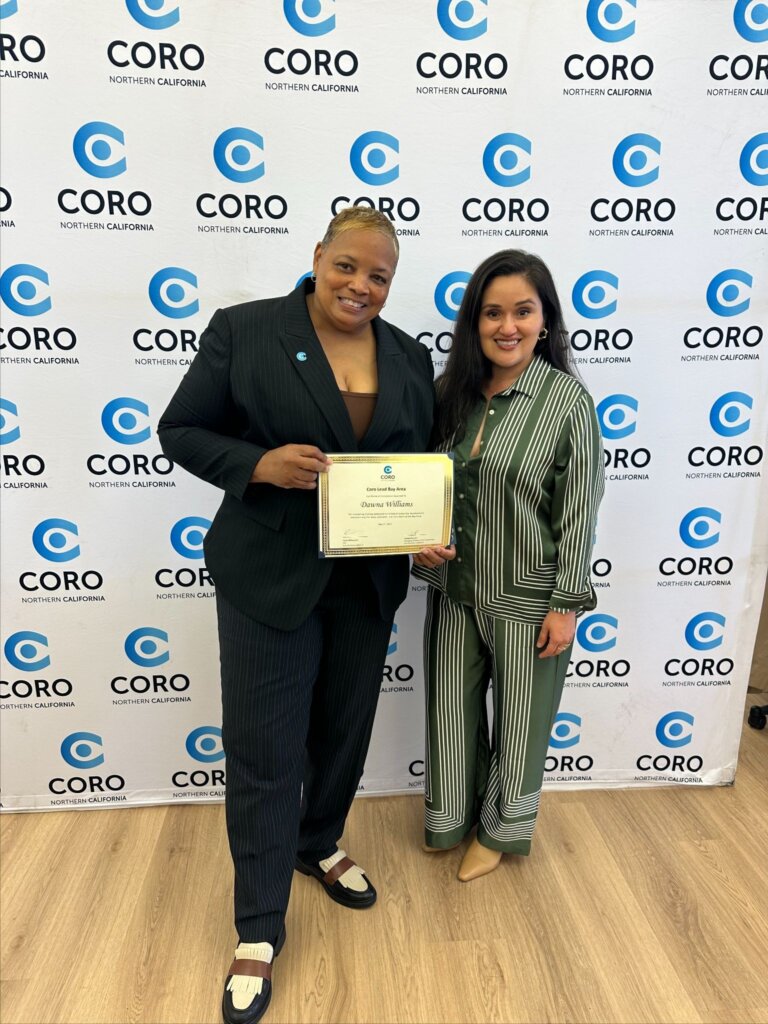
Tell us about a time the Coro network showed up for you, or you showed up for someone in it.
Our cohort is still very close. We have happy hours every quarter and we have an ongoing group chat. Rebekah Espino-Drobner, who was in Lead Bay Area with me, connected me to Larry Brundage at Thrivent Financial. It turns out Larry is a boxer! He really loves boxing and he assists with a recreational boxing program in Tracy. So she introduced me to Larry, and he came out to visit the program. He absolutely loved it, especially upon seeing our campus and realizing we did more than boxing.
He ended up sponsoring our summer showdown, our big annual boxing event. He also connected us with Thrivent Financial’s charitable arm so that we could get donations from their members.
A vision for a stronger California, one cohort at a time
What’s your vision for a stronger California and East Oakland specifically?
One of the things we do here at EOBA is civics education, in conjunction with the Oakland Freedom Project and the League of Women Voters. We take people right from our food bank lines who are not civically engaged at all, and we take them through a 6-week training program where they learn who represents them at city hall, at the state level, and at the federal level. We teach them how to file complaints with the city and recognize who to call for illegal dumping, which is prevalent in East Oakland. Many of these folks don’t speak English and we have translators, because I feel like they’re no less deserving just because you don’t speak English. You’re no less deserving to be civically engaged. That part of making a better California is making an informed citizenry.
We have a cohort of 32 at a time, and we bring in organizations to work with them; the Chinese Chamber of Commerce speaks to our constituents who are Chinese-speaking, the Oakland Freedom Project speaks to our Spanish-speaking participants. These are people in the same room, getting the same education, who get registered to vote if they’re eligible. You have a group of people who weren’t engaged before, who wouldn’t know who to call to get help — then, somebody spoke to them in their language and now they’re civically engaged. They’re telling their friends. Now we’ve got people knocking on the door asking when’s the next class.
If I can do that 32 more times with 32 more people, and have these partnerships with the Oakland Freedom Project, the League of Women Voters, and the Chinese Chamber of Commerce…if we can come together and do that 32 more times, the number of people who would be civically engaged just in deep East Oakland, who’s been disenfranchised, disinvested in for years…we do that 32 more times with this little body and this little bit of area, that’s gonna make for a better Oakland, which makes for a better Alameda County, which makes for a better California. And if we can replicate what we’re doing in these other areas that are disinvested in, we got a better California.
About Lead Fellowships in the Bay Area
The Lead Fellowship, offered in both the Bay Area and Los Angeles, is Coro California’s nine-month, part-time program for professionals ready to deepen their leadership capacity and expand their cross-sector network. Through an opening retreat, monthly leadership forums, team-led Issue Day projects, and ongoing peer coaching, Lead Fellows build adaptive leadership skills, sharpen inquiry-driven decision-making, and join Coro’s 15,000+ alumni community. It’s the kind of experience that, as Dawna’s story shows, keeps shaping how people lead long after the program ends.
Learn more about the Lead Fellowship or nominate someone who’s ready to grow as a regional leader.
Gohar Chichian
Ready to strengthen your leadership impact?
Explore programs designed to equip leaders with the skills to drive change.