
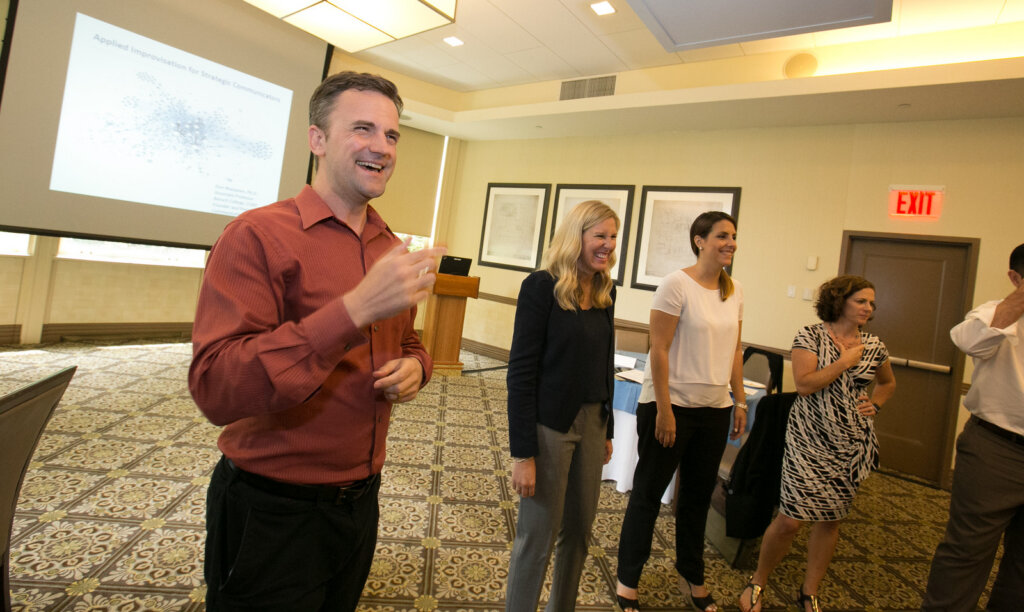
At the end of the day, public policies come from stories. They’re the result of people having conversations. Coro brought home the deeply relational and interpersonal level at which everything of value gets produced.
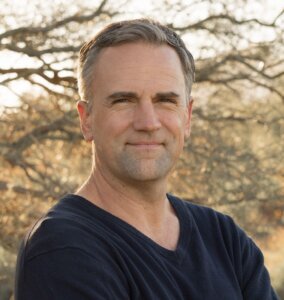
More than twenty years ago, Don spent 2003-04 as a Coro Fellow in Southern California, discovering a kind of learning that no classroom had ever offered. Today, as a professor at Baruch College’s Marxe School, the Faculty Director of the NYC Trust Leadership Fellows program, and founder of Communication Upward, he spends his days building the same kind of space for the next generation of emerging leaders.
Don traces the throughline from his own public policy fellowship to the leadership development programs he now designs, and reflects on why communication, collaboration, and a willingness to sit with complexity remain at the heart of it all.
Tell us where you are now — your work as a Professor at Baruch College’s Marxe School, Faculty Director of the NYC Trust Leadership Fellows program, founder of Communication Upward, and author. Of everything you’re juggling, what’s the one thread right now that you find yourself most energized by, and why?
My number one source of energy is emerging leaders, period. There are many critiques and complaints to be made about our political and social worlds right now, and rightly so.
My question is, where is the hope? Where are the bright spots? The space of emerging leaders is where I see that. I see people who are committed to public service, to different futures, to different visions rising up. When I meet these people, I think we’re going to be okay.
For me, it’s the source of hope. It’s where alternatives to a lot of our present conditions lie — it’s in the people themselves. I see it in the New York Community Trust leadership program that I co-direct. We have 25-30 emerging nonprofit leaders in New York City who bring a lot of hopes, dreams, fascinating backgrounds, and lived experiences to this fellowship program.
We bring a lot to them – cutting-edge training, instructors, mentorships, and change projects – but we’re continually iterating the model for how to do this well. We want to create enough space for them to co-create this fellowship with us and make something new together. The opportunity in the emerging leader space to create new realities together is by far the most exciting part of my work right now.
The public policy fellowship that changed everything
For me, Coro was utterly transformative. There’s a knowledge and performance gap in a lot of our formal education systems that a program like Coro directly addresses.
Take us back to 2003-04 and your Coro Fellowship. What’s a moment, conversation, or challenge from that year that has stayed with you two decades later?
For a lot of Fellows, Coro is inspiring, and it sets them on a trajectory of public service, working for the common good in some capacity that you see reflected in a lifetime of work.
My invitation to Coro was through a former fellow. I thought, this is someone who I can see the values and practices the world most needs reflected in, and I wanted that.
For a lot of people, Coro is inspiring. For me, it was utterly transformative. There’s a knowledge and performance gap in a lot of our formal education systems that a program like Coro directly addresses: group processes, reading a room, learning to become more sensitive to cultural contexts and differences, and working on your own “default settings” that you didn’t even know you had. Coro put a lens on those skill sets in a way that no formal education ever had.
I didn’t know how much I needed the space that Coro provided. It was a good nine months of reflection. You get to work on different internships for a month here and there, and that bird’s eye level view of people and organizations, combined with reflective space, group process, and self-work was transformative. My background is in improv, and I would simultaneously ask a question every good improviser learns to ask: “What does this scene need right now?” in each of these settings.
The most transformative moment for me was having conversations with Southern California’s previous executive director, the late Carol Baker Tharp. She said to me, what most emerging leaders need is a “learning that occurs by the nervous system,” from the neck down. We get a lot of education for our brains, but what most people need is more attention to the embodied and physiological aspects of our working lives–our gut reactions and emotions. Examining that space is where leadership training should go. Coro was very attuned to that every step of the way.
I frankly think Coro provides the kind of training everybody should go through at some point, but is seldom addressed in a lot of our educational systems.
Tell us about a time the Coro network showed up for you, or you showed up for a fellow alum.
I did the fellowship in Southern California, and I eventually transferred to New York for work after graduate school. Even though I didn’t do the Coro New York fellowship, having that network has been instrumental. Over the past 16 years, I’ve met lots of people who have gone through Coro programs.
I’m also an adaptive leadership enthusiast; it’s what I teach in classes, and Coro has the same methodology. It’s been neat to be able to send people Coro’s way when they are looking for further knowledge and training. Folks have come back over the years to thank me for recommending the program. They go on to become executive directors of nonprofits, mid-level managers at government agencies, working in education or healthcare. Coro is national and the cross-country connections have worked out well.
I’m even on weekly text threads with some people from my cohort. We’re still hashing out ideas. I have LinkedIn messages going with some of them. That’s pretty telling about some of the enduring relationships established through the Coro program.
From fellow to faculty: building leadership development programs around communication
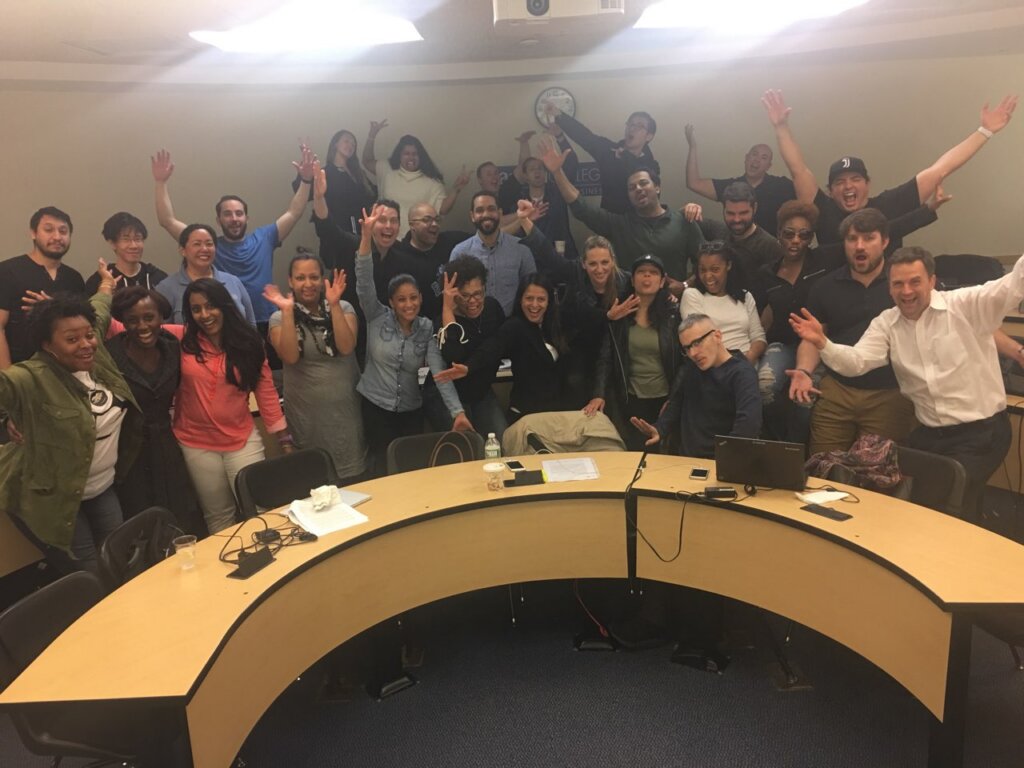
You’ve built a career and a philosophy around the idea that communication sits at the center of every leadership challenge — how we tell stories, hold conversations, and build social worlds together. Where did that conviction start?
I majored in political science and communication studies in undergrad. I was inspired to go further in communication, and my year with Coro solidified my interest. I kept seeing how communication could get people in and out of problems at the various organizations I worked at – labor unions, media organizations, and PR agencies. After Coro, I went to graduate school for communication and then pursued my doctorate, because I still think it’s the most complicated, complex, and consequential subject in the world.
I often ask people if they would like to go to a dentist from 500 years ago. Nobody does. Why is it then when it comes to the forms and quality of our communication and leadership, we keep going back to outdated understandings and practices? We know how to do so much better with conflict, intercultural understanding, and improving our voices with others in contextually sensitive and adaptive ways. A big part of my work is to get our understanding and practices for communication and leadership on the same trajectories as medical and technological advances.
We need real, 21st century understandings of how communication works and what it does to change our social and political conditions for the better.
What has Coro made possible for you that wouldn’t have happened otherwise?
A lifelong fascination with what it takes to make democracy work. Coro in microcosm showed me a picture of that.
It’s in how we do our meetings, whose voices are included and whose haven’t been. It’s in inequities and power differences between people in and across organizations and societies.
Politics is one of the most complex topics on the planet. Let’s treat it accordingly by acknowledging the differences people have in values, beliefs, and physiological ways of approaching discussions. Let’s treat it with the nuance and respect for the complexity that it deserves.
Coro ended up inflecting a lot of what I do with the question: “What is a democracy perspective on this?” Coro taught us not to shy away from the political. Political just means, “How is it that we’re all going to live together at the end of the day?”
A lot of people want to shy away from talking about topics such as politics or religion. At Coro, we put it on the table. It’s more about how we talked about these issues–or putting our focus on the very processes we have to discuss them.
At the end of the day, public policies come from stories. They’re the result of people having conversations. Coro just brought home the deeply relational and interpersonal level at which everything of value gets produced.
Collaboration and the ‘yes, and’ of leadership development
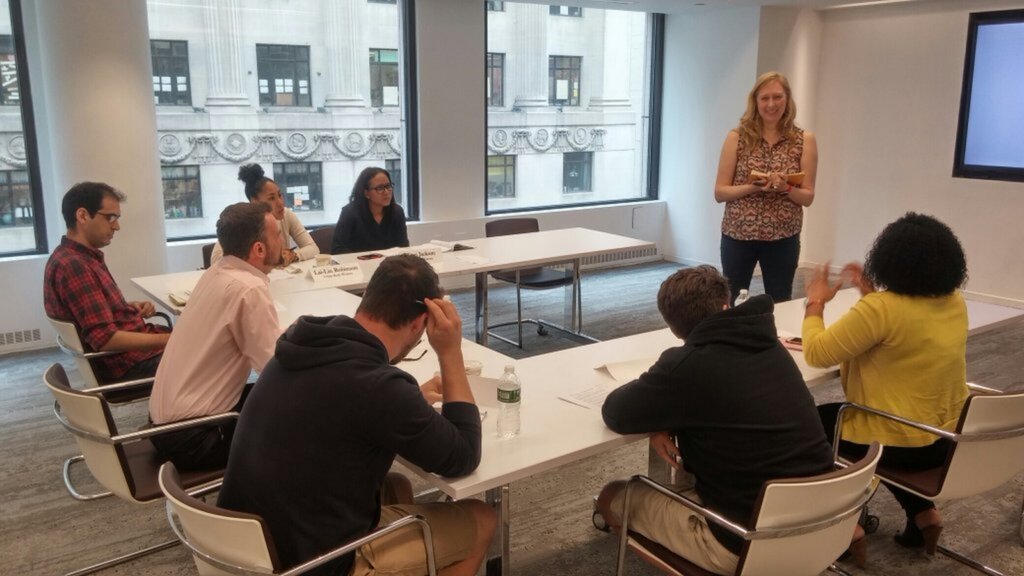
How has Coro shaped the way you approach collaboration, whether in the classroom, on stage doing improv, or facilitating a room of professionals?
Nothing is possible without collaboration. One of my favorite quotes is from The Art of Is by Steven Nachmanovich: “No solo is a solo.” He basically says it doesn’t matter if you’re Beyonce, Bono, or a public parks director – you get nothing done without other people. Everybody is building on or working with other people’s work, even if that’s not stated.
There’s no purely solo performance. Coro’s group process really highlighted that. I’ve written books by myself, but those books relied on the insights of others to generate new knowledge. I’ve also had way more fun writing with others.
The “yes, and’ mentality is also very helpful in the space of generating new ideas. Politics, academia, and a lot of worlds are oriented in chronic ways toward “no.” No is an incredibly important concept to use, but it can be overused and stall co-creation. We can never create anything new together without ‘yes, and’.
It’s a tool in the collaboration toolkit that actually allows for creativity and innovation to occur. Once people start practicing the ‘yes, and’ principle more, they ask, why wasn’t I doing this way more in my life? That’s a big part of my teaching and training.
About Coro’s public policy fellowship
There’s a reason a single fellowship shows up again and again in the stories of effective leaders. Coro California’s Fellows Program in Public Affairs — the organization’s flagship public policy fellowship — has spent more than 80 years advancing civic engagement and accelerating extraordinary careers. Offered in Greater Los Angeles and the San Francisco Bay Area, it’s a full-time, fully immersive experience over several months in either Los Angeles or the Bay Area. Fellows rotate through professional placements across business, nonprofit, government, labor, and electoral politics, investigate the region’s hardest problems during Focus Weeks, learn directly from influential leaders in candid interviews, and build their leadership toolkit in weekly facilitated seminars.
Above all, the program rewards those who want to do the work, not just read about it. Through high-profile assignments and individual and cohort projects, Fellows produce results that organizations actually use. They leave with respected credentials, a portfolio of tangible accomplishments, deeper policy knowledge, and membership in a 15,000+ alumni community whose members include United States Senators, elected officials, and changemakers nationwide. Learn more.
Read about the experiences of other FPPA alumni on our blog.
Applying to Coro’s public policy fellowship
Joining the fellowship costs nothing in tuition, and need-based monthly stipends plus health insurance allowances are on hand to make it work for those who need support. Coro looks for recent graduates and early-career professionals who lead with integrity and want to strengthen democracy through civic engagement.
If that describes you — or brings someone specific to mind — keep these dates close: applications open in early September, with a mid-January deadline. Whether you’re ready to invest in yourself or to lift up someone you admire, now is the time.
Nominate someone in your network →
Gohar Chichian
Ready to strengthen your leadership impact?
Explore programs designed to equip leaders with the skills to drive change.