
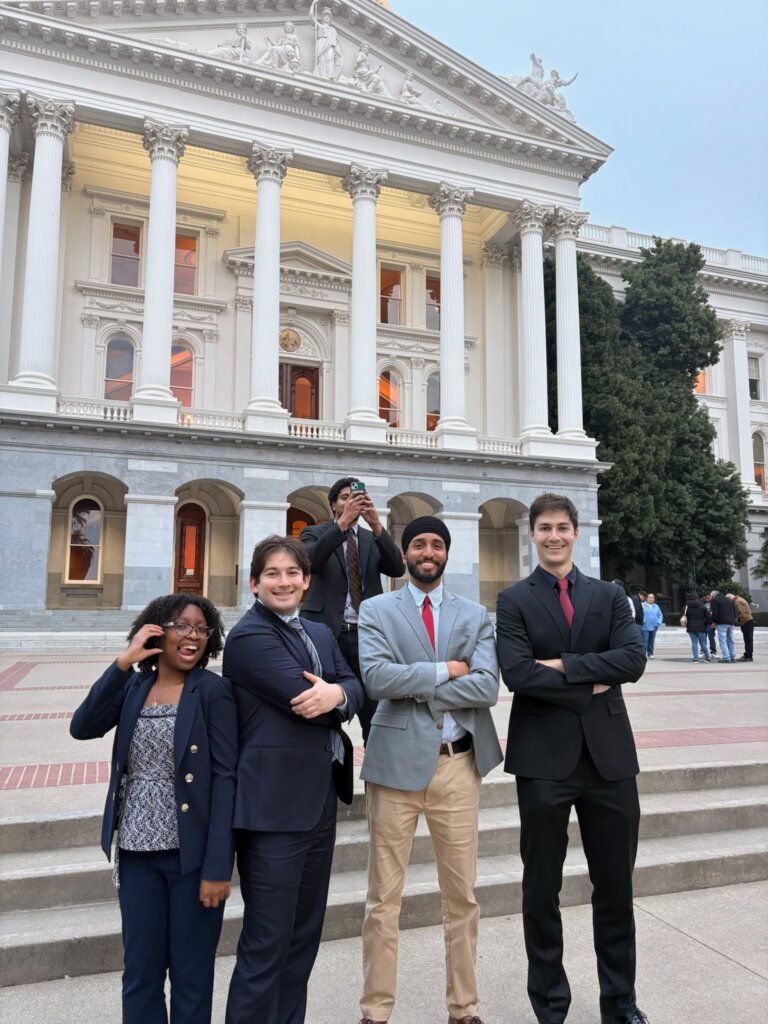
I came asking how a city breaks down. I left with more.
I did not grow up in California. Growing up in Chicago and living across different countries through college taught me that there is rarely only one way of doing things. Every place I lived challenged assumptions I hadn’t realized I was making: about how governments work, how communities organize themselves, and how people in genuinely different circumstances still find themselves wanting the same things.
Moving through those different worlds made me comfortable holding multiple lenses at once and looking for how they fit together. That orientation toward complexity is part of what drew me to Coro. However, it wasn’t what pushed me to apply.
Why I applied for a public policy fellowship in California
In early 2025, I came home to Los Angeles, and the Palisades caught fire. I found myself evacuating in the middle of the night, watching the glow on the horizon while disinformation moved faster across my phone than the firetrucks arriving from across the West Coast. What struck me wasn’t just the fire. It was how quickly the response had become its own kind of destruction. Confronted with this natural disaster, I wanted to understand who actually held authority in a crisis like this, and who held the real power to act. Coro offered me that learning opportunity.

I came into the 68th class of Coro Fellows in Public Affairs with a series of lofty ideals. In my lifetime, I hoped to see Los Angeles expand its public transit, build affordable housing, and address climate change. However, I lacked a concrete understanding of how those ideals could be implemented – how an idea moves from a policy proposal to a built thing in the world, and how many competing interests touch it along the way. That understanding began to take shape early on in my year.
Lessons from the public affairs fellowship
On September 19, 2025, the Los Angeles City Council officially approved the $2.6 billion Los Angeles Convention Center Expansion and Modernization Project. The LA Convention Center modernization looked, from the outside, like a straightforward infrastructure project; the plan was to connect existing buildings, create new space, and modernize the facility. However, through my nonprofit and subsequent placements, I found it to be an instructive lesson of the complex machinery that goes into the construction of megaprojects. I saw a coalition of labor unions, walkability advocates, urban planning consultants, city agencies, and elected officials, all moving toward the same outcome – a modernized Convention Center.
Throughout my year, I had the opportunity to evaluate projects like the Convention Center through the perspectives of multiple different sectors. While most people who want to change cities never get to see inside that machinery, Coro put me inside it across multiple sectors and insisted I pay attention.
Paying attention requires its own discipline. The FIAO framework — Fact, Inference, Assumption, Opinion — taught me to sort which is which before acting, and to resist conclusions that feel true before they are earned. Alongside this, Coro sharpened my ability to distinguish necessary conditions from sufficient ones. As an example, zoning reform is necessary for affordable housing development, but it guarantees nothing on its own. You still need funding, political will, community trust, and a labor market that can deliver. Then there is what Coro calls getting on the balcony: the discipline of stepping back from the immediate and reading it against a larger frame. Los Angeles can feel unlike any other city. But its struggles with housing, transit, and civic trust are not singular, and the answers to problems you are staring at closely might already exist somewhere you haven’t thought to look.
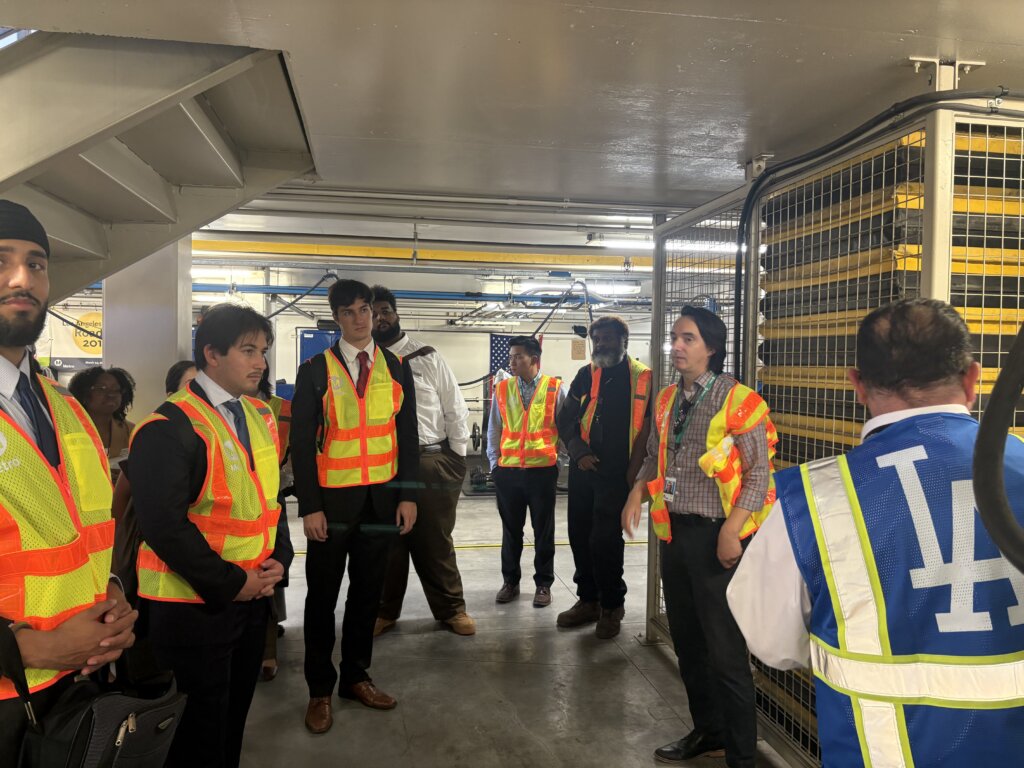
Leadership was the other education. I spent years in college extracurriculars building what the Romans called auctoritas: authority and prestige accumulated over time. However, when I walked into the non-hierarchical structure of Coro in September 2025, I had none of it. I met twelve strangers – all capable, smart, and with no reason to defer to anyone. Learning to move forward without that footing was uncomfortable. It was also clarifying.
Inside the public affairs fellowship experience
What followed was a year of learning what auctoritas is actually made of beneath the titles. Trust comes first. I started reaching out to Fellows individually before bringing ideas to the full group, investing in their thinking before asking them to invest in mine. The Greeks called this pistis: credibility that accumulates through demonstrated character and cannot be manufactured. I also learned to read what people were not saying. Silence has texture; hesitation and opposition are not the same thing, even when they may sound similar.
The tools this fellowship gave me — to think clearly, move strategically, and lead with integrity — feel less like professional development and more like preparation for the moment we are actually in.”
Timing matters just as much. Over the course of the year, my peers and I came to the realization that we live in a “do-ocracy.” Those who flesh out ideas and move to implement them first hold an advantage that is hard for opposition to overcome. As my colleagues and I proposed and implemented ideas over the course of the fellowship, I had boundless opportunities to cultivate a sense of when the opportune moments were to shift the conversation. Moreover, when the factions in our group disagreed, I learned that the middle ground is sometimes the worst place to land. While I originally hoped to lead by consensus, I realized that a compromise that satisfies no one resolves nothing. Through repeatedly trying and failing to achieve compromise between ideologically opposed factions, I gradually adopted a more successful strategy; I worked to find a third path drawn from the interests underneath each position rather than the positions themselves. The friction yielded by Coro’s non-hierarchical structure proved to be a testing ground for me to develop practical wisdom in leadership.
As Coro comes to a close, I find myself a far more prudent, empathetic, and resolute person than I was at the start. I also leave with something I did not anticipate: twelve colleagues — twelve friends — whose judgment I trust and whose work I know will matter. Founded 84 years ago, Coro’s lessons feel anything but dated. The world today stands at a serious precipice, where peace, prosperity, democracy, and human rights face pressures on every continent. The tools this fellowship gave me — to think clearly, move strategically, and lead with integrity — feel less like professional development and more like preparation for the moment we are actually in. I came to Coro asking how a city breaks down so fast. I leave with something more useful than an answer: the tools to stay in the question, and the people who taught me how.
About Coro’s public policy fellowship
The Fellows Program in Public Affairs is Coro California’s flagship public policy fellowship, offered in both the Greater Los Angeles Area and the San Francisco Bay Area. The program has an 80+ year track record of advancing civic engagement and accelerating the careers of remarkable leaders. It’s a rigorous, full-time fellowship that prepares emerging civic leaders to shape the spirit and integrity of their communities, organizations, and country. Over the course of the program — nine months in Los Angeles, seven months in the Bay Area — Fellows rotate through professional placements across business, nonprofit, government, labor, and electoral politics; explore pressing regional issues during immersive Focus Weeks; sit down with influential cross-sector leaders in candid leadership interviews; and build a practical leadership toolkit through weekly facilitated seminars. Fellows complete individual and cohort-wide projects, including curated Spring Projects for partner organizations, that turn classroom learning into real organizational impact.
What makes the experience transformative isn’t any single component — it’s how they fit together. Fellows don’t just study how systems work; they step inside them, take on high-profile assignments, and test their own leadership in real time. They graduate with esteemed credentials, a portfolio of tangible work, deeper political and policy knowledge, and a place in a network of 15,000+ Coro alumni that includes United States Senators, elected officials, and changemakers across the country.
Apply or nominate a Future Fellow
The program is tuition-free, with need-based monthly stipends and health insurance allowances available to help Fellows participate. Ideal candidates are recent graduates and early-career professionals committed to ethical leadership and strengthening democracy through civic engagement.
If Grant’s story resonates, the next cohort could include you or someone you know. Applications open in early September, and the deadline to apply is mid-January. Whether you’re an emerging leader ready to invest in your own growth or you know someone who belongs in this community, now is the time to take the next step.

Grant Huebner
Ready to strengthen your leadership impact?
Explore programs designed to equip leaders with the skills to drive change.