
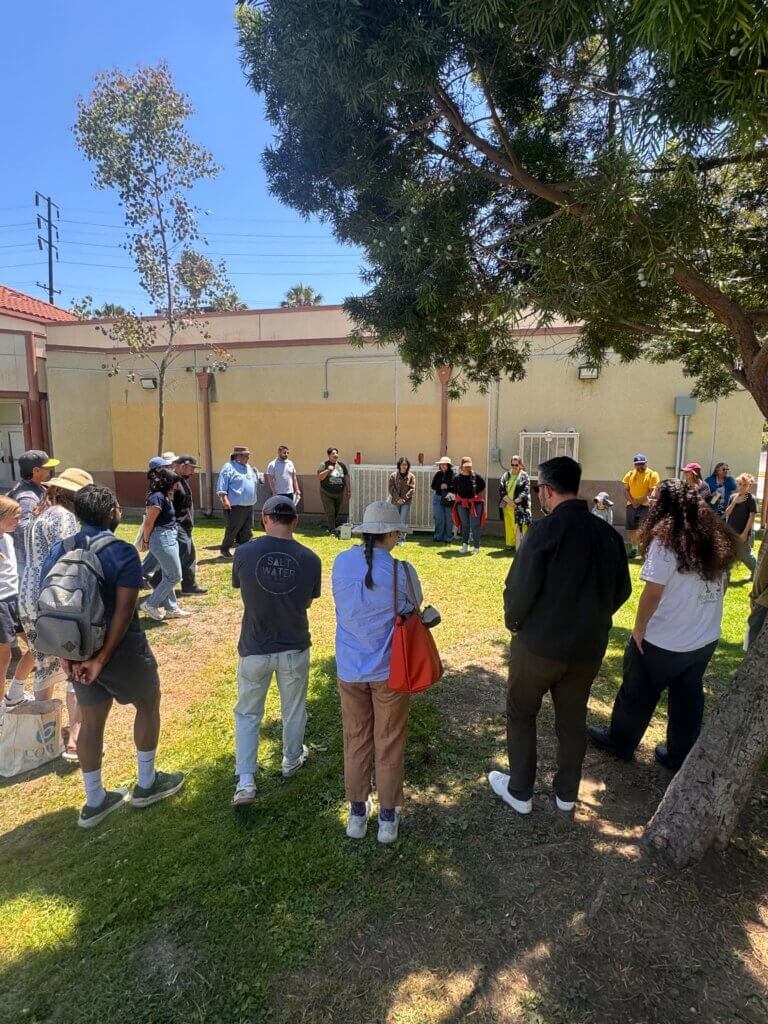
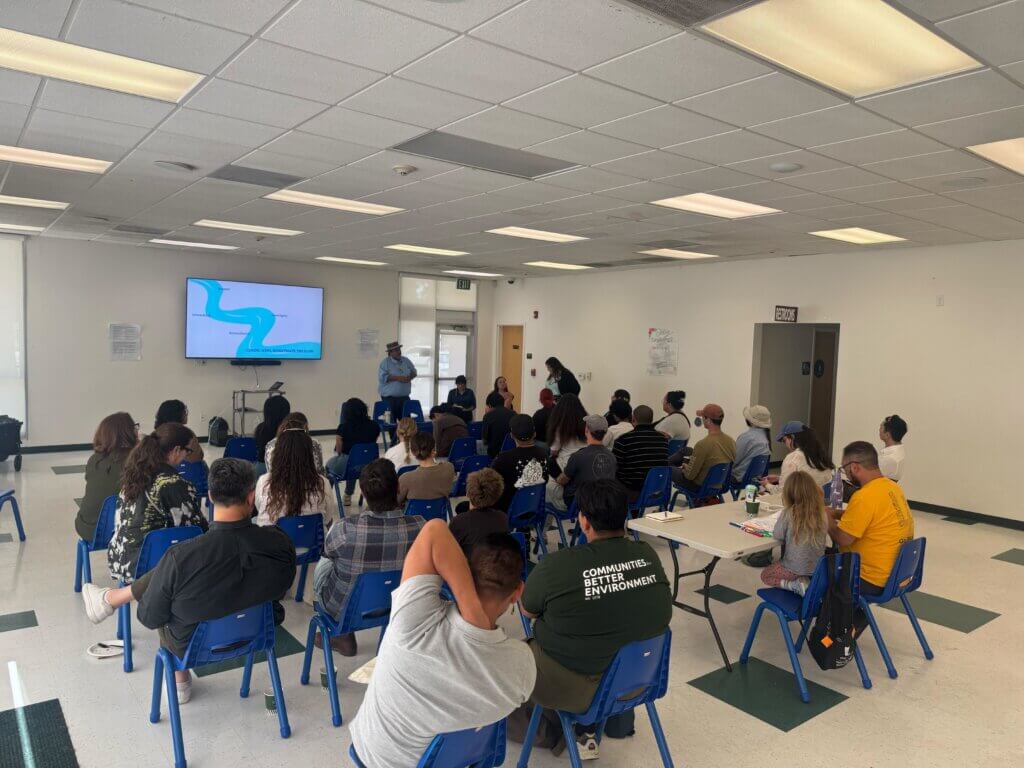
A couple Saturdays ago, I sat in a blue plastic-molded chair in Huntington Park’s Community Center listening to representatives from the Owens Valley Indian Water Commission (OVIWC) talk to our Climate Resilience Leadership Network program participants about the Commission’s efforts to broaden awareness of their water rights advocacy work. They’d joined us from over 300 miles away to be in shared learning with the cohort for the day.
A Climate Lens of Los Angeles
On our agenda was a “Toxic Tour” of sites in Southeast Los Angeles where environmental justice was not being served. Put on by the nonprofit, Communities for a Better Environment, the 3-hour bus tour stops throughout Vernon, Maywood, Huntington Park, and South Gate. The guides are multi-generational community members of Huntington Park whose families and neighbors have borne the brunt of illegal and overt environmental policy dodgers through soil, air, and water contamination for decades.
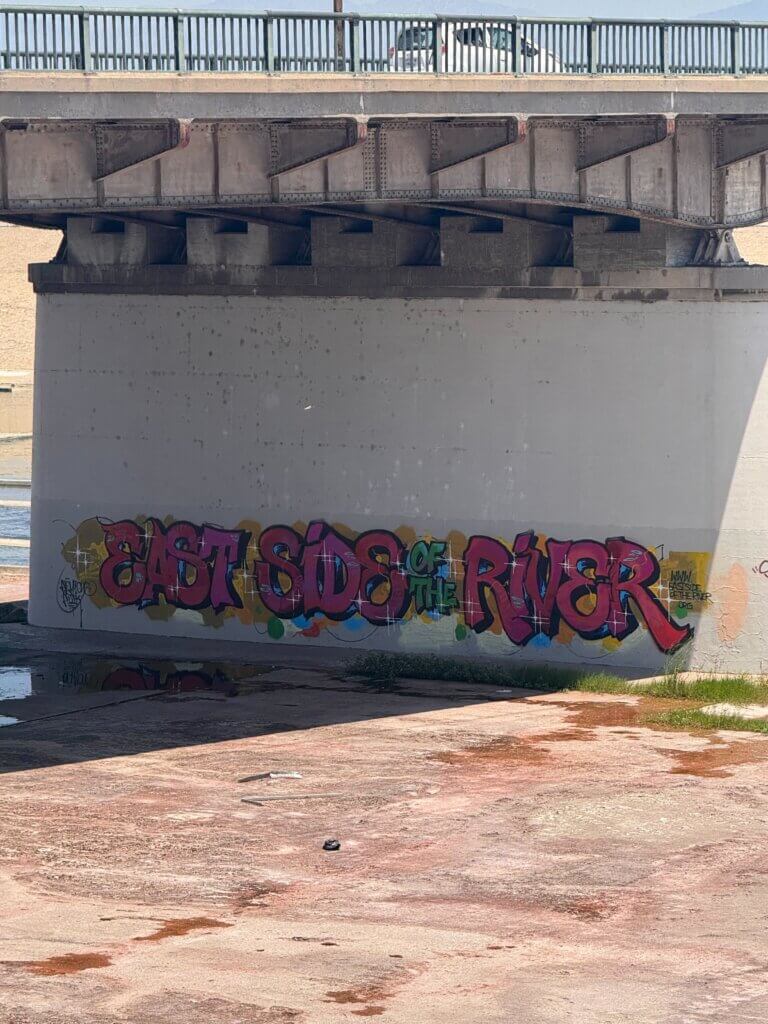
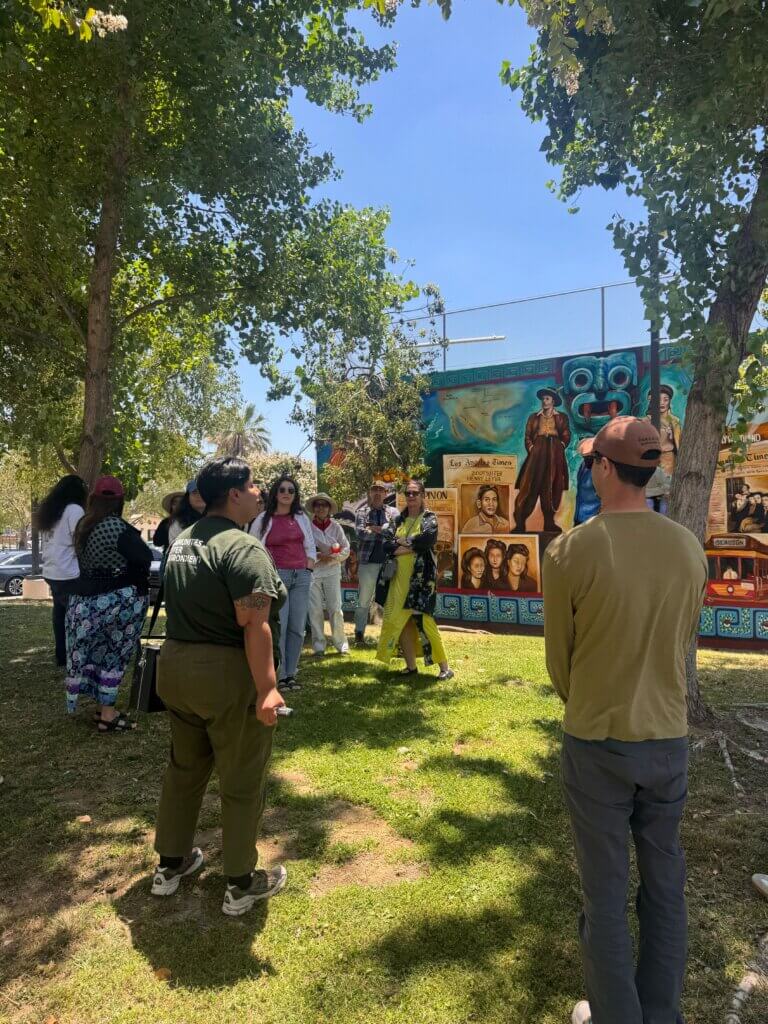
Connecting the two plights of vulnerable communities is a shared relative, the river that flows from Mono Lake through LA’s concrete river bed, to the ocean. Water is life. Without it, the interdependent ecosystems that rely on its health suffer too. As we stopped along Maywood Riverfront Park to take in the mural painted by East Side of the River commemorating the Zootsuit Riots and Sleepy Lagoon, we were met by AnMarie Mendoza, a Tongva water protector and Paya/Paar Outreach Director for OVIWC, holding back tears as she talked about the heaviness of hearing about an oil pipeline struck by telecommunications crews in East LA the week before, spilling crude oil into the river. She, and many others, gathered at this very spot to watch the water flow and find strength in its resilience and each other.
Coro’s Climate Resilience Leadership Program
At Coro California, we have been running the Climate Resilience Leadership Network program for three years with the generous support of Accelerate Resilience Los Angeles (ARLA). Its purpose is to pull a cross-sectoral group of climate professionals working to further the climate resilience of the LA region together into a space of skill building for collaboration and impact. Foundational concepts to the program include looking at the region through a living infrastructure lens that acknowledges human, built, and natural infrastructure as interconnected aspects essential to creating places capable of not only surviving climate crises moments, but also capable of creating environments where all living beings can thrive. It’s systems thinking through a regenerative framework where siloed systems are brought together to reinforce the potential of the whole to work better.
Our drivers to create and continue the program are in what we see as its potential to help regional climate work feel less like ‘one step forward, two steps back’ and more like 1+1=3. The potential for engaging stakeholders as partners-in-progress is there if we see systems as made up of people. People have power to enact, and resist, change. People have belief systems and perspectives that can be better understood if we take the time to ask questions to gain insight into where there may be mutual valuing. People have reasons for forming alliances and adopting positions. If we take the time to understand what’s at stake for them, we might be able to get past some of the positional entrenchment to discover where there is more fertile ground for collaboration.
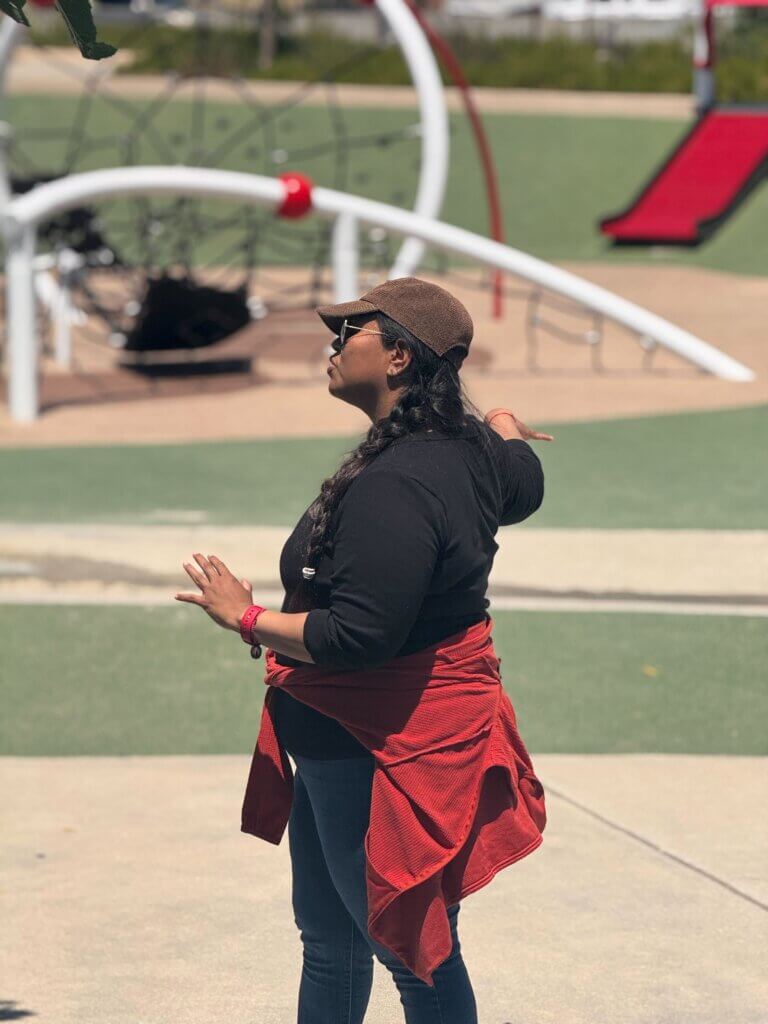
Our last stop on the Toxic Tour was Urban Orchard Park in South Gate. Brought to life through a coalition of state, public, and nonprofit partnerships, it is a demonstration of collaborative planning to meet the needs of the nearby communities and environmental best practices. Accessible pathways and play structures give the low-income senior housing residents in the neighborhood a place to play with their grandchildren. Over two hundred fruit trees provide shade, avocados, and heat relief. Stormwater capture filters runoff water and redeposits it into the LA river, cleaner. An education garden and nature-based playground share the Tongva history of the region. The park is an inspiration.
As we sat there at picnic tables next to a joyful and rowdy baby shower, I couldn’t help but feel inspired myself. I was reminded that the work we do at Coro is human work. By building the leadership capacity of our civic and community leaders, we get to sit back on a beautiful Saturday afternoon and watch what they can accomplish together when they collaborate, listen, and lead with purpose in their communities.
About Coro’s Civic Engagement Programs
Through cohort-based, experiential programs spanning high school through executive level, Coro’s civic engagement programs equip participants with the critical thinking, self-awareness, and collaboration skills to lead across differences and address our society’s most complex challenges. Coro’s approach combines diverse cohorts, real-work civic engagement, and a focus on the inner work of leadership.
The Climate Resilience Leadership Network activates and strengthens leaders working to build healthier, more climate-resilient communities. This part-time program combines adaptive leadership practices with place-based solutions, enabling participants to deepen their understanding of living systems within the Los Angeles Basin.
Participants gain a valuable perspective on climate policy, advocacy, environmental justice, land management, and community-based transformation across sectors and specializations. They tackle real-world challenges through cohort-led projects, embracing curiosity and innovation in complex contexts as they practice cross-sector collaboration and systems thinking.
Learn more about the Climate Resilience Leadership Network and the rest of Coro’s programs.

Kaya Haig
Ready to strengthen your leadership impact?
Explore programs designed to equip leaders with the skills to drive change.