
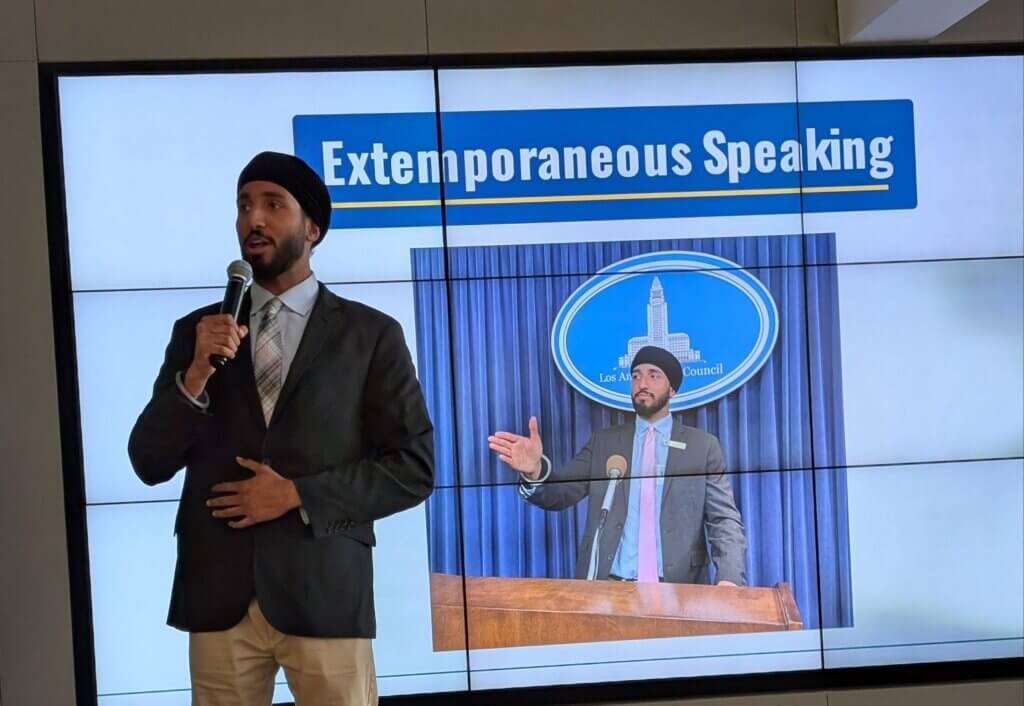
What I came to appreciate is that leadership is often less about fitting a specific mold and more about honestly understanding your own strengths and weaknesses.
Why I applied to a public affairs fellowship
When I decided to apply for Coro’s Fellows Program in Public Affairs (FPPA), I think the biggest thing I was searching for was a clearer understanding of how decisions actually get made. I studied political science in college, and I deeply valued it, since it gave me a strong conceptual understanding of government, institutions, ideology, and political behavior. But I felt that I was missing the practical side of things: the day-to-day mechanics of policymaking, implementation, negotiation, and institutional decision-making.
A lot of what drew me toward public service was curiosity. I wanted to understand why some ideas become policy while others stall out completely. I wanted to see how agencies, elected officials, advocates, businesses, labor groups, and communities all interact with one another in practice, not just in theory. From the outside, politics can look very linear. Someone proposes something, people debate it, and a decision gets made.
The more exposure I had, the more I realized how interconnected everything is and how many competing pressures shape outcomes. That’s also why the cross-sector aspect of FPPA stood out to me so strongly. I didn’t want experience confined to a single lane of public life. One of the things that interests me most about policy is that no sector operates in isolation. Government decisions affect business, nonprofit organizations influence legislation, labor shapes economic priorities, and community groups often determine whether policies succeed or fail on the ground.
I wanted a program that would let me see those relationships up close and understand how people with very different incentives still have to work together. More personally, I think I was also looking for a sense of direction about where I fit within public service. I knew I cared deeply about civic life and governance, but I wanted exposure to people actually doing the work — people navigating complexity, building coalitions, and trying to create change in imperfect systems. I hoped FPPA would help me move from being someone who understood politics academically to someone who could participate in it thoughtfully and effectively.
What Los Angeles taught me during the fellowship
One thing that surprised me during my placement and regional exploration was how many people working inside Los Angeles’ major institutions were deeply thoughtful, competent, and motivated by a real sense of public responsibility. From the outside, it is easy to associate LA’s institutions with dysfunction given the issues with homelessness, traffic, environmental challenges, bureaucracy, and political gridlock. Public conversation often focuses on failure, and after a while, you begin to assume the people inside these systems are detached or ineffective. My experience consistently challenged that assumption.
Whether I was speaking with public officials, nonprofit leaders, organizers, labor representatives, or people in the private sector, I was struck by how seriously they approached their work and how nuanced their understanding of the region was. Even when people strongly disagreed on solutions, most were operating in good faith and trying to balance competing needs, constraints, and constituencies. That complexity is hard to appreciate from headlines or social media alone.
What I learned is that Los Angeles is not a city struggling because nobody cares; it is a region where incredibly complicated problems are being navigated by people who often care a great deal. Seeing that firsthand changed the way I think about institutions and governance. It made public service feel more human, and it gave me a deeper appreciation for how difficult, but necessary, coalition-building and policymaking really are.
How my public policy fellowship redefined leadership
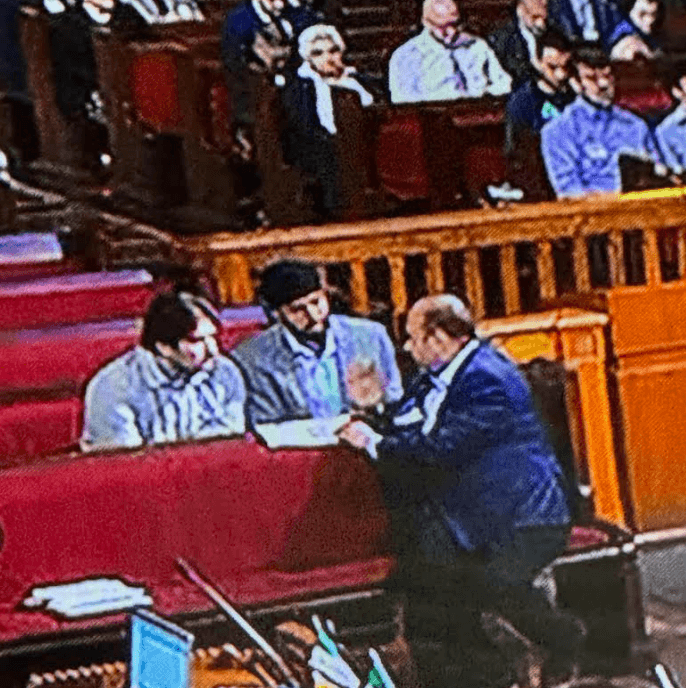
One assumption the Fellowship challenged for me was that leadership has a single, recognizable form. Throughout the Fellowship, I encountered effective leaders who operated in completely different ways. Some were persuasive public communicators, while others were exceptional listeners, coalition-builders, strategists, or technical experts who quietly held complicated systems together. What I came to appreciate is that leadership is often less about fitting a specific mold and more about honestly understanding your own strengths and weaknesses.
The strongest leaders I met were not people without flaws; they were people who knew what they were good at, continued sharpening those skills, and built teams or relationships that compensated for areas where they were weaker. That shifted my understanding of leadership from being performative to being adaptive, collaborative, and deeply self-aware.
Advice for future public affairs fellowship applicants
The biggest thing I would want them to know is to really take it all in. FPPA moves quickly, and you are constantly exposed to new people, sectors, and perspectives, but a lot of the value comes from how willing you are to engage with it fully. Seize every opportunity you can, as some of the most meaningful experiences and relationships come from moments that seem small at the time.
I would also tell them to assume alliances instead of assuming opposition. Before the Fellowship, I think I sometimes viewed civic life too rigidly — business versus labor, government versus advocates, public sector versus private sector, etc. What surprised me was how often people from completely different backgrounds still shared overlapping goals and were genuinely trying to solve problems, even if they approached them differently. Going into conversations with curiosity instead of defensiveness completely changes what you are able to learn.
And finally, I wish someone had told me that you do not need to arrive with everything figured out. A huge part of the Fellowship is exposure; it’s understanding where your interests, strengths, and values fit within a much larger civic ecosystem.
About Coro’s Fellows Program in Public Affairs
Spend time in Los Angeles or in the San Francisco Bay Area inside Coro’s Fellows Program in Public Affairs, and you come out a different kind of leader. This flagship public affairs fellowship has spent more than 80 years advancing civic engagement and fast-tracking exceptional careers, and it does so by putting Fellows directly into the work. You rotate through professional placements across business, nonprofit, government, labor, and electoral politics. You spend Focus Weeks taking apart the region’s thorniest problems. You sit down with influential leaders for unguarded conversations about the realities of leadership. Every week, facilitated seminars help you build a toolkit you’ll use for the rest of your career.
None of it happens in the abstract. Fellows take on high-profile assignments and complete individual and cohort projects — including Spring Projects for partner organizations — that leave a real mark. You graduate with esteemed credentials, a portfolio of meaningful work, deeper political and policy knowledge, and lifelong access to a network of 15,000+ Coro alumni that includes U.S. Senators, elected officials, and changemakers across the country. Explore the program.
Apply or nominate a future Fellow
Money should never be the barrier to a transformative year, so the fellowship comes tuition-free, backed by need-based monthly stipends and health insurance allowances. The program is a fit for recent graduates and early-career professionals who hold themselves to ethical leadership and want to help strengthen democracy through civic engagement.
Here’s the timeline worth marking: applications open in early September and close in mid-January. Whether you’re the emerging leader ready to commit or the colleague, mentor, or friend who knows one, the next step is yours to take.

Tajvir Singh
Ready to strengthen your leadership impact?
Explore programs designed to equip leaders with the skills to drive change.