
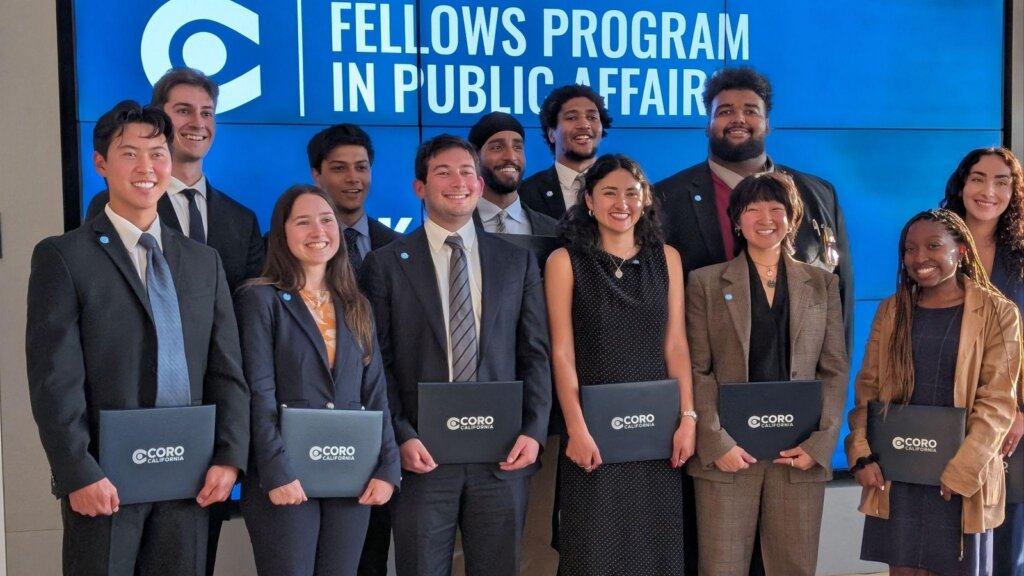
What follows are a few honest reflections from that year, what I was searching for when I applied, what surprised me, what shifted in me, and how I think about leadership now versus twelve months ago.
Why I applied to the public policy fellowship: learning while doing
Coro promised something different: constant learning, but always in direct contact with the city itself…rotating through the sectors that actually shape people's lives.
I graduated from college with a clear problem I wanted to work on: the disconnect between public opinion and public policy. It seems like the foundational tension of democratic governance. People want things, and the systems built to deliver those things often fall short, move slowly, or respond to entirely different pressures. I wanted to understand why, and more importantly, I wanted to learn how to actually do something about it.
Most programs ask you to study that question from a distance. Coro promised something different: constant learning, but always in direct contact with the city itself. Not in a classroom. Not through case studies. In a nonprofit, in a county office, in a labor organization, on a political campaign, rotating through the sectors that actually shape people’s lives.
That promise is what got me in the door. What kept me engaged all year was how fully Coro delivered on it. I was never just observing. I was contributing, questioning, and being questioned in return, and that tension between doing and reflecting is where the real learning happened. It was pretty difficult to do both at the same time, all the time. That challenge, and what you can gain from it, is incredibly valuable.
When LA surprised me: the infrastructure behind the city
When you can see the infrastructure, you start to understand why changing a city is so hard, and why it matters so much that people are trying.
There was a moment during the Fellowship that stopped me in a way I didn’t expect. We visited a Chevron refinery, and standing there, surrounded by pipelines and processing equipment and infrastructure built over decades, something clicked that I hadn’t fully grasped before.
Los Angeles doesn’t look the way it looks by accident. The city was built around systems, energy systems, transportation systems, water systems, that were laid down long before most of us were born, and those systems have shaped nearly everything that came after them: where people live, how they get around, what industries took hold, which communities were built up, and which were built over. The refinery wasn’t just an industrial site. It was a piece of the city’s actual skeleton.
Growing up here, I had always experienced LA at street level, as neighborhoods, as culture, as traffic. The Fellowship gave me a view from a different altitude. When you can see the infrastructure, you start to understand why changing a city is so hard, and why it matters so much that people are trying.
What the public affairs fellowship overturned
You can have the most sophisticated analysis in the room and still lose the room entirely if you haven't done the work of understanding what people actually care about and why.
I came into the program with a fairly intellectual picture of public affairs. I imagined it as a field of strategy and analysis, knowing the right frameworks, understanding the policy landscape, and having the right arguments ready. I thought expertise was the primary currency.
The Fellowship gently, and then not so gently, dismantled that picture. What I kept seeing across every placement, the nonprofit, the county office, the labor organization, the campaign, was that the people doing the most effective work were the ones who showed up consistently and genuinely tried to understand the perspectives of every stakeholder in the room. Not just the ones who agreed with them. Not just the powerful ones. Everyone.
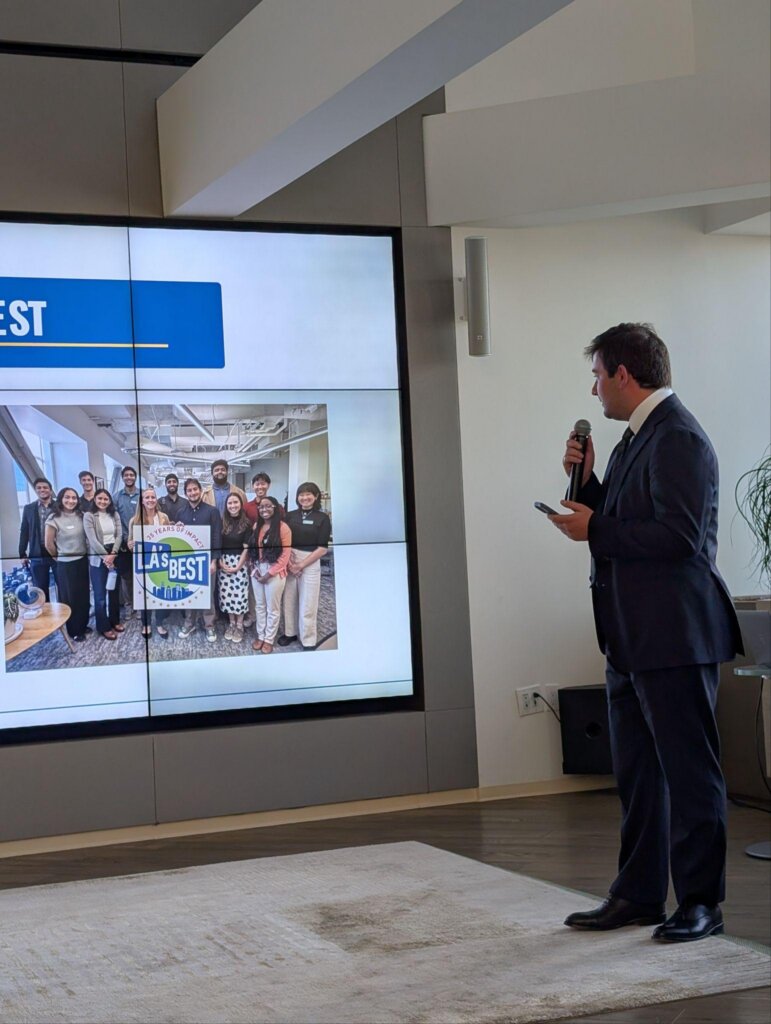
Across my placements at organizations like LA’s BEST, the LA County CEO’s Office of Asset Management, the Apprenticeship Readiness Fund, LA City Council District 2, and the Mahan for California campaign, I watched this play out in different contexts with the same basic truth underneath: relationships and presence matter more than polish. You can have the most sophisticated analysis in the room and still lose the room entirely if you haven’t done the work of understanding what people actually care about and why.
That shift, from thinking public affairs is primarily about expertise to understanding it’s primarily about people, is probably the most important thing I took away from the year.
What leadership looks like now
Before this year, I think I understood leadership as a kind of authority, being the person in front of the room, setting the direction, making the calls. I didn’t think of it as a bad thing; I just thought that’s what it was.
My definition has changed. Leadership, as I now understand it, is the willingness to do anything you would ask of the people around you, and then the ability to step back and build up the people who can do those things better than you. It’s not about being out front. It’s about creating the conditions for others to do their best work, and doing your share of the unglamorous work alongside them.
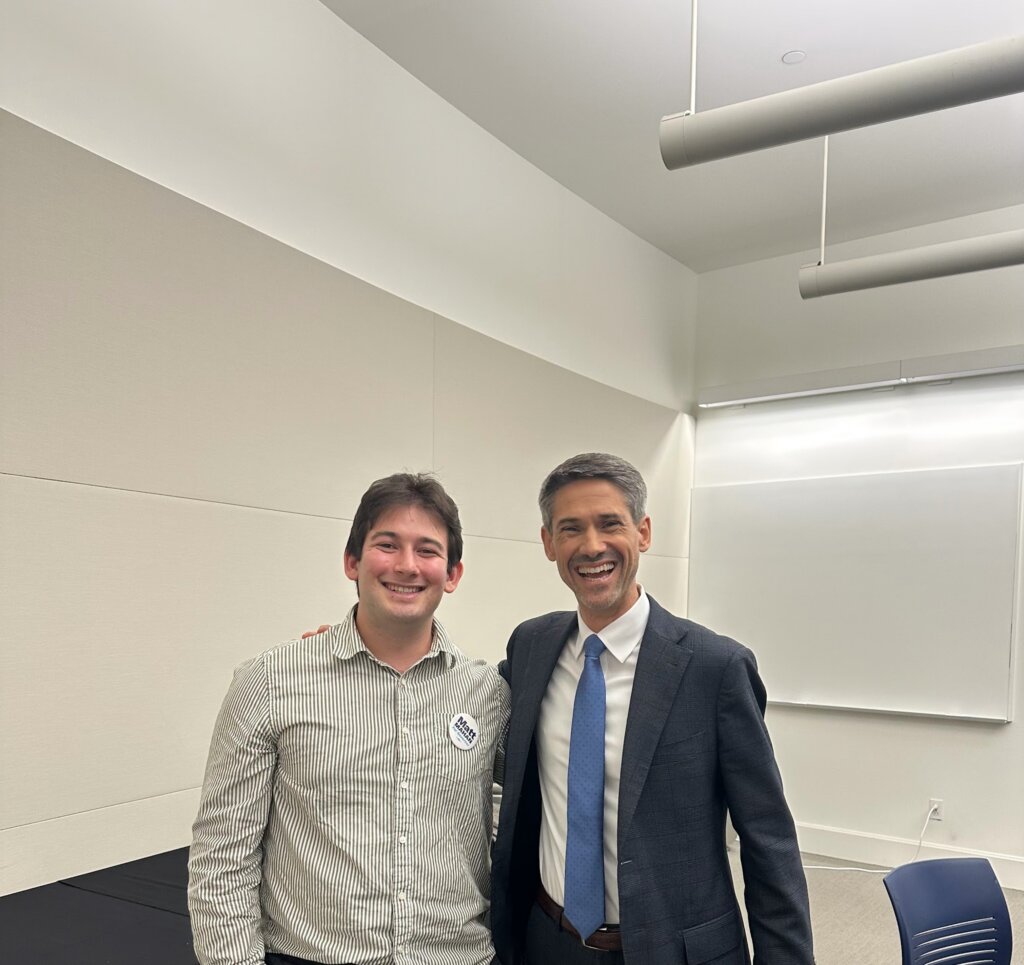
I saw this most clearly during my time on the Mahan for California campaign. Campaigns have a way of stripping away pretense. There’s always more to do than there are people to do it, and the person willing to make the calls, knock the doors, and still show up to the debrief at the end of a long day earns the trust of the people around them in a way that no title ever could.
I am still learning what this looks like in practice. But I carry with me a much clearer sense of the kind of leader I want to be: present, willing, and genuinely invested in the growth of the people I’m working with, not just the outcome of the project.
About Coro’s Fellows Program in Public Affairs
At its core, Coro California’s Fellows Program in Public Affairs exists to strengthen democracy by developing the people who carry it forward. This public policy fellowship with cohorts in Greater Los Angeles and the San Francisco Bay Area has an 80-plus-year record of advancing civic engagement and accelerating remarkable careers. It is full-time and immersive, all of it oriented toward practice. Fellows rotate through placements in business, nonprofit, government, labor, and electoral politics, investigate pressing regional issues during Focus Weeks, learn from candid leadership interviews with cross-sector leaders, and develop their craft in weekly facilitated seminars.
Crucially, the parts reinforce one another. Fellows step inside real institutions, take on high-stakes assignments, and complete individual and cohort-wide projects — including Spring Projects for partner organizations — that translate learning into organizational impact. They finish with respected credentials, a body of tangible work, a sharper command of policy and politics, and a seat in a 15,000+ alumni network whose members include United States Senators, elected officials, and changemakers nationwide. Learn more about the fellowship.
Apply or nominate a future Fellow
You won’t pay tuition to join: the program is fully subsidized, with need-based monthly stipends and health insurance allowances available to ease the way. It’s built for recent graduates and early-career professionals who are committed to ethical leadership and to strengthening democracy through civic engagement.
The next group of Fellows is taking shape, and it could include you or someone you’d vouch for. Applications open in early September and the deadline lands in mid-January. If you’re ready to invest in your growth — or to champion someone who is — this is your moment.

Eli Weiss
Ready to strengthen your leadership impact?
Explore programs designed to equip leaders with the skills to drive change.