
Why I applied for a public policy fellowship
During the fall of my senior year in college, I was in Washington, D.C. for a National Summer Learning Association (NSLA) conference. Aaron Dworkin, the CEO of NSLA (who did the Coro Fellows Program in New York) approached me at the conference and asked me what I wanted to do after I graduated college. At that time, I had only thought about either continuing my Korean language studies through a fellowship at Yale, or applying for a job on Capitol Hill, where I was already comfortable working. I responded with these potential paths in mind.
Aaron then asked me, “Have you heard of Coro? I think you should apply for it. You’d be a great fit.”
I responded truthfully – I had not heard of Coro. I didn’t have anything lined up after I graduated college, so I knew it would be something I would apply for. In fact, I decided this at that moment. But, the more I researched Coro and the Fellows Program, the more I realized it was something I should apply for. Like I often used to say, I didn’t really know what I wanted to do, so Coro’s cross-sector, experiential learning seemed especially attractive to me. I hoped the fellowship would get me closer to answering that question, that is, what exactly do I want to do? I pressed submit with that hope in my heart.
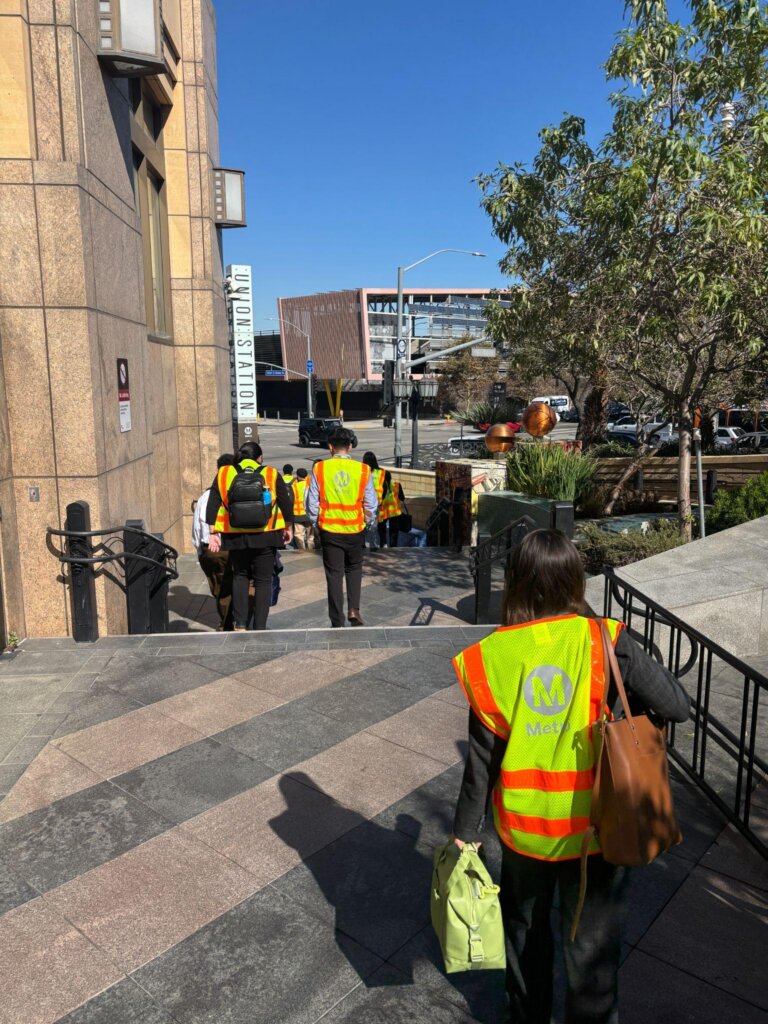
Exploring Los Angeles on a systems level
As a “transplant” from Georgia, I had a lot of assumptions about Los Angeles and Southern California before coming here. Los Angeles (and Los Angeles County) were often portrayed in wonderful ways in the media I consumed growing up. It was full of palm trees, beaches, and vibrant culture. I expected Los Angeles to be put-together, just like how it seemed in the movies.
But, as the other Fellows and I interviewed guests, no matter their relation to public affairs, the same topic came up: the high cost of living. Projects, even the most essential ones, often had high price tags attached to them. Bureaucracy and red tape came up. Projects took years to come into fruition. City policy could sometimes stand in the way of a project’s completion, even when the mayor mandates some streamlining.
By the time we had reached December in the Fellowship, any perceptions that the media gave me were neutralized. I understood some of the nuances of Los Angeles and realized two things could be true at once. Yes, I still think Los Angeles is a beautiful city. I also recognize that, like any other city, it has its own problems. My exploration within Coro helped me see that up close.
Outside of the public policy fellowship’s curriculum
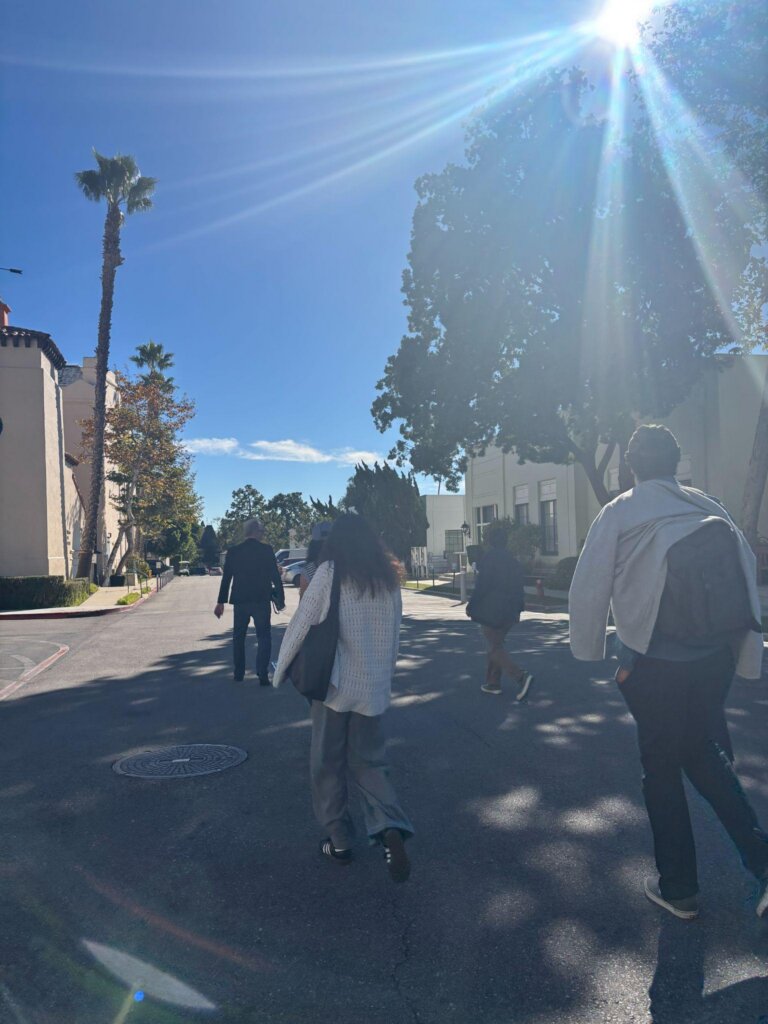
I’ve told a few people in the Fellowship about my social battery. In the past, when I’ve been ready to go home and recharge, I’ve done exactly that. The Fellows Program is a little more demanding, and you can’t just leave when you want to. You can’t just stop when you feel like it –I’ve learned that there are consequences for your teammates when you do!
FPPA has certainly tested – and improved – my stamina. Networking events took place after full days with the cohort; more cohort work and cohort biweekly meetings awaited me after placement work. There was never a shortage of things to do.
It was the same socially, too. My colleagues would often get dinner together after Friday seminars, and at first, I was confused. If you spent 9 AM to 5:30 PM together, how could you spend 5:30 PM to 9 PM together? Eventually, I stopped questioning, and I went for it. I would get the meal with my colleagues despite exhaustion, or the bingsu, or the drinks. I grew from that, even though that wasn’t in the curriculum at all.
What comes after the public policy fellowship
Currently, I’m going through the job search! I hope to land a position immediately after Coro. My interests in education and financial inclusion haven’t changed all that much, but I thank the program for the exposure it gave me to carry out these interests.
I also thank the program for inspiring me to stay (or at the very least, soon return) to Southern California, and strive to make a change within a large population. Los Angeles is a city of so many opportunities, complexities, and people with lives unlike my own. The landscape of the city excites me. It has tug-of-wars between technological innovation and displacement, diversity and disparity, movie fame and infamy. There are many economic challenges that I hope to tackle here. Coro gave me the tools to begin to unpack those challenges, and even if I can’t “solve” any widespread challenge, I’m energized to be a part of the solution.
Lessons for future Fellows
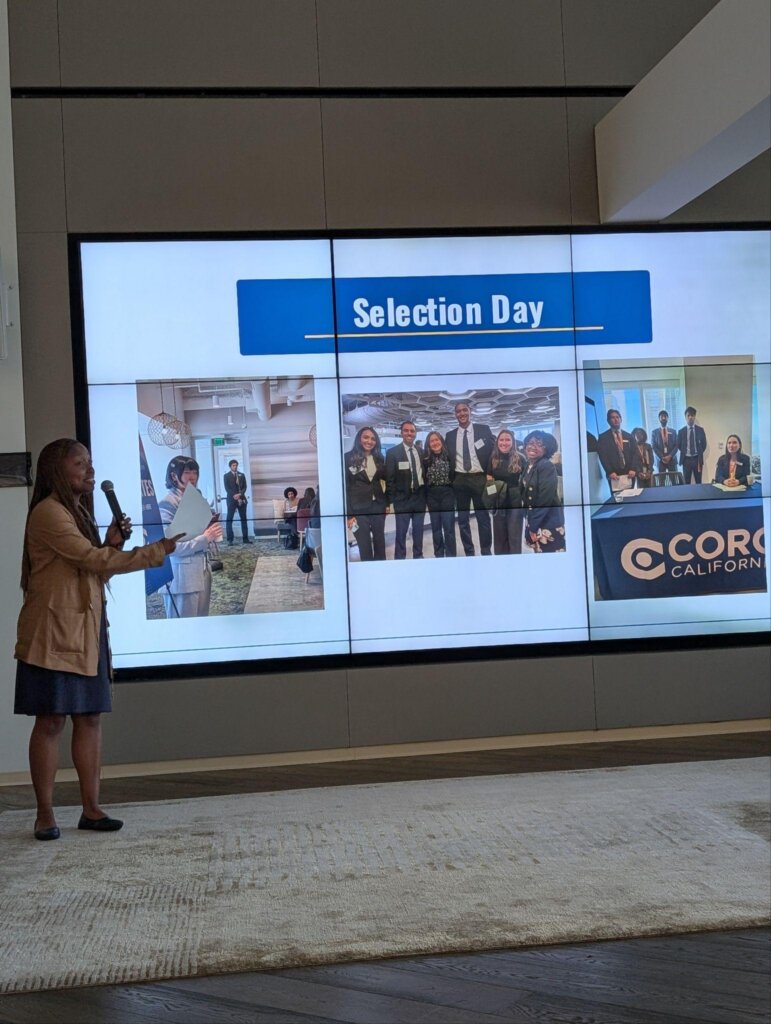
I would tell future Fellows what every other FPPA alum has said: this program will change you. I would emphasize that they should welcome that change. You might come in with an idea of what you want to do with your life. Some Fellows in my cohort have stayed true to that, and all the exposure the program gave them only solidified their dedication. Others have found that their initial interests were thrown off track by the curiosity this program fosters and embraced where the journey took them. Others (like me) found clarity in allowing the program to shape my career trajectory, even though I already knew my passion. I just didn’t realize financial empowerment could show up in multiple ways!
FPPA requires hard work, and anyone who is thinking of applying should be prepared for the work they have to put in to succeed. Work is all-encompassing: yes, they will have to put in long hours. But they should be prepared for emotional and mental change as they are pushed out of their comfort zone. They should know about the invisible (and highly visible) work they will do. They should know that they have to reflect independently, as the program goes on, about what they really want out of this program. It may very well change.
But all that aside, they shouldn’t worry. At the end of the nine months, they will be able to say, “it was worth it.”
About Coro’s Fellows Program in Public Affairs
What would it take to lead well in public life — and where do you go to actually learn it? For more than 80 years, the answer has been Coro’s Fellows Program in Public Affairs. This flagship public policy fellowship, offered in both Los Angeles and the San Francisco Bay Area, is full-time and intentionally rigorous, designed to prepare emerging civic leaders to shape the spirit and integrity of their communities, organizations, and country. Fellows cycle through placements across business, nonprofit, government, labor, and electoral politics; spend Focus Weeks examining the systems that govern daily life; trade questions with influential leaders in closed-door interviews; and build their leadership toolkit in weekly seminars.
The result is leaders who have been tested, not just trained. Through high-profile assignments and individual and cohort projects — including Spring Projects for partner organizations — Fellows produce work that matters and graduate with credentials, a portfolio, and deep policy fluency to show for it. They also join something lasting: a network of 15,000+ Coro alumni that includes U.S. Senators, elected officials, and changemakers across the country. See the full program.
Apply or nominate a Future Fellow
The fellowship is tuition-free, and need-based monthly stipends along with health insurance allowances are available to make full participation possible. Coro seeks recent graduates and early-career professionals who lead ethically and want to strengthen democracy through civic engagement.
If any of this sounds like you — or like someone in your circle — stay tuned for the application portal, which will open in early September.
Learn more about starting your leadership journey with Coro:
Anya Bibbs
Ready to strengthen your leadership impact?
Explore programs designed to equip leaders with the skills to drive change.