

Jessica has spent more than two decades advancing affordable housing through research, policy, and community development, from her early work at a community development corporation in Brooklyn to her current role as the Managing Director of Research at the California Housing Partnership. Through Coro’s Affordable Housing Leadership Network, she joined a cross-sector group of leaders from across the Bay Area to sharpen how she leads through one of California’s most complex challenges.
We sat down with Jessica to talk about her housing journey, the Coro tools she still reaches for, and her vision for a stronger California.
Coro teaches great leadership tools, but for me, it was really about seeing the person behind every affordable housing advocate. Everyone in this field has a story about why they do this work.
From the Tenderloin to Bushwick: the housing leadership journey
What first pulled you toward affordable housing, and when did you know it was the work you wanted to build a career around?
My parents came to the U.S. as refugees from China, and I am the child of immigrants, born in San Francisco. Growing up in immigrant communities, I was surrounded by families who worked incredibly hard and wanted the best for their children. But I also remember when someone would receive a letter they couldn’t read or needed help navigating a system they didn’t understand. Looking back, that was my first glimpse of the barriers that people face, but also of the strength of communities that come together to support one another.
Over time, my dad built a successful engineering business, and we were able to move into nicer homes. When I transferred to a high school in Orinda, I remember how striking the difference was between communities. One month, I was riding the bus across Richmond, and the next, I was going to school in a completely different world. I wondered: why should where you live make such a difference? Why can’t every child have the same opportunities to grow up, learn, and succeed? That question has stayed with me throughout my career.
It wasn’t until I moved to New York and started working at a community development corporation in Brooklyn called RiseBoro, that I really understood what stable housing could mean for people’s lives. Riseboro emerged out of a period in the 1970s when fires and disinvestment devastated neighborhoods. What I appreciated was that it met the community where it was, listened to what residents needed, and responded with services.
I worked in the housing department, and people would walk through our doors on the verge of homelessness. Maybe they’d lost a job, were facing eviction, or had a medical emergency. We would connect them with a case manager, walk them down the hall to get food assistance or legal help, and work with them to find a place to stay.
That’s when I knew this was the work I wanted to do. I saw firsthand that affordable housing isn’t just about buildings. It’s about giving people stability, connecting them with the support they need, and making sure everyone has a fair chance to thrive.

You recently joined the California Housing Partnership as Managing Director of Research. What are you working on right now, and what has you most energized about this chapter?
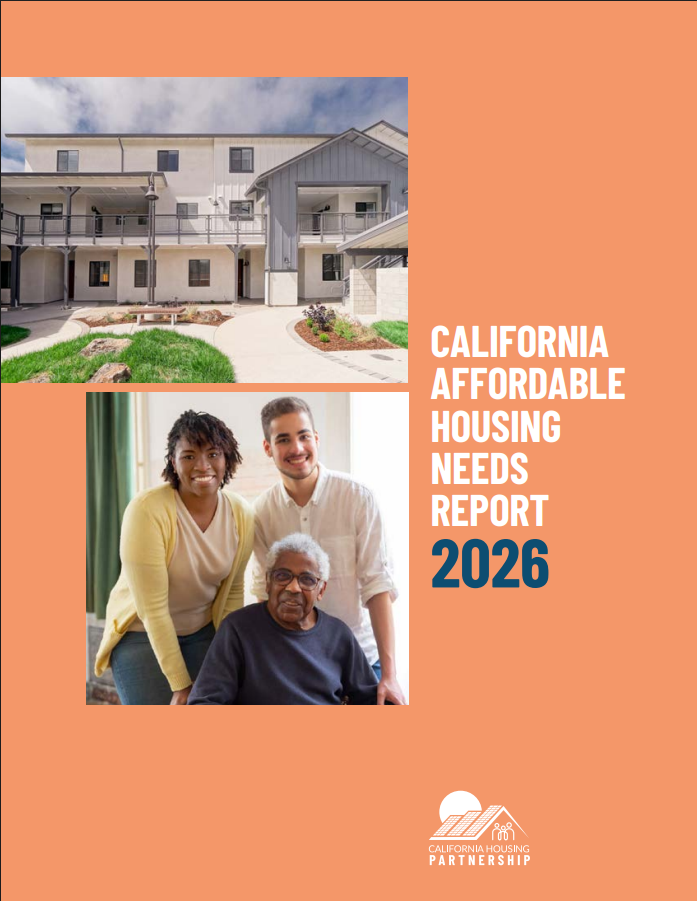
The California Housing Partnership creates and preserves affordable homes for low income Californians by providing financial expertise, research, and policy solutions to nonprofit and public agencies. It was established by the State Legislature in 1988, and what makes it special is that it combines hands-on work helping affordable housing get built with research and advocacy to improve housing policy. There aren’t many organizations that bring those two sides of the work together. What energizes me most is the opportunity to use research to inform policies to make housing more affordable to Californians.
Our team recently analyzed the potential impact of Proposition 1, an $11.25 billion affordable housing bond on California’s November ballot. We estimated Prop 1 would create and preserve over 40,000 affordable homes, expand homeownership opportunities for first-time buyers and veterans, and help families and seniors remain in their communities. The California Legislative Analyst’s Office (LAO) subsequently drew on our findings in its analysis of the measure, demonstrating how our research helps inform statewide policy discussions.
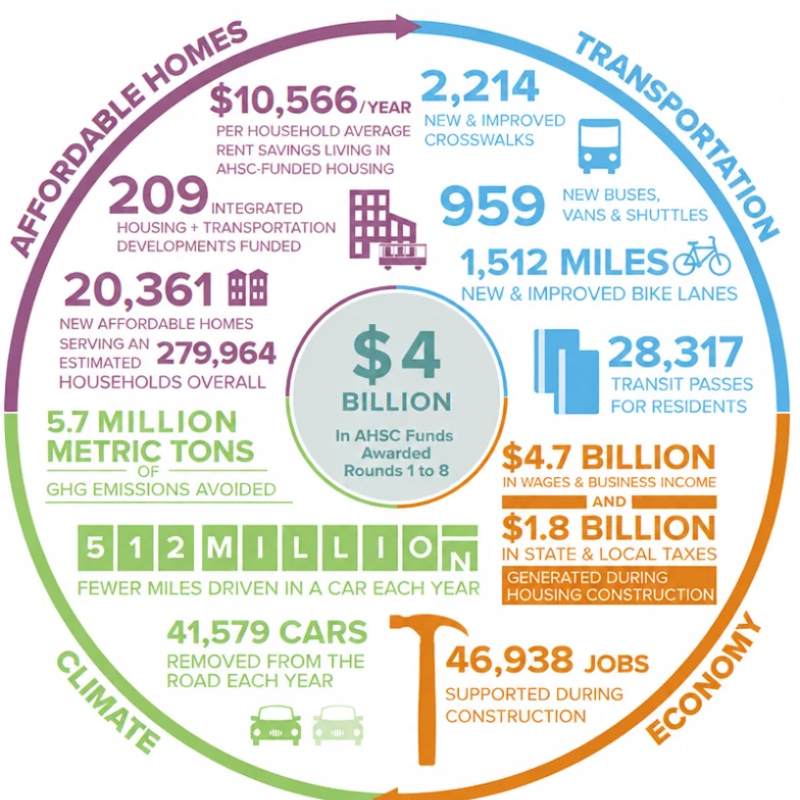
In California, affordable housing saves residents an average of $760 per month, or over $9,000 annually, compared to what they would pay for market-rate housing. Decades of public investment in more than 500,000 affordable homes have generated nearly $71 billion in cumulative rent savings for California households, giving families more room in their budgets for groceries, healthcare, education, and other essentials. For me, it’s exciting to see how our research can help people understand the real-world impact of housing investments.
Turning data into impact
Before this role, you spent years working with state and local governments on data-driven affordable housing policy, including as President of Urban Math. Looking at that arc, what’s the throughline in how you approach a housing problem? And how did your time in Coro’s Affordable Housing Leadership Network sharpen that approach?
I think good research starts with humility. Sometimes the data tells you something you didn’t expect, or a focus group reveals a perspective you hadn’t considered. As a researcher, your job is to hold these different perspectives, understand what the evidence is telling you, and consider what is possible. You are not the decision-maker, but you have to translate information into something meaningful for policymakers.It’s not easy to do this well.
One of my favorite Coro tools is called DKDK: “what you don’t know you don’t know.” It’s a reminder that no matter how much expertise you have, there will always be something that you don’t know or haven’t considered. Being open to the unknown, and recognizing that other people or different research methods can help fill those gaps, ultimately leads to better decisions.
Affordable housing is what Coro calls an adaptive challenge. There’s no magic wand or single policy that will solve the housing crisis. We need multiple strategies working together over time to make housing affordable, and I think Housing California’s Roadmap Home provides a strong north star.
Through Coro’s Affordable Housing Leadership Network, I spent session after session alongside advocates, government officials, developers, consultants, and community development lenders. What stayed with me was the realization that we don’t have to solve these challenges alone. We have the collective knowledge and experience to make real progress, if we work together. There aren’t many spaces that bring all those perspectives into one room, and that was what made the experience so valuable.
A housing leadership program that empowers alumni
How has your cohort shown up for you since the program ended?
We’ve stayed friends. Every so often, we get together for a "peer consultancy" (another Coro tool), where someone brings a challenge they’re facing, and we draw on what Coro taught us: listening carefully, asking thoughtful questions, and stepping back to see the bigger picture. Because we’ve all gone through the same training, there’s a shared understanding that makes those conversations valuable. The experience also built a level of trust that’s rare to find with a group of people you meet as adults.
As the program has grown, it’s been wonderful getting to know people from Cohort 1, and I’m looking forward to meeting Cohort 3. Affordable housing is a field built on relationships, and there’s something reassuring about knowing I can pick up the phone and call someone from Coro, whether I have a question about state resources, want to connect with an advocate, or just need another perspective. It’s a community I know I can continue to learn from and contribute to long after the program has ended.
For someone on the fence about this program, what would you tell them, and who is this experience really for?
I can’t imagine being on the fence! The opportunity to look inward at your own leadership, outward at how you work with others, and forward at the challenges facing our industry is something you don’t often find in a professional development program. I understand that taking time away from work is a real consideration, but aside from learning from great managers, this has been the most valuable professional training I’ve had. And the relationships you build are just as important as the leadership skills.
AHLN is a great fit as a mid-career professional. Most people in my cohort had at least 10 to 15 years of experience, and some had 30. I loved that range. I learned so much from people who had spent decades building programs and leading organizations, while also getting to know peers navigating similar challenges in their careers.
If you’re on the fence, I’d say go for it. It’s rare to find a program that gives you the space to reflect on your leadership while building a network of people you can trust and turn to for years to come.
A vision for a stronger California
What’s your vision for a stronger California when it comes to housing, and where does your own work fit into that bigger picture?
My vision is a California where we put our belief that housing is a human right into practice. The challenges can feel overwhelming, whether it’s the number of low-income families struggling to afford rent, the rising cost of building housing, or the unhoused we see in our communities. But I often remind people that we know what works. We need to build more affordable homes, preserve the housing we already have, and protect people from displacement.
What’s missing is the scale of investment needed to make those solutions a reality. There was a time when we treated housing as essential infrastructure, and I believe we need to return to that thinking.
I’d love to see California establish a permanent, dedicated source of funding for affordable housing. When we invest more, we can create and preserve more homes. Ultimately, I want to see a California that invests in its people, through housing, education, health care, and climate resiliency. That’s how we build a stronger, more affordable future for everyone. My role is to keep advancing the research and evidence that help make the case for those investments and turn that vision into reality.
Beyond housing, you’ve also spent five years serving on a school board in rural California. What has that experience taught you?
I stepped into the role during COVID, after a respected teacher and administrator resigned following harassment. I didn’t think what happened was right, and I felt it was important to step up and serve.
What’s interesting about serving on a rural school board is that our members come from across the political spectrum, from the far right to the far left. As board chair, I’ve learned that one of the most important things you can do is set the tone. We may have different political beliefs, but we’re all there for the same reason: to serve our children and give them the best education possible.
That shared purpose has helped us move forward on things that matter to families, like expanding after-school programs through California’s Expanded Learning Opportunities Program, providing freshly cooked meals to every student, and working with our unions to implement Professional Learning Communities, where teachers collaborate to improve student outcomes.
In today’s polarized political climate, I think we lose something important when we start seeing people as belonging to the red team or the blue team. We stop seeing the person behind the politics. I’ve learned how important it is to sit down with your neighbors, share a meal, and get to know one another as people. You don’t have to agree on everything to find common ground, build trust, and do meaningful work together.
About the Affordable Housing Leadership Network
The Bay Area needs leaders who can navigate complexity and build cross-sector housing solutions. Coro California’s Affordable Housing Leadership Network brings together housing professionals across sectors for 60 hours of immersive leadership training from February through June.
Over ten full-day sessions and two multi-day retreats, fellows practice Coro’s leadership tools, learn directly from decision-makers shaping Bay Area housing policy, and take on collaborative projects tackling real regional challenges. Most importantly, they join a network of peers who keep showing up for each other long after the program ends.
Applications for the next cohort close November 15, 2026.
Apply today, nominate a housing leader in your network, or schedule a call with our team to learn more.
Learn more about Coro California’s leadership development programs.

Gohar Chichian
Ready to strengthen your leadership impact?
Explore programs designed to equip leaders with the skills to drive change.