
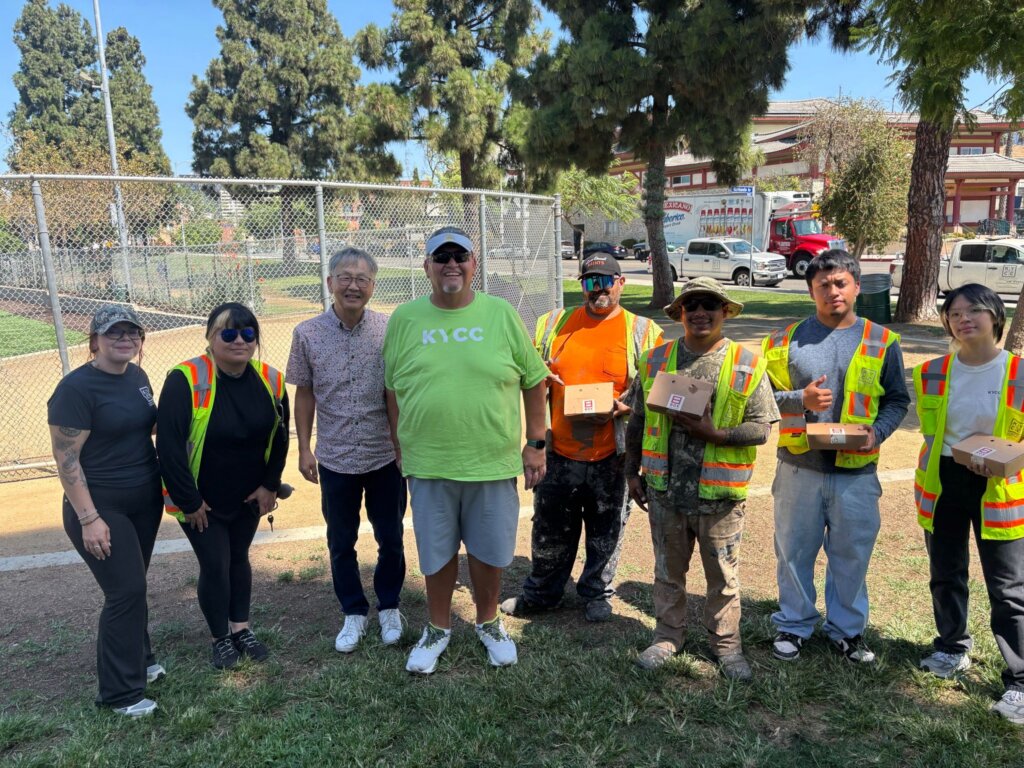
AEG Graffiti Removal Event at Seoul International Park.
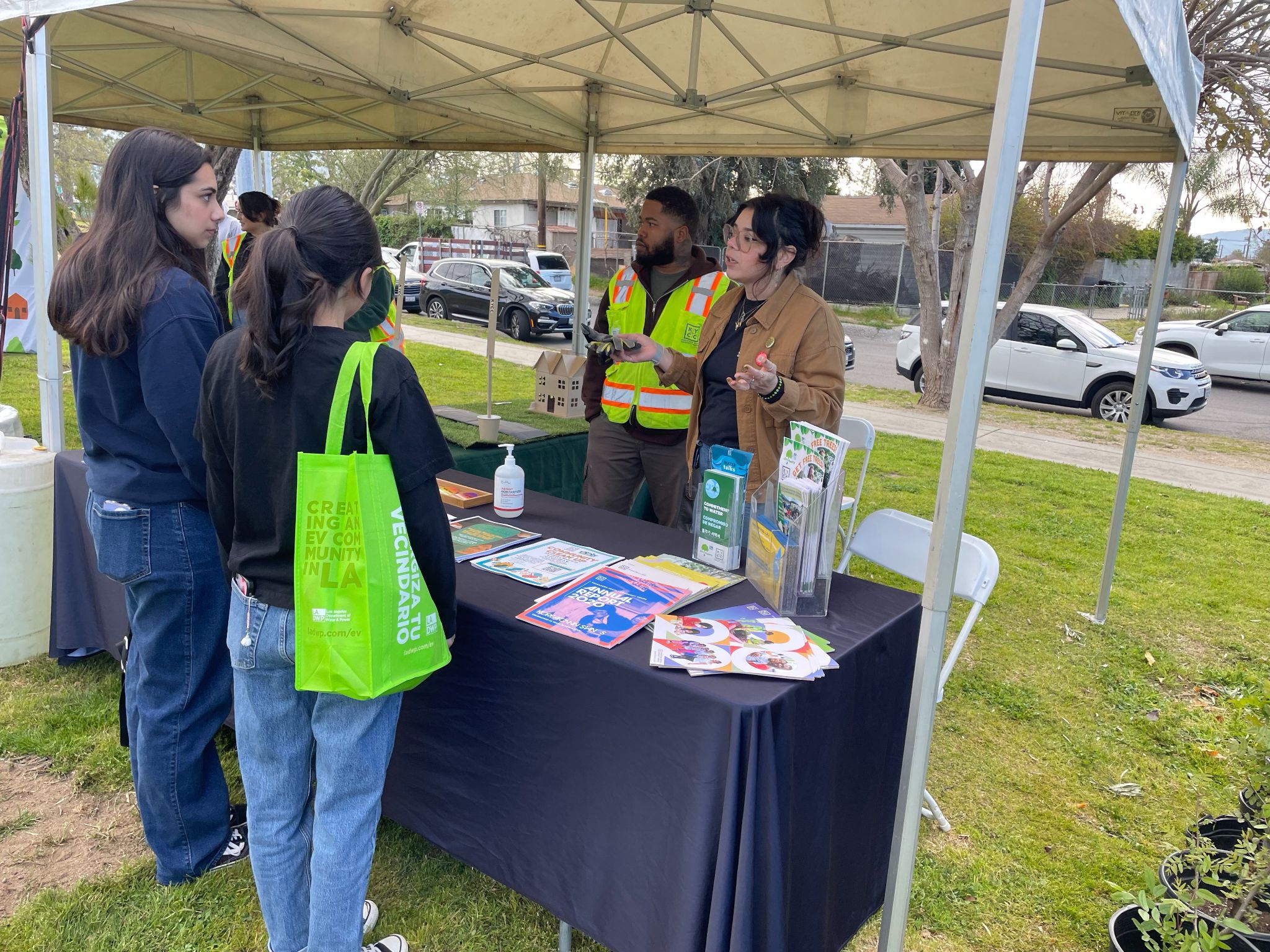
Angelic’s climate journey began with a door-to-door conversation: a longtime South LA resident reminded her that planting trees starts with understanding a neighborhood’s history and lived experience. Today, as Senior Community Engagement Coordinator at Koreatown Youth and Community Center (KYCC), she brings that listening-first approach to urban forestry and community resilience. An alumna of Coro California’s Climate Resilience Leadership Network, Angelic shared how the program reshaped the way she leads, why a simple hand fan says so much about how we’re adapting to heat, and what she’d tell anyone thinking about applying to the program.
Before the climate resilience leadership program: California communities as teachers
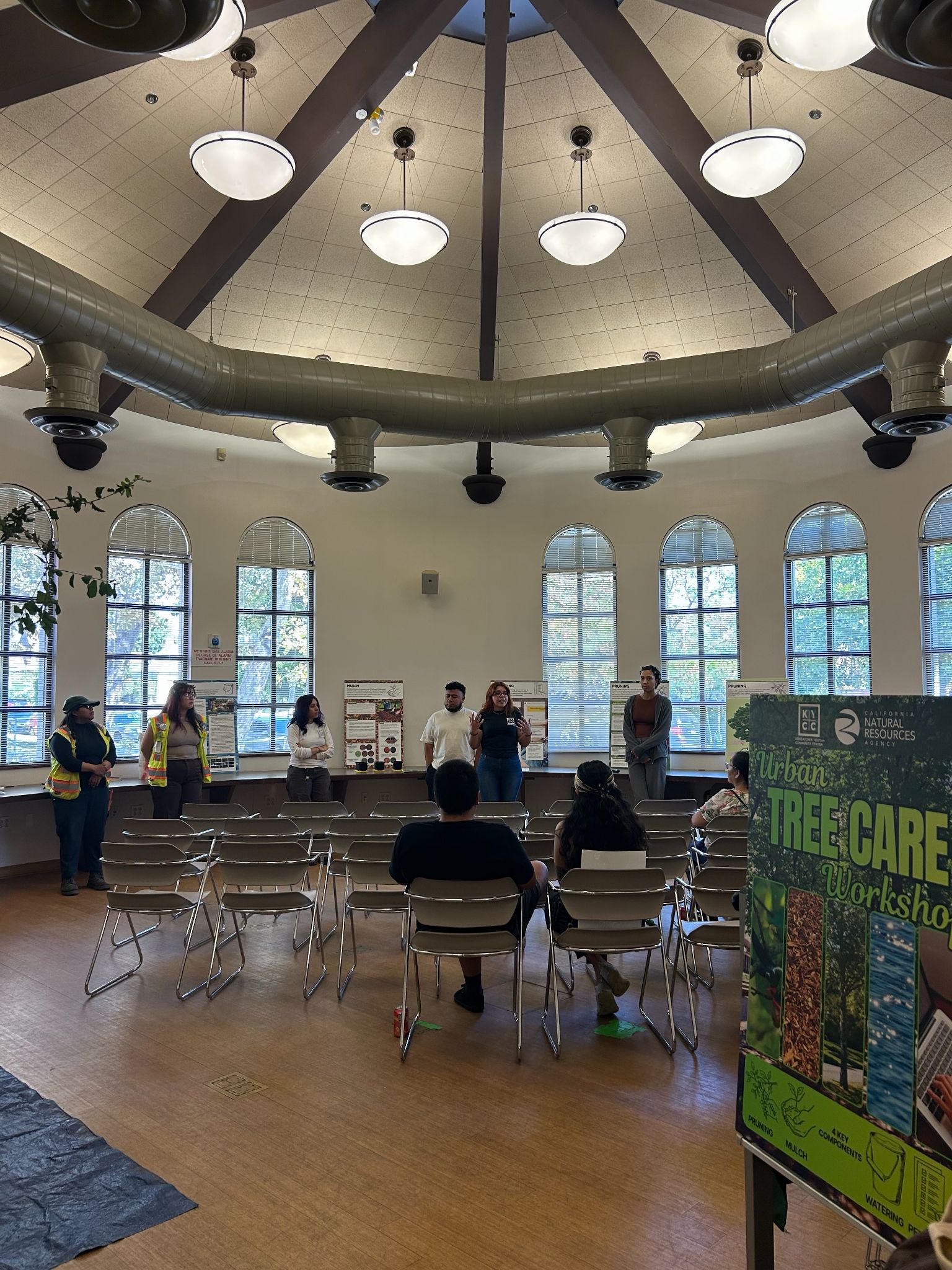
Tell us about your role at Koreatown Youth and Community Center. You started in urban forestry outreach. How has your work evolved, and what are you most energized by these days?
I earned my degree at Cal State Fullerton, and my background is in earth science. When I pictured my career, I knew I wanted to work in education. I didn’t want to be a teacher, but I did want to be a resource.
When I discovered KYCC, I didn’t even know they had an environmental services office. I was brand new to urban forestry and had no background in urban planning or project development, so I was immersed right away. I started as an outreach specialist, canvassing door to door as the South LA representative.
I remember one community member who really schooled me. He told me, "Thank you for what you’re doing. It’s great that you’re trying to add trees. But you have no understanding of the area you’re in, the history here, or how we feel, and you’re coming in to tell us we need trees." He was totally right. I knew the council district boundaries and what a parcel looked like, but I didn’t know what it meant to live on that block for more than 30 years, or why it looks the way it does and doesn’t get the resources it should.
That gave me so much energy to learn. I told my supervisor, Cristina Basurto, I didn’t think we knew enough to go into communities as experts, and I pushed for more education, more professional development, and a deeper understanding of community-based needs. KYCC gave me a lot of trust and room to grow. We read theories, explored new concepts, and looked for better ways to prepare ourselves.
What energizes me now is hearing community perspectives. With everything I know, I can logically break down why we can’t do certain things. But when someone brings so much energy without that background, it reminds me that even inside our silos, there’s opportunity.
Inside the climate resilience leadership program: California leaders finding their style
Was there a moment in the program that shifted how you think about climate resilience or your own leadership? What frameworks do you find yourself returning to?
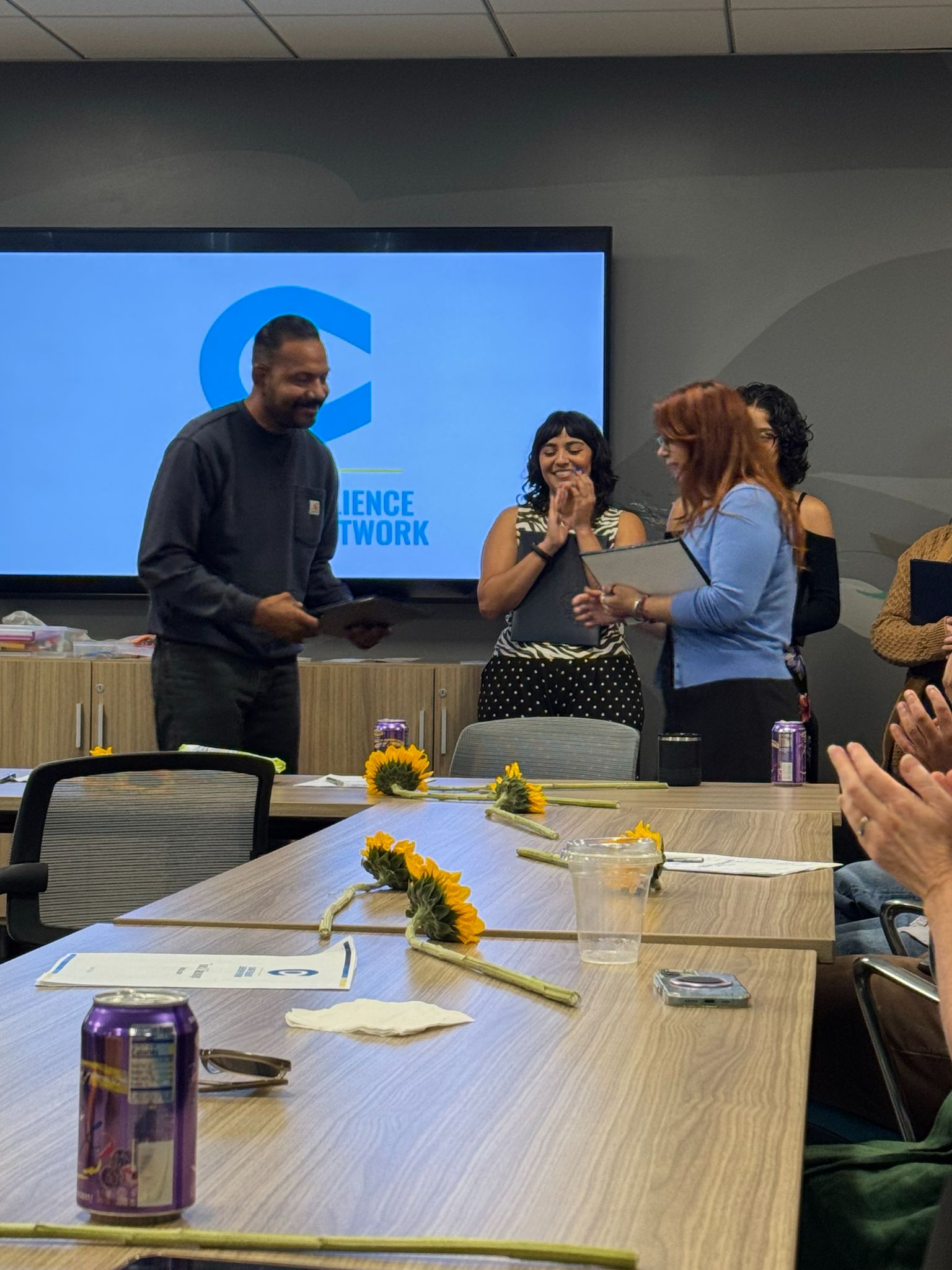
Two moments stand out. The first was when we explored leadership styles and broke into groups: directing, persuading, analyzing, and so on. I’d been struggling with this in my own organization, comparing myself to others and expecting things from people that didn’t fit how they work. The activity showed me there’s nothing wrong with the way I lead. We all just need different things to succeed. Seeing it from both the supervisor’s and the supervisee’s side opened up dialogue that felt really good.
It also changed how I supervise. The one staff member I supervise is an analyzer, and the activity gave me the language for that. We function completely differently, so I’ve learned to be much more intentional about how I support her.
The second moment came from a presenter whose ideas challenged all of us. What I took away was a deeper kind of optimism: even when we think there’s no way, there’s always a way or a workaround. It’s our way of thinking that’s limited. If we accept that we’re limitless, we open up more room for innovation and collaboration. It made me feel seen. It gave new words to what we’re already doing, which comes from innovation and the limitlessness of ourselves as a community.
How has your growth as a leader changed the outcomes around you, at KYCC, with community members, or with partners? What’s different now because of how you lead?
If I see a need, I will run to fill it. But that can also lead to burnout. When I act reactively, I don’t feel my best. There’s a burst of energy, and then a sink. Early on as a supervisor, I felt that high and low constantly, balancing staff emotions, projects, and everything else that needed managing.
Since Coro, I’ve worked hard to be less reactive. Slowing down lets me gain more ground and stability and gather more details before I respond. As a persuader, I can come up with fast solutions, but they aren’t always the best long-term ones. Now I try to be more intentional: get the full picture so I can make a more thoughtful decision.
Community beyond the climate leadership program
Leading in the climate space asks a lot. Tell us about a time someone from your cohort or the broader Coro network showed up for you, or you showed up for them. What has that community meant for sustaining you?
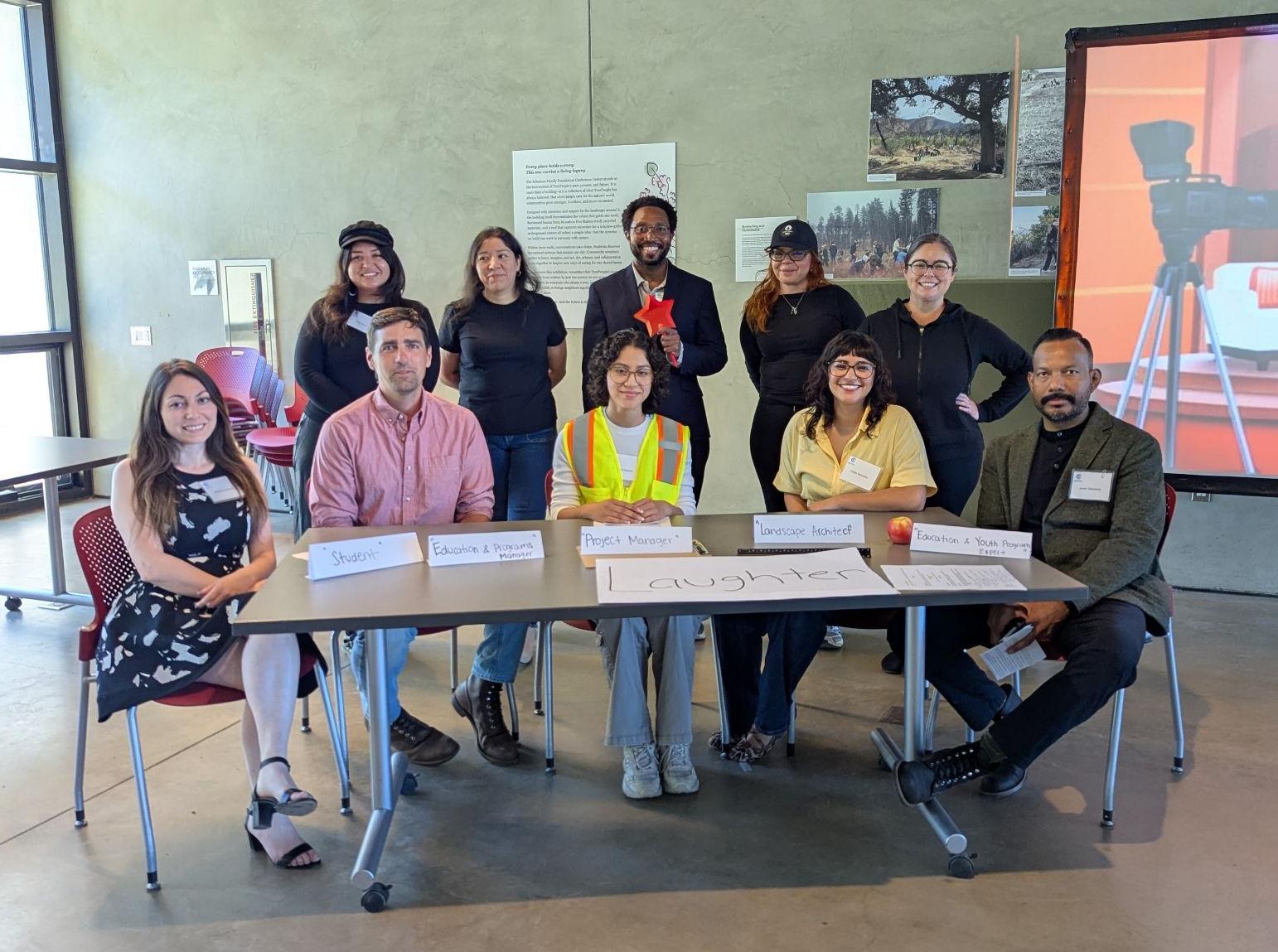
Toward the end of the program, we did peer consultations, and one of my peers, Lolly Lim, showed up for me in a way I didn’t expect. She gave me so much validation for things I didn’t even realize I was processing, including the invisible weight of being a woman and a person of color in this field. I’m half white and half Mexican, and I hadn’t fully acknowledged that part of my identity in myself. She helped me do that. Coming from a science program where I rarely saw people like me, I often felt like I didn’t belong. Coro made me feel like I belong, and that even in really high-stress times, there’s still a place of peace and possibility. I really needed that.
Then there’s Katie Vega, from a previous cohort. Long before we connected through Coro, I admired how she manages projects, leads community engagement, and partners across teams. We’d collaborated with her team at USC, and I see her as a mentor. Knowing she’s part of Coro made me admire her even more. She understands that process of deeper thinking, and she chose to commit her time to it.
The future of climate resilience
What’s your vision for a more climate-resilient California, and what role do you see yourself playing in it?
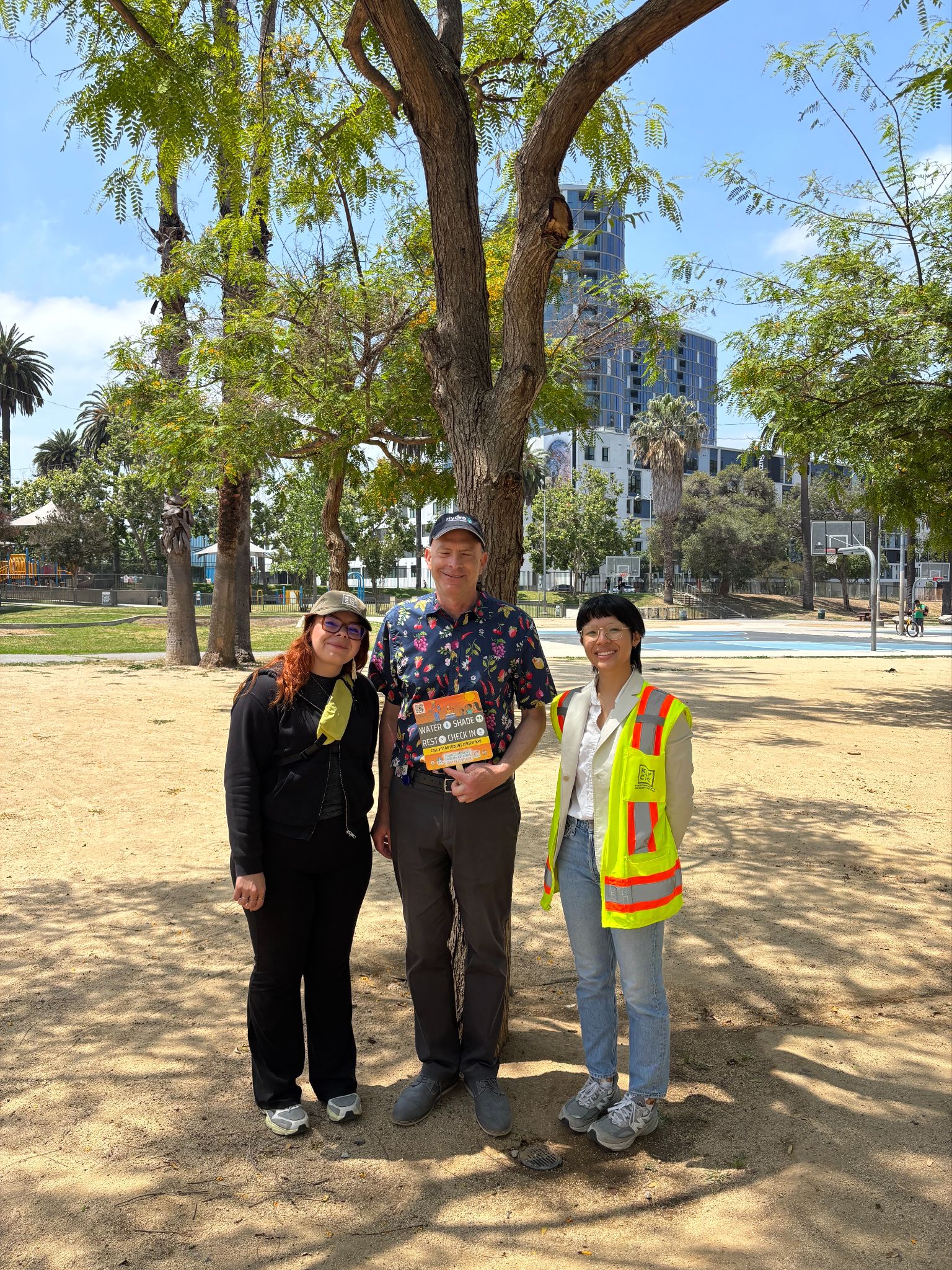
I see it as an evolution. I’m good at identifying trends and patterns, and lately I’ve been starting conversations with my staff about hand fans. They’re an accessory now because it’s been so hot. That touches marketing, the economy, even beauty. People are getting creative with paper fans and foldables, and you see them right by the register at 7-Eleven. It says a lot about how temperature and weather show up in someone’s daily life. You can’t escape the heat, so you carry an extra tool: your phone, your cards, your keys, and your hand fan.
It starts with our youth, because they lead our trends. Next come bedazzled fans, solar-powered fans, bigger fans. It can seem small, but in reality, we’re adapting, slowly and incrementally, like a pot that’s gently simmering. We know we’re not fully prepared, and that’s okay. But we need to find the strategies and have the conversations, and that starts with naming these patterns. Our youth are telling us it’s getting really hot, and their lives won’t look exactly like ours.
I’m also thinking about it at an organizational level. Our staff are working shorter days because of the heat, which means we produce less, report less to funders, and invoice less. When we talk about deliverables with funders, we need to be honest that this isn’t a choice; it’s the reality. Our crews are exposed to more extreme conditions, and it’s harder to build a workforce ready to do this work when the conditions are so demanding.
For our environmental services team, my goal is to make sure staff feel comfortable naming that reality, that our leadership is aligned with what’s happening, and that our community is prepared for greater exposure to the elements. My role? As a persuader, I’ll throw out a lot of ideas and hope someone catches one.
What would you say to a climate or community leader in LA County who’s considering applying to the Climate Resilience Leadership Network?
Do it, because your mind is going to be blown. It really is.
When I started the program, I wasn’t feeling my best or as receptive as I wanted to be. I had to remind myself that this was an opportunity to be in this space with these people. Even when it was hard to focus, I knew I wanted to be there. It felt purposeful and meaningful to me.
If you’re feeling a little dread, or a little out of control, this will give you peace and a community you know will be there for you. We’re not asking something of you. We know what our communities need, and we want to give, not take.
This network was truly life-changing, and I hope anyone who’s interested gets the opportunity to participate.
About the Climate Resilience Leadership Network
Coro California’s Climate Resilience Leadership Network develops stewards of resilience and systems change across Greater Los Angeles. Designed with Accelerate Resilience Los Angeles, this part-time program blends adaptive leadership practice with place-based learning at sites throughout Los Angeles County. Cohort members build systems-thinking skills and lead a collaborative project on a real climate challenge facing the region. The program welcomes leaders working in resilience advocacy, environmental justice, clean energy, water, land conservation, community development, and related fields.
Applications for the next cohort are due November 15, 2026.

Gohar Chichian
Ready to strengthen your leadership impact?
Explore programs designed to equip leaders with the skills to drive change.