
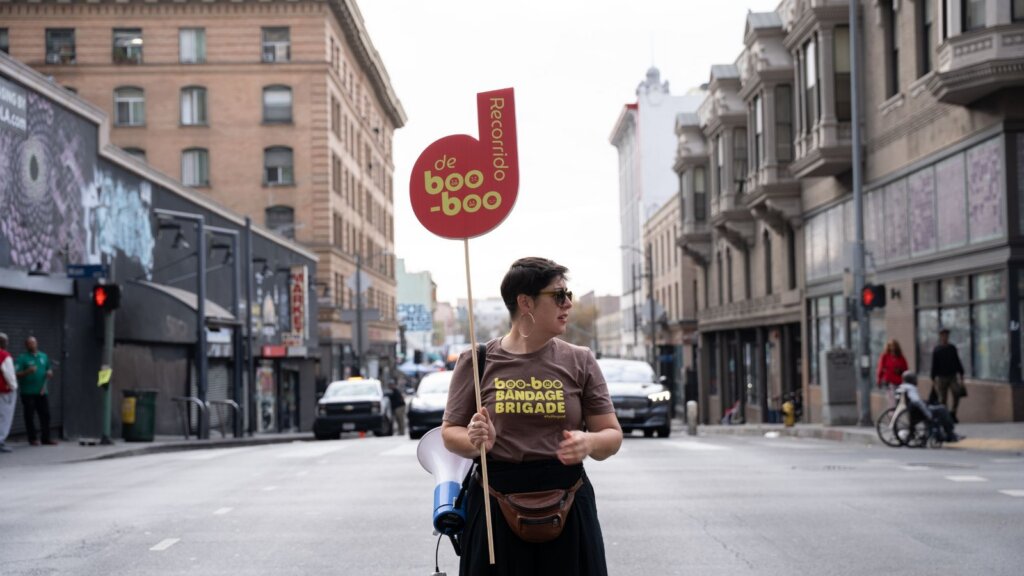
For Alex Ramirez, cities are places we inherit and shape together, a lesson she carried from Cholula, Mexico, to her role as Executive Director of Los Angeles Walks. As an alumna of Coro California’s Climate Resilience Leadership Network, she brings a planner’s lens and two decades of organizing to building a city that is more connected, affordable, and joyful. We sat down with Alex to talk about her Coro experience, cross-organization partnership, and what it takes to build a Los Angeles where everyone can belong.
That’s probably Coro’s biggest lasting impact on me. I’m much more interested in what people uniquely bring to the room than whether they lead the way I do. Sometimes the best thing you can do as a leader is create enough trust for everyone to bring their particular superpower—and enough room for the weird idea to become the one that lasts.
Before the climate leadership program: family roots and urban planning
What first drew you toward urban and regional planning, and when did you know it was the work you wanted to build a career around?
I grew up in Cholula, a city in central Mexico where people have lived for nearly 3,000 years. The largest pyramid in the Americas is there, but you can’t see most of it because the city has been rebuilt on top of it for centuries. I experienced cities as places we inherited, but also shaped through everyday life.
I studied architecture and became a single parent after my third year. My days were school, parenting, and waitressing at night. I loved design, but was increasingly interested in how everything connected.
Then a car crash left me unable to drive for six months, so biking became how we got around—often with a tiny kid in a ballet outfit and helmet. Biking ran in my family. My dad was an avid cyclist who rode 500 kilometers to Oaxaca every year, and my grandfather was a baker who delivered bread around town by bike. It reminded me of something cities can easily lose as they grow: being able to walk or bike is pretty fundamental to a good life and a thriving built environment.
A national scholarship gave me the chance to pursue a master’s in urban planning at the University of Michigan. Planning brought together what I was already doing—design, transportation, community, and advocacy—and gave me the tools to understand those connections at the scale of a city. That’s when I knew I’d found my field.
What are you working on right now, and what has you most energized about this work as you look toward 2027?
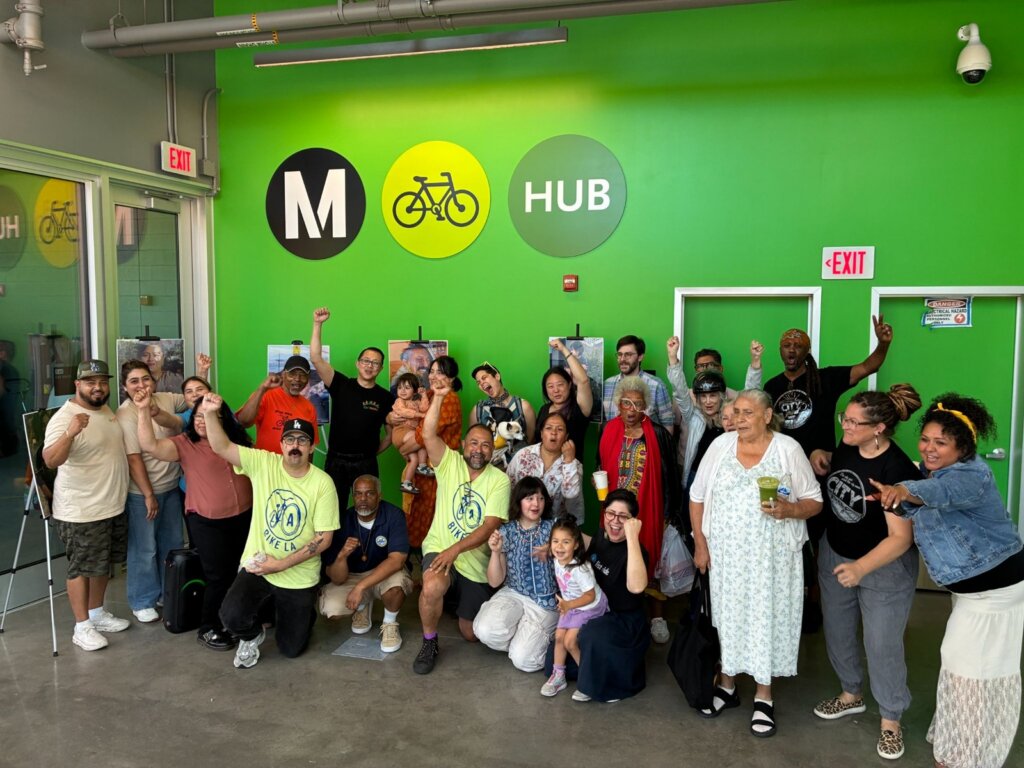
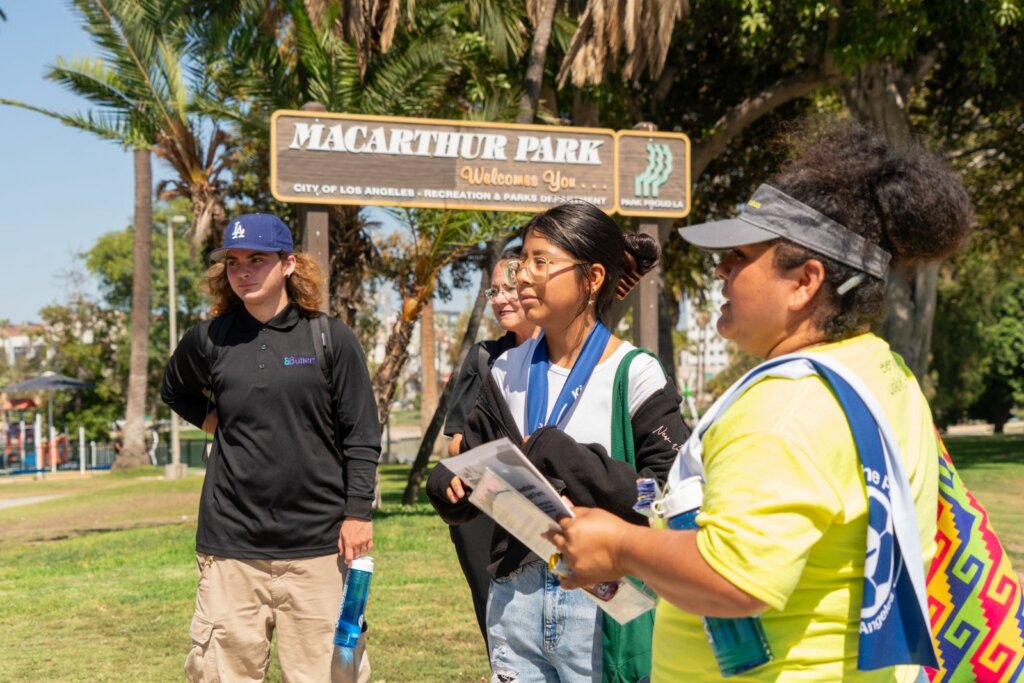
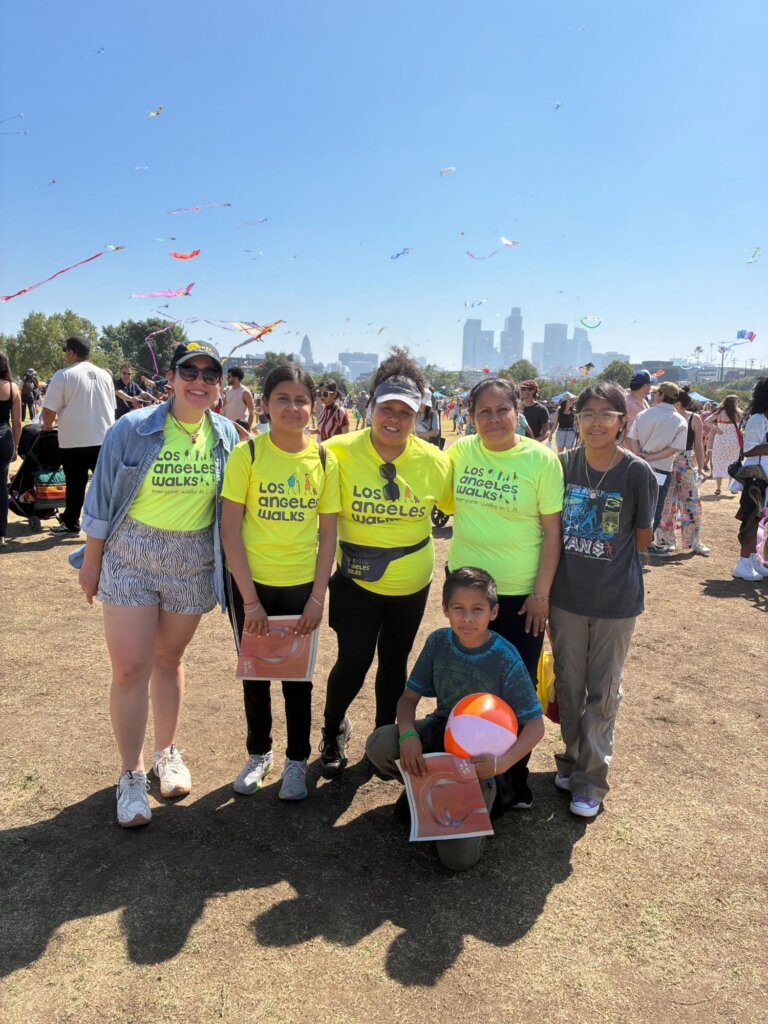
Together with BikeLA and local partners, we did almost 50 events from April through July this summer, and this fall, we’re averaging about eight a month. It sounds like a lot—and it is—but I genuinely find this work fun.
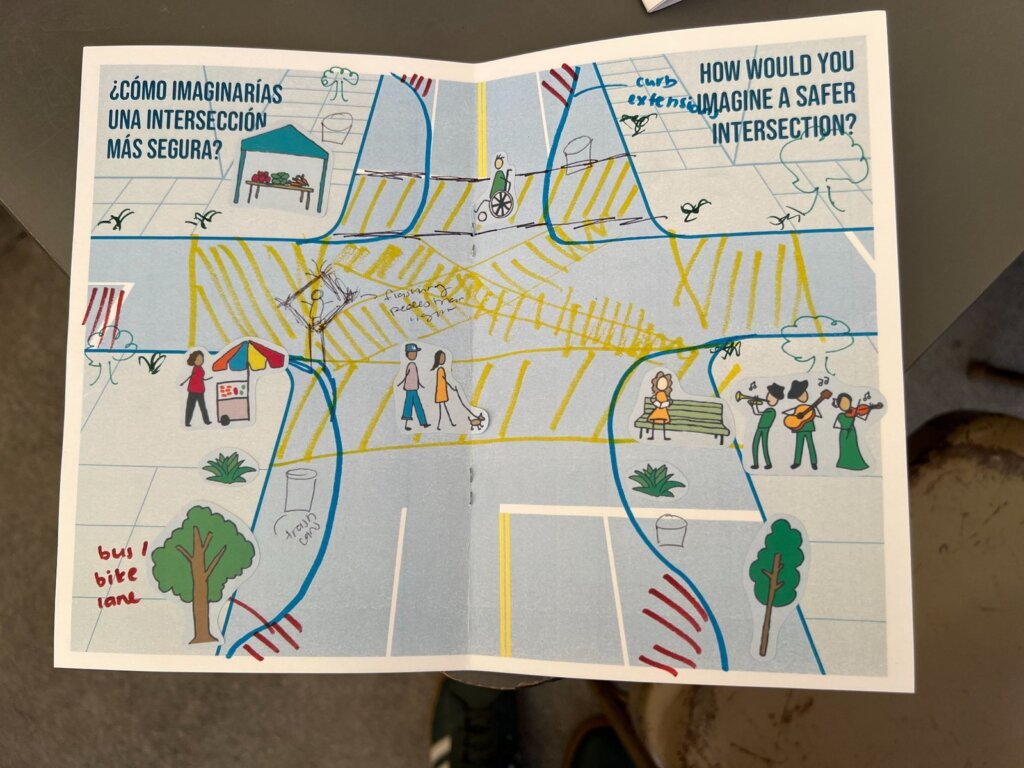
A lot of it is about “walking the walk,” pun intended. LA Walks has a long tradition of walking tours connecting people to neighborhood history and advocacy. We’ve built on that by centering the everyday experiences of working-class communities and asking how what happens on the street can inform what we build and advocate for.
What energizes me looking toward 2027 is how all of this connects. Los Angeles has huge global events coming, but I’m most interested in what remains after they leave. I want the infrastructure and programming we’re building now to be rooted in lived experience, art, and storytelling—and ultimately make getting around LA on foot, transit, bike, or however you move a little easier and a lot more joyful.
How did the partnership with BikeLA come about? Where does it stand now and where are you excited to take it next?
When I joined LA Walks, I quickly realized the organization was in a serious financial crisis, and there were moments when I wasn’t sure we would make it through. I went back to something I know from home: you find the threads around you and weave yourselves together—stronger and more colorful.
I started having honest conversations with leaders across public space and mobility justice. BikeLA’s ED, Eli Akira Kaufman, and I found a lot of common ground around a more multimodal movement, storytelling, and building organizations that reflect our values. Eli is also a recent Coro Climate Resilience Leadership Network alum, so we share some language around leadership and how change happens.
With support from our coach Helen Chin, we talked through values, capacity, and what each organization could bring. Winning the Willowbrook/Rosa Parks Station contract together was a turning point; neither organization would be doing that work in quite the same way alone.
Today, we share staff and systems even though only about a third of our projects overlap. The bigger ambition is to bring more mobility justice organizations into this way of working—pooling capacity while each brings its own relationships, history, and expertise. If we can do that well, we can spend less energy competing for limited resources and build a more resilient movement.
Lessons from Coro’s climate leadership program
How has Coro changed the way you lead, and where have you seen that show up in your work?
Coro was a really affirming space for me. I’d spent more than a decade in nonprofit work connecting dots across people, sectors, and issues, and Coro gave me language for those instincts and helped me understand them more deeply.
One of my favorite exercises was actually one of the first: identifying our leadership styles. Suddenly you could see why one person needs to analyze an idea from every angle, while someone else wants to persuade everyone around it, facilitate the conversation, or just say, “Great, how are we getting this done?” It stuck with me enough that when friends went through Coro in the cohort after mine, I remember texting them: “Okay, what leadership style did you get?”
We really put that into practice with our group project. Because we understood how differently we each worked, we created a space where everyone felt comfortable being a little quirky, weird, and creative—and somehow that led us to develop these amazing fire resilience oracle cards. I still use them in facilitation today.
Take us back to your Climate Resilience Leadership Network experience. Is there a specific session, site visit, or piece of feedback that’s stuck with you?
We had just experienced the Palisades and Altadena fires, so that experience was very present for all of us. During the pandemic, I organized in Northeast LA, starting a food distribution that served more than 400 families every week. We built networks of mutual aid across neighborhoods, and when the fires happened, those same networks were activated. Resilience felt much less abstract.
I remember several of our Climate Resilience Leadership Network sessions at TreePeople. During one session, we learned about oak trees and the role they can play in fire-resilient landscapes—the way they hold water, support ecosystems, and create these incredibly strong, interconnected root systems.
That stayed with me because it gave me a different way of thinking about resilience. It isn’t just about responding when something goes wrong. It’s about what you plant, nurture, and connect long before the crisis arrives.
I still think about those oak trees when I’m navigating difficult systems-change questions: strong systems aren’t necessarily the most rigid ones. They’re the ones with deep roots, the ability to hold and share resources, and relationships strong enough to protect one another when conditions change.
Beyond the climate leadership program: connections that last
How has your cohort, or the broader Coro network, shown up for you since the program ended?
I went through a pretty major life transition toward the end of the program, and I was really grateful for how people held space for me. There wasn’t pressure to explain everything or have it all figured out. People just showed up with a lot of care.
That has continued beyond the program. We have a pretty active WhatsApp group across the cohorts, and I love how honestly people use it. Someone can say, “I’m running into this barrier at work—does anyone have a resource?” and inevitably somebody makes a connection. I’ve definitely been on the receiving end of that generosity.
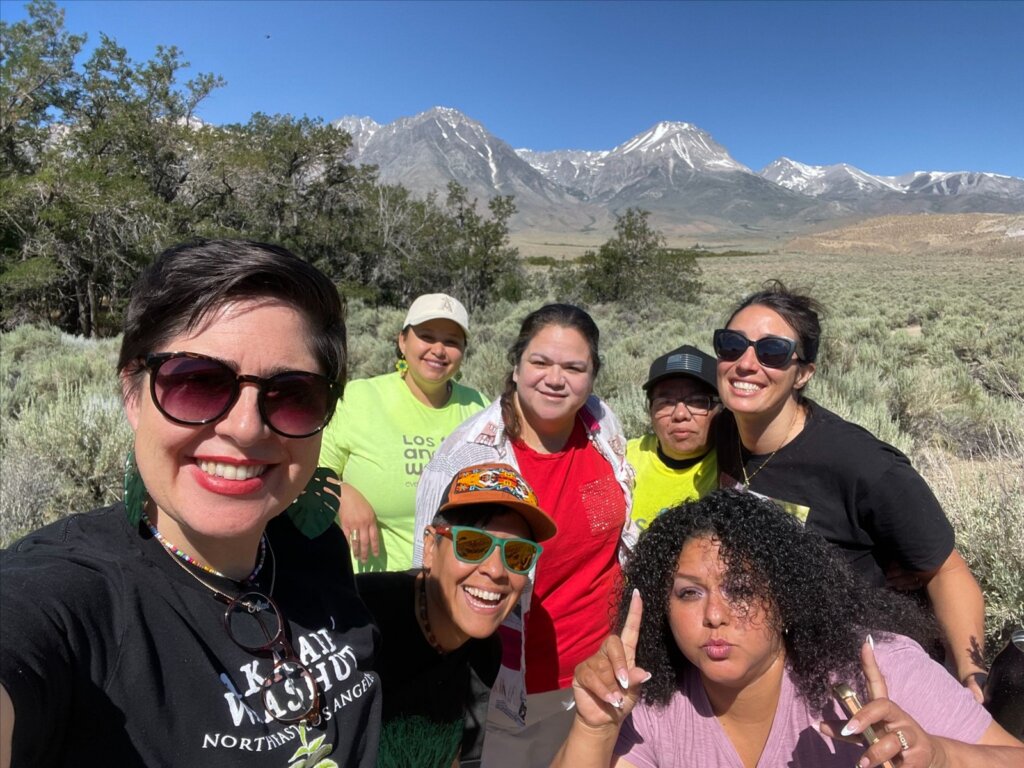
But some of my favorite parts are even simpler. People invite each other on hikes, to picnics, or to hang out after work. Those casual invitations matter. They remind you that the network isn’t only there when you need something professionally—it’s also a community of people who genuinely enjoy being around each other.
I wish I had more capacity to show up for everyone as much as they’ve shown up for me, but I hope I’ve offered some of that back, particularly to younger folks at turning points in their careers—sharing advice, serving as a reference, making a connection, or talking through a difficult decision. You don’t always know whether those small gestures make a difference; I just know how much they’ve meant when other people have offered them to me.
A vision for California’s cities.
What’s your vision for a more climate-resilient Los Angeles — one that’s also equitable and culturally vital?
I can’t stress enough how hard this past year has been for those of us working in active transportation—supporting the joy and connection of walking, biking, taking transit, and moving through your city without needing a car. With gas climbing above $6 a gallon, owning a car is becoming increasingly expensive. Without viable alternatives, simply getting around becomes another barrier to affording life in Los Angeles.
When the ICE raids began, we had to rethink almost all of our programming. For many of the communities we work with and are a part of, being visible in public space suddenly carried a different level of risk. We had to ask: How do we keep people connected and continue the work while taking care of one another?
But that experience is part of a bigger story about asking communities to be resilient without making the systems-level investments they need.
There are also things that give me a lot of hope. We’ve seen investments like the Slauson corridor show what’s possible.
Ultimately, my vision is pretty simple. I think about the city I want for my kids, everyone else’s kids, and our elders. You should be able to get what you need easily and affordably. You should be able to walk, bike, or catch a bus and have that experience be safe, dignified, and joyful—and feel connected along the way to people, place, culture, and nature.
To me, that’s climate resilience: not only whether Los Angeles can withstand the next crisis, but whether we’re building a city where people can afford to live, belong, and have a good life.
Advice for joining Coro’s climate leadership program
For someone on the fence about joining the Climate Resilience Leadership Network, what would you tell them? What do you wish you’d known going in?
I think the program can be valuable at very different points in your career. If you’re just starting out, it gives you a strong foundation for understanding systems change and a chance to learn directly from people doing the work across Los Angeles. If you’ve been doing this for a long time, it gives you space to deepen your practice, question some of your assumptions, and reconnect with the hopefulness that probably brought you to this work in the first place.
I remember in one of our first sessions making a decision that, even though I barely knew these people, I was going to let my guard down and be vulnerable. And what was really beautiful was that other people did too. It changed the kind of conversations we could have and how much we could learn from each other. So if there’s anything I wish I’d known going in, it’s how valuable that openness would be. You get so much more out of the experience when you’re willing to show up as you are, share what you’re actually wrestling with, and create space for other people to do the same.
About the Climate Resilience Leadership Network
The Climate Resilience Leadership Network is Coro California's climate resilience leadership program in Greater Los Angeles, designed in collaboration with Accelerate Resilience Los Angeles. During the program, the cross-sector cohort pairs adaptive leadership practice with place-based learning at sites across Los Angeles County, then leads a collaborative project on a real climate challenge facing the region.
Participants come from resilience advocacy, environmental justice, clean energy, water, land conservation, community development, and beyond.
Applications for the next cohort close November 15, 2026.
Apply today, nominate a climate leader in your network, or schedule a call with our team to learn more.
Learn more about Coro California’s leadership development programs.
Gohar Chichian
Ready to strengthen your leadership impact?
Explore programs designed to equip leaders with the skills to drive change.